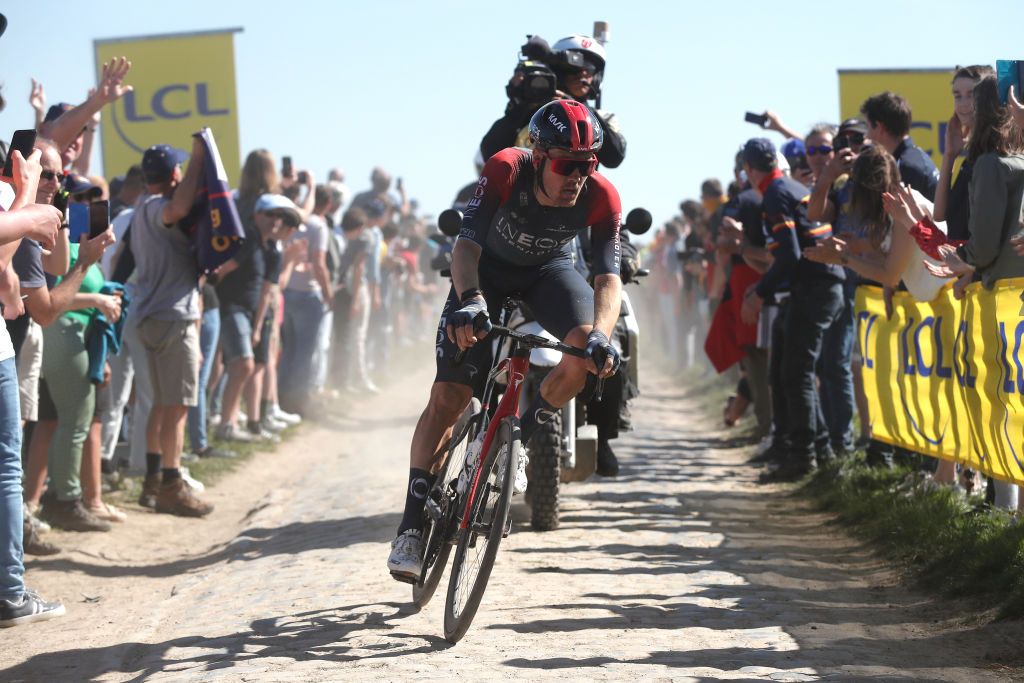
The Mons-en-Pévèle sector is one of three five-star cobbled sectors of Paris-Roubaix and Paris-Roubaix Femmes, together with Carrefour de l'Arbre and the Trouée de Arenberg – the trickiest and hardest parts of the race.
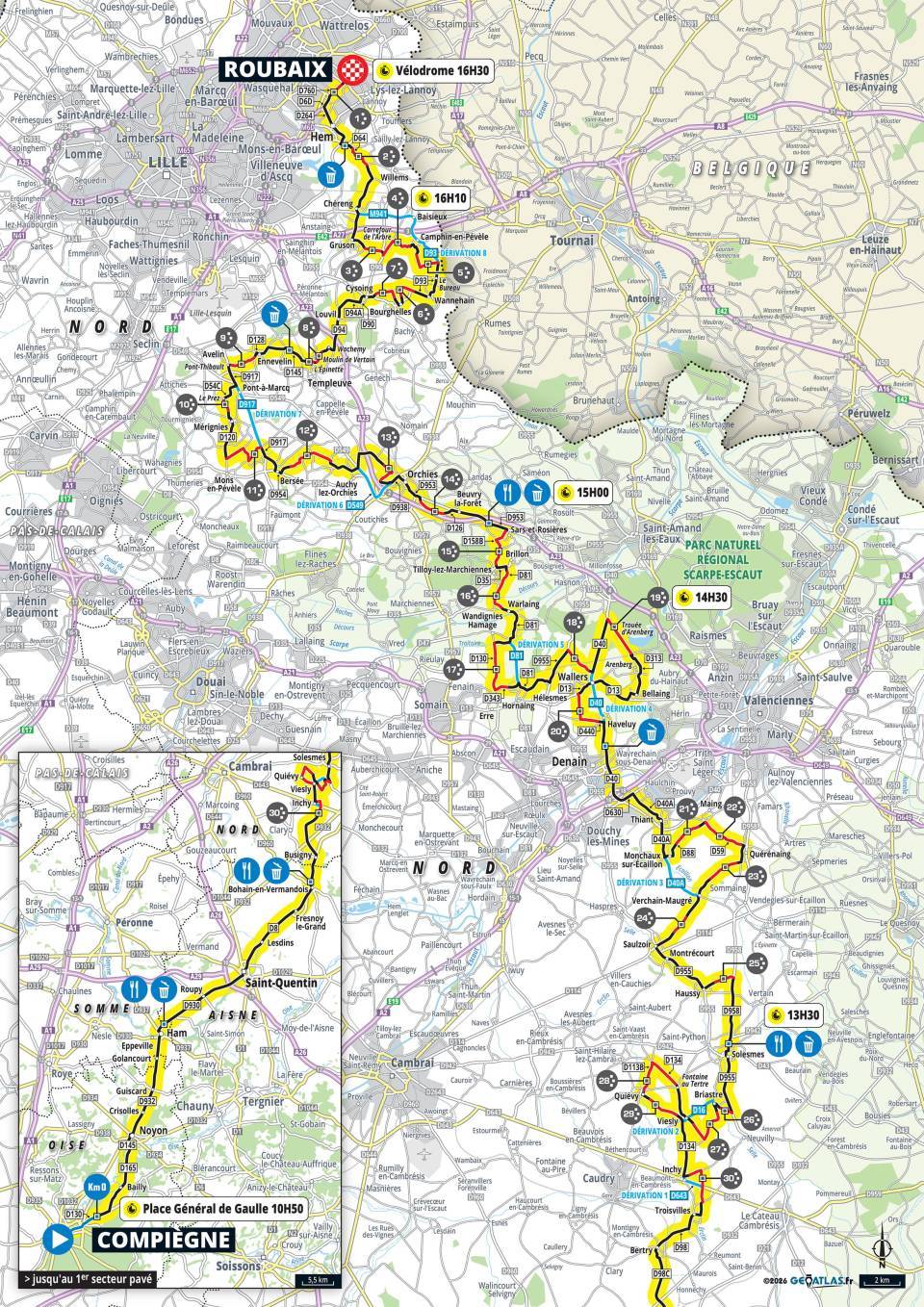
Also known as the Pavé du Blocus, the 3km sector is the 11th cobbled sector of 29 in the 2026 men's race, and 11th of 20 in the women's.
Since its introduction to the Paris-Roubaix route in 1978, Mons-en-Pévèle has been a fixture of the route. However, only the first 1,100-metre section was used in the 1997, 2000, 2002 and 2003 editions of the race.
The sector is positioned 48.6km from the end of both races, meaning it's a key section of the route.
That positioning, combined with a narrow entrance, uphill sections and chicanes, means that Mons-en-Pévèle forces a decisive split in the reduced peloton. Miss the split, and your chances of victory are drastically reduced.
Sector information
Measuring 3km in length, the sector is the second-longest in both the men's and women's races in 2026.
It starts with a gentle 300-metre descent followed by an 800-metre slight uphill before a 90° right turn onto a flat portion for another 800 metres.
A hard left turn, which can be difficult to negotiate in muddy conditions, leads into a false flat for the final 1,100 metres.
Recent history
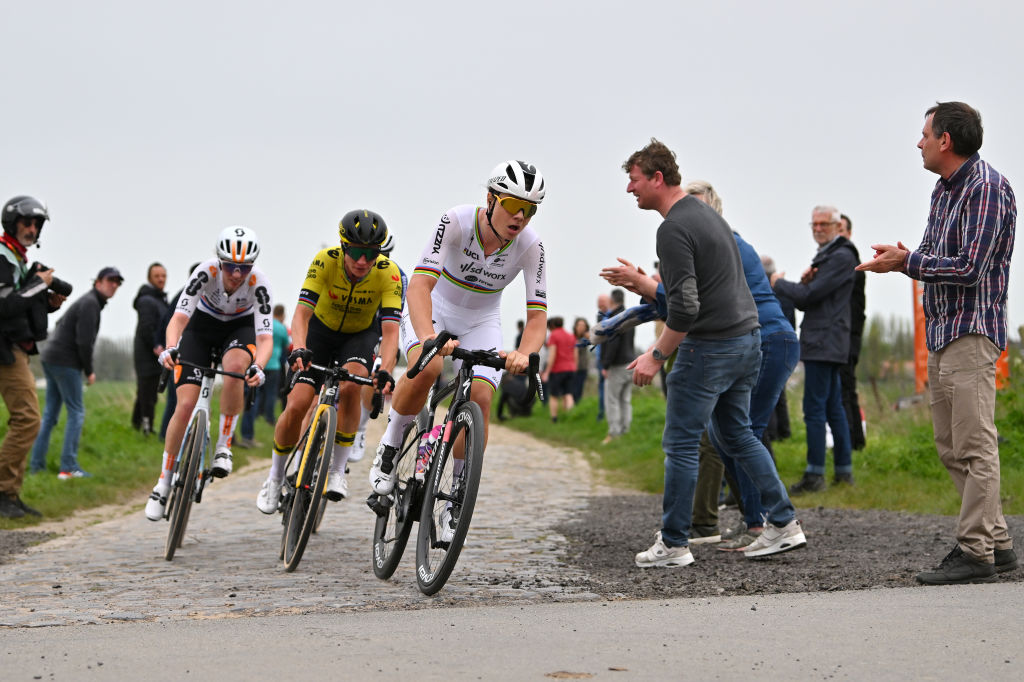
Stijn Devolder's attack on this sector aided the victory of his team-mate Tom Boonen in 2008. The following year, Boonen used this sector to reduce the lead group to six riders before racing to back-to-back victories.
Mathew Hayman, the 2016 Paris-Roubaix winner, stated that this sector is decisive in making the finale, saying: ”If you can get through this sector, then you need to settle in and prepare yourself for the fact that you're going to have a chance.”
In 2010, Fabian Cancellara made his race-winning attack near the Mons-en-Pévèle sector of cobbles. Even though he only had a small gap on his rivals at the exit of the pavé sector, Cancellara pushed on to a famous solo victory.
This stretch of pavé can also decide the loser, of course. In 2006, George Hincapie’s aluminium steerer tube infamously snapped here, causing him to crash, injuring his shoulder and derailing his spring classics season.
In 2016, Peter Sagan saw his chance to chase back to the front group disappear in the dust when Cancellara crashed in front of him. In 2017, Hayman missed the decisive split and had to settle for 11th place.
In 2025, Mons-en-Pévèle played host to a major attack from Lotte Kopecky and Marianne Vos in the women's race as the lead group was whittled down, while the men's race saw Mathieu van der Poel and Tadej Pogačar trade accelerations, leaving the two at the head of the race as Jasper Philipsen dropped away.
Maps