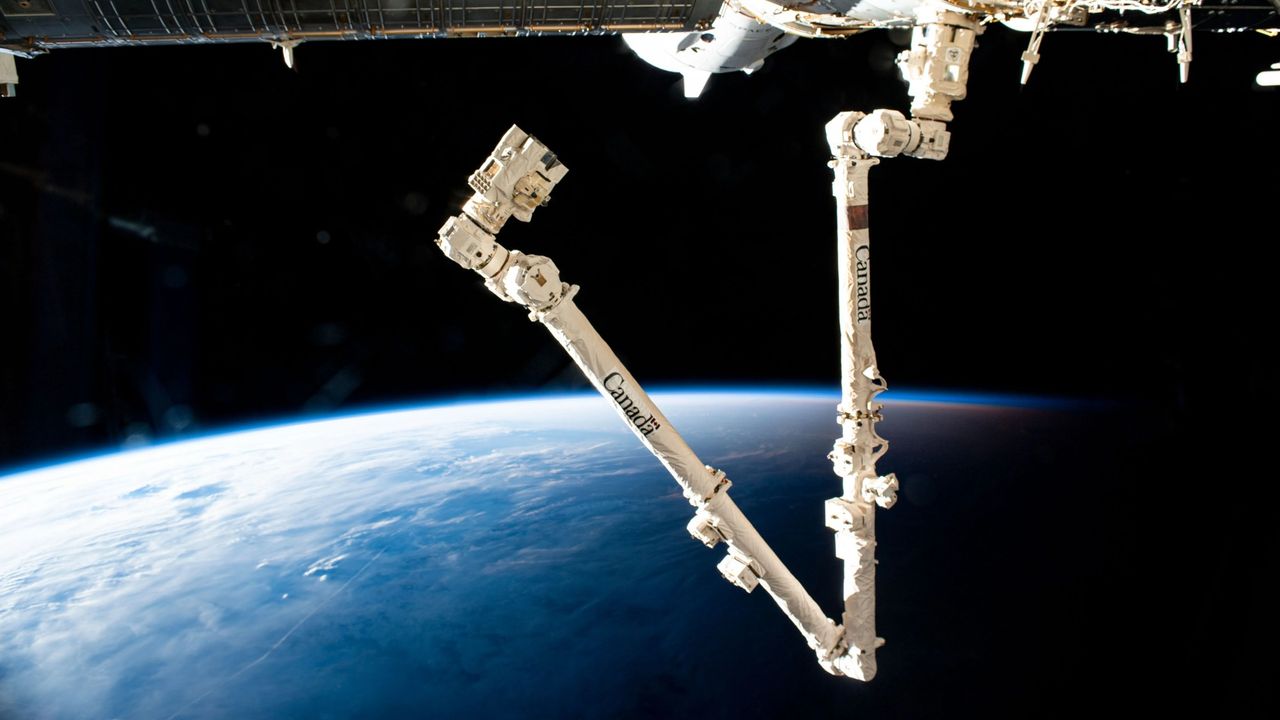
One of the space station's robot arms, crucial for catching cargo ships and doing a share of maintenance duties, is offline for at least a few weeks for repairs.
Canadarm2, which just passed 25 years of service in April on the International Space Station (ISS), will require a spacewalk to fix an apparently broken part that seized up during routine work on May 27, NASA said in a blog post Wednesday (June 10).
The arm is in a stable spot, but it is awaiting help from spacewalking astronauts on June 30 — the day before Canada Day, a national holiday in that country. "The system demonstrated an elevated motor current in a wrist joint, and arm motion did not occur as expected," NASA officials wrote of the issue. Consultation with the Canadian Space Agency (CSA), which funds the arm and supports its operations with MDA Space, showed a spacewalk will be needed to replace the affected joint. Luckily, a spare is already on station.
"Canadarm2 was designed with these kinds of potential issues in mind: it is made up of several segments that can be pulled out and replaced in space," the CSA wrote in a Wednesday update on its website. "Knowing that parts would eventually have to be replaced, the CSA planned shipments of key spares to the station well in advance. In 2017, a similar repair happened with one of the robotic arm's 'hands' after it started to show signs of normal wear and tear."
NASA plans a news conference at a to-be-announced date to discuss the spacewalk and to share more about the assigned spacewalkers. The two astronauts will likely be drawn from the Expedition 74 crew on the U.S. side of the station, which include NASA's Chris Williams, Jessica Meir and Jack Hathaway, and the European Space Agency's Sophie Adenot.
Getting Canadarm2 back online will be critical to berth some cargo ships at the space station, which carry food, equipment and other supplies to the astronauts, as well as to perform a share of maintenance on the orbiting complex. The last Canadarm2 berthing took place in April with Williams controlling the arm, and Hathaway supporting, to pick up the arriving Northrop Grumman Cygnus XL spacecraft.
Notably, Canadarm2 was not originally designed for ship arrivals (it flew to station in 2001, long before the rise of commercial spacecraft), but it made a milestone 50th "cosmic catch" in 2024 and has kept going despite being now 10 years past its design life as of this year.
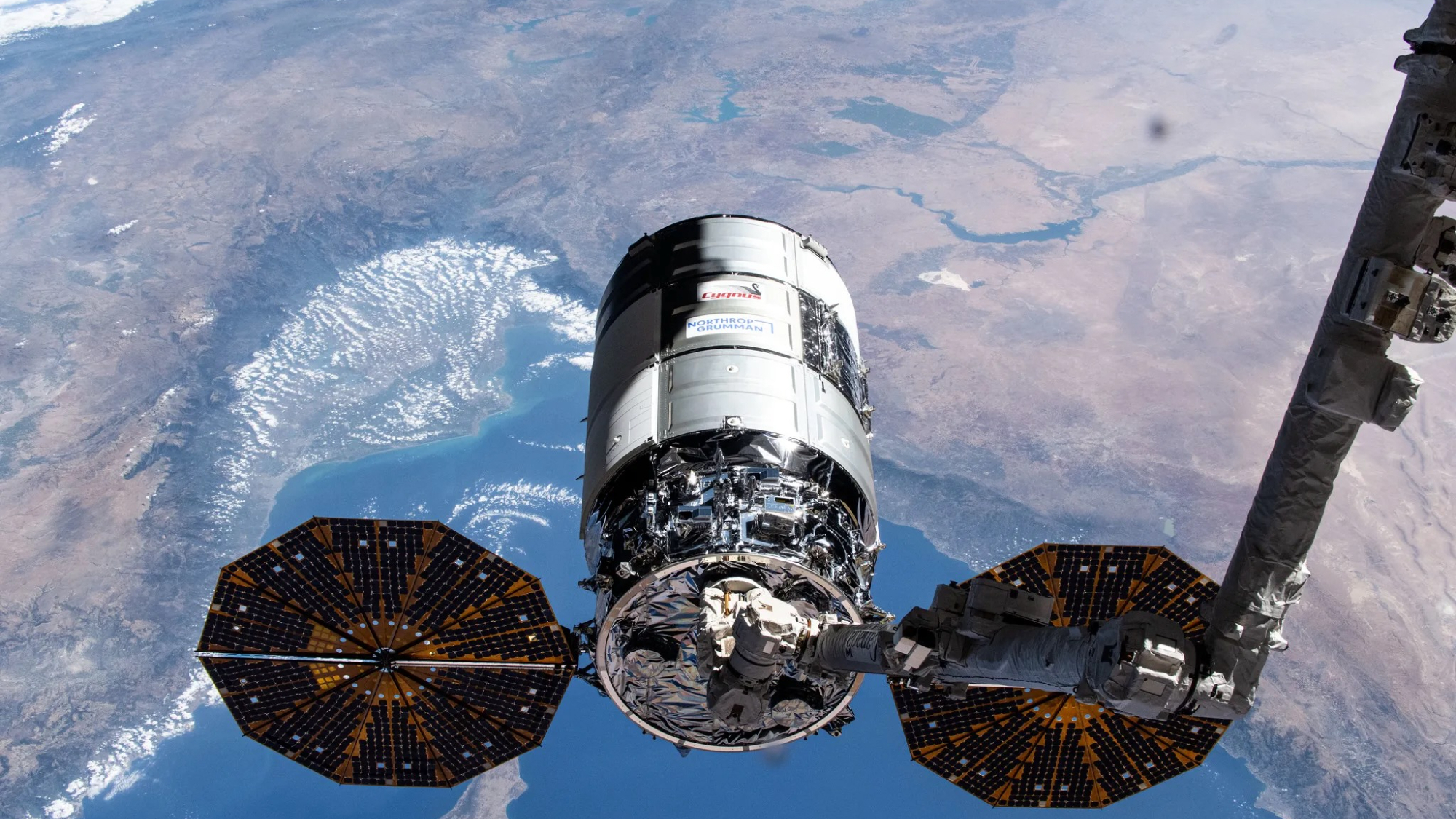
Moreover, tasks over the decades have increasingly transferred to the ground, both at NASA in Houston and at the CSA headquarters near Montreal, Quebec. Controllers in Canada alone support more than 100 days of work a year for Canadarm2 and other Canadian ISS robotics (including the Dextre "hand"), which includes picking up equipment, transferring experiments, and performing other duties that don't require precious astronaut time.
The CSA's robotics on station represent its share of the ISS funding arrangement, allowing CSA astronauts and science to fly. The next CSA astronaut to go there will be Josh Kutryk, flying aboard SpaceX Crew-13 no earlier than September; the last was David Saint-Jacques in 2018-19.
Canadarm2 forms part of a long line of Canadian space robotic arms, originating in part with Canada's National Research Council technology that underlay early satellite antennas and the "legs" of Apollo lunar landers.
The first Canadarm made its debut flight on the second space shuttle mission in 1981. Canadarm2 helped build the ISS and supports station activities, and Canadarm3 is a next-generation arm being constructed to support the Artemis program, which saw CSA astronaut Jeremy Hansen fly around the moon on Artemis 2 in April.
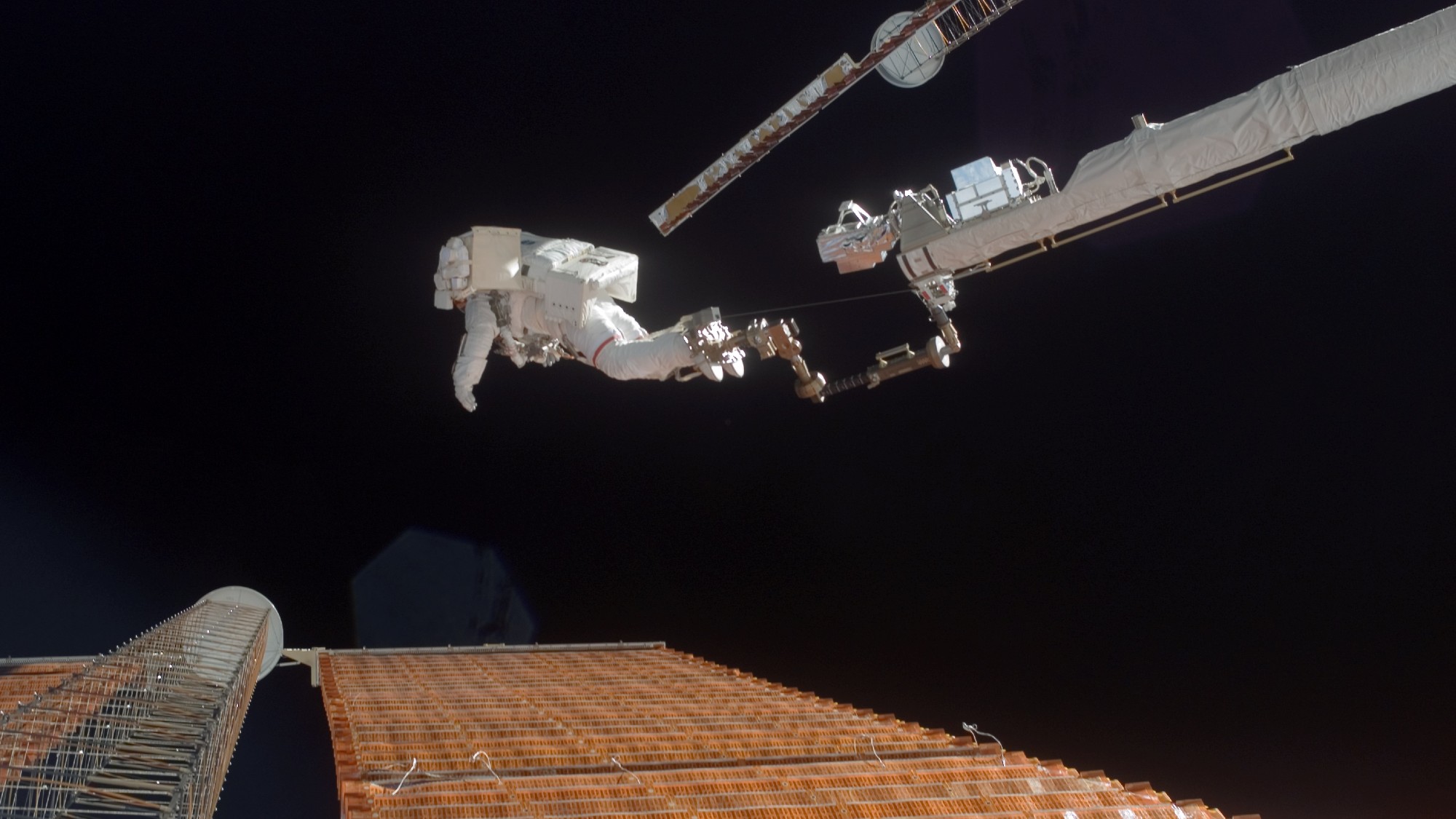
One of Canadarm2's biggest moments in history was a near-emergency repair of a torn solar array in 2007, which required NASA spacewalker Scott Parzaynski to ride on the arm and a Canadian robotic "boom" extension to reach the faraway, live solar panel part for a fix.