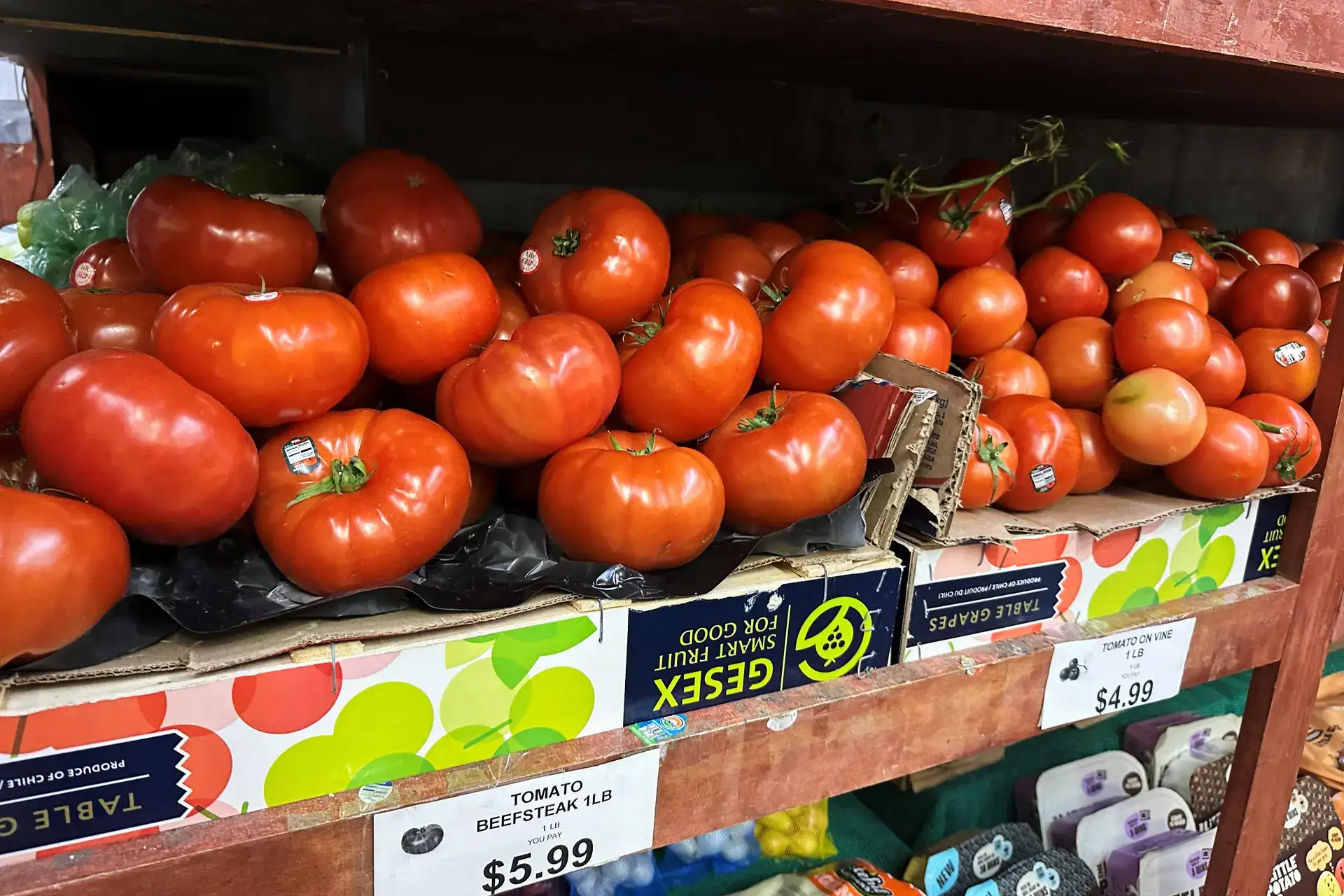
Juicy tomatoes are a summer staple often slipped into burgers or sliced atop a salad. But weather disruptions in two major growing regions have driven up prices for the vegetable, and consumers shouldn’t expect much relief for their wallets in the months ahead.
“This one was driven by the double whammy: the freeze in Florida and weather issues in Mexico, primarily drought,” says David Branch, executive director of the Wells Fargo Agri-Food Institute, which provides research and analysis on the food, beverage and agribusiness sectors. “Supply is going to level out, prices are going to tweak down. But we’re not going to have a huge supply increase” big enough to push prices down substantially.
US tomato prices rose by about 40% between January and April, the biggest three-month increase since 2006, consumer price index data shows. While prices eased slightly last month, they remain more than 30% higher than a year ago. Some Mexican states, meanwhile, are reporting price increases of more than 100% from the prior year.
Weather has long affected grocery store prices, but increasingly frequent bouts of extreme heat, drought and flooding are putting household budgets on the frontlines of climate change. As global warming intensifies, economists are expecting food-price shocks to become more common, raising the risk that higher grocery costs become a more enduring source of inflation.