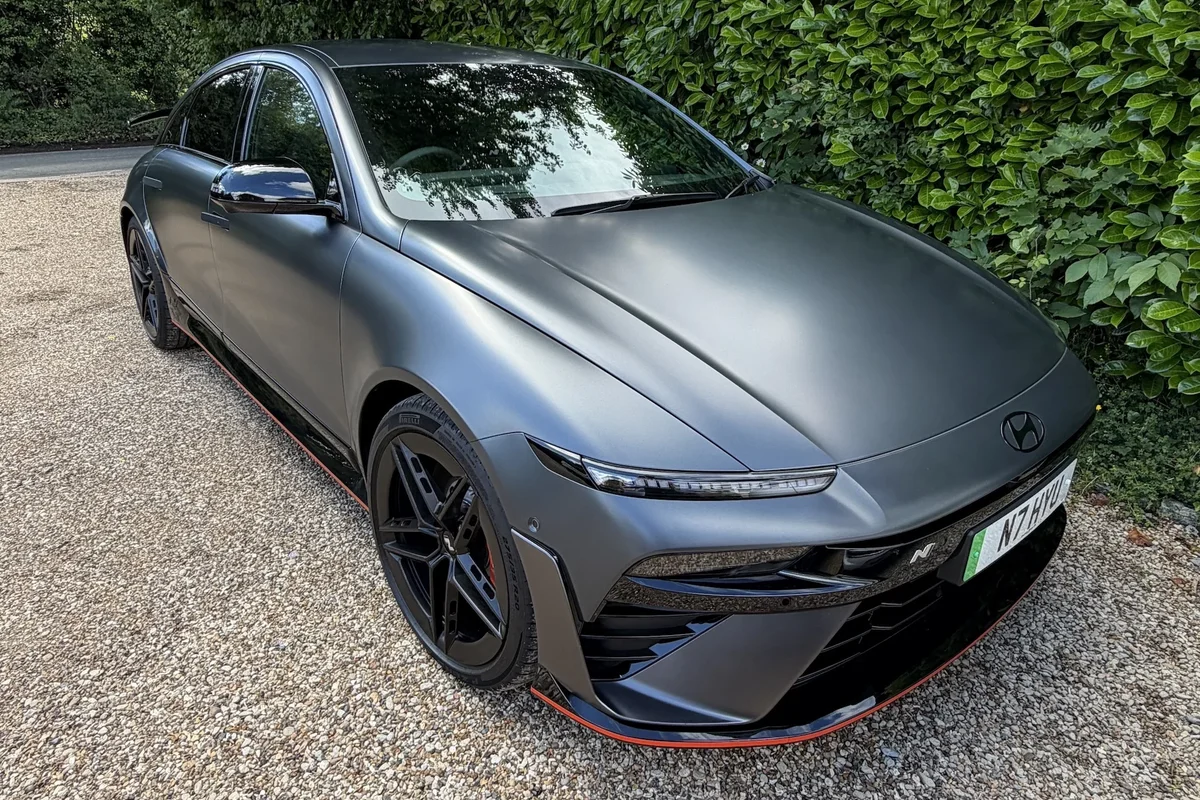
I’ve spent the past few days driving the Hyundai Ioniq 6 N on UK roads and I’ll admit something straight away: I’m a bit hooked. Not just impressed. Not just nodding respectfully at the engineering. Properly, childishly hooked.
This is a car that makes me want to take the long way home. It makes me look for the twisty route rather than the quick one. It makes me laugh when I press the right buttons, hear the noise build, feel the car shuffle its power around and sense it digging itself out of a corner with real intent.
And yes, some of that noise is fake. Of course it is. There isn’t a snorting petrol engine up front, a turbo whistling away, or an exhaust system doing its best to annoy the neighbours. But here’s the thing: I don’t care. It’s fake fun, and I absolutely love it.
This, to me, is the point where electric performance cars start to get really interesting. We’ve all got used to EVs being fast in a straight line. Even sensible family SUVs now launch from the traffic lights with the sort of punch that would have embarrassed supercars not that long ago. Press the pedal, wait for your internal organs to catch up, job done.
But that was never really what made proper sports cars special. Any car can be quick. The great ones make you feel involved. They talk to you through the steering wheel, the seat and the pedals. They make corners interesting. They reward you for getting it right and, ideally, don’t punish you too heavily when you get it slightly wrong.
That’s the bit EVs have sometimes struggled with. The batteries are heavy, the power delivery is instant and the whole experience can feel a bit one-dimensional. Devastatingly effective, yes. Deeply exciting after the tenth full-throttle blast? Not always.
But cars like the Ioniq 6 N suggest we’re moving into a new phase. This isn’t just an electric car with a big power figure and a sporty spoiler stuck on the boot. It feels like a car that’s been engineered by people who understand why people like driving.
The technology is clever, but the really clever bit is how it’s being used. Electric motors allow engineers to do things that would have been much harder with a petrol engine, a gearbox, propshafts and conventional differentials. Power can be moved around the car incredibly quickly. The software can help the car grip, settle and accelerate in ways that make the driver feel more confident rather than less involved.
That’s where the future of the sports car gets exciting. Not because EVs can make performance easier, although they can. Not because they can make performance safer, although they can do that, too. But because the best ones are starting to use all that tech to make driving more satisfying.
The Ioniq 6 N is a great example. Its sound system, simulated gearshifts and different driving modes could easily have been gimmicks. Instead, they add theatre. They give you cues. They make the car feel alive in a way that too many fast EVs simply don’t.
Petrolheads may be sniffy about that, but let’s not pretend the old world was entirely pure. Sports exhausts, sound symposers, launch control, adaptive dampers, torque-vectoring and dual-clutch gearboxes have all been part of the performance car playbook for years. Modern petrol performance cars are full of theatre, assistance and clever electronics. Electric cars are just finding their own version of it – and they’re doing it quickly.
Sign up for Steve Fowler’s DriveSmart newsletter here
Look at what’s coming. The Peugeot E-208 GTi is a hugely important little car because it brings the idea of the electric hot hatch back to a more accessible part of the market. Peugeot has real history here, and the idea of a small, agile, sharp-looking electric GTi is exactly the sort of thing that could make performance EVs feel less remote and more relevant.
Then there’s the Volkswagen ID Polo GTI, another car with a badge that carries expectation as well as excitement. Volkswagen knows better than most that a GTI is not just about outright power. It has to be usable, approachable, quick enough to be fun and friendly enough to drive every day. If VW gets that balance right in an electric hatchback, it could do more for the performance EV cause than another 1,000bhp hypercar.
Vauxhall is having a go, too, with the Corsa GSE. Again, that’s encouraging. Not every exciting EV needs to cost a fortune or come from an exotic brand. Some of the most loved performance cars of the past were warm and hot hatchbacks that ordinary enthusiasts could aspire to. If electric cars are going to win over people who grew up loving 205 GTis, Golf GTIs, Corsa GSis, RenaultSports and Fiesta STs, they need to deliver fun at that end of the market as well as at the top.
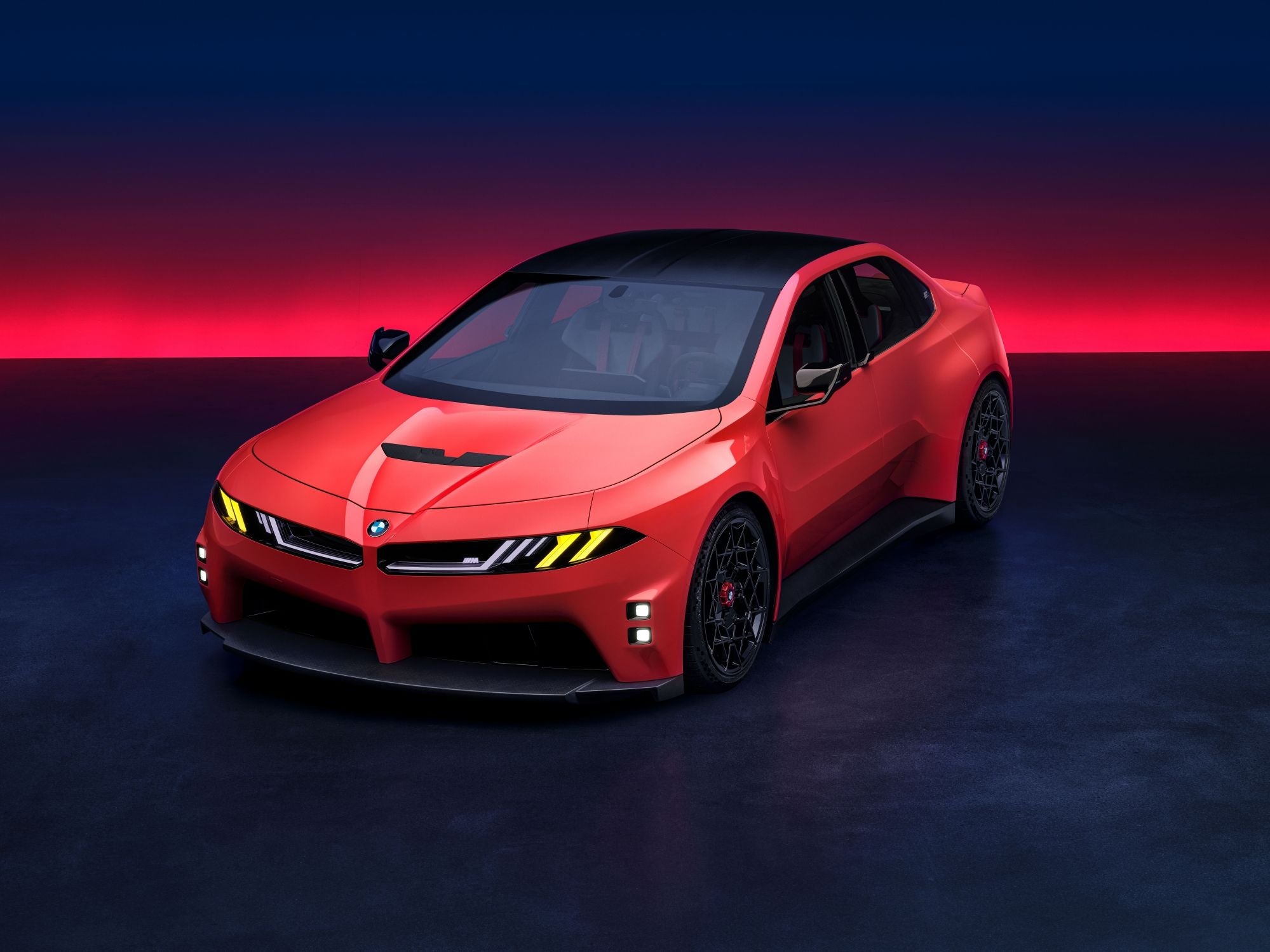
At the other end, BMW’s M Concept Neue Klasse shows how seriously the traditional performance brands are now taking this. BMW M has built its reputation on feel, balance and driver connection, so it can’t simply turn up with a heavy EV that does a silly 0–62mph time and expect everyone to cheer. It has to feel like an M car. That means precision, playfulness and the sense that the car is working with you, not just doing the job for you.
That’s the big challenge for all these brands. They mustn’t make electric sports cars that simply flatter the driver into irrelevance. The best performance cars don’t make you a passenger. They make you part of the process.
Tesla, of course, has been part of this conversation for years. The Model Y Performance is a good reminder that even a practical family EV can deliver serious pace and surprisingly capable handling. It won’t be everyone’s idea of a sports car, but it has helped normalise the idea that electric performance doesn’t have to come with a long bonnet and a tiny boot. It can be wrapped up in something you can use for school runs, trips to the tip and motorway slogs.
Mercedes-AMG is coming at it from a different angle with its electric GT thinking. AMG has spent decades making cars that feel muscular, emotional and slightly naughty. Recreating that in an EV is a huge task because so much of the old AMG character came from the engine. But if AMG can combine electric punch with the sort of chassis control and attitude its best cars have always had, it could prove that the electric sports car doesn’t have to be quiet, clinical or cold.
And then there’s Ferrari. The Luce is fascinating because Ferrari cannot afford to get an electric car wrong. This is a brand built on sound, emotion, theatre and obsession. If Ferrari can make an EV feel special, desirable and properly Ferrari-like, the argument that electric performance cars can never stir the soul starts to look a bit tired.
No, an electric Ferrari won’t sound like a V12. It won’t smell of hot oil and fuel. It won’t deliver its performance through gears and revs in the same old way. But maybe that’s fine. Maybe the question shouldn’t be whether electric sports cars can copy petrol ones. Maybe the question should be whether they can create their own kind of excitement.
That’s what the Ioniq 6 N has been reminding me this week. It doesn’t feel like a petrol car. It doesn’t need to. It feels like a really well-sorted electric performance car that understands the driver still wants to be entertained.
For years, the fear has been that the electric future would be fast but bland. Efficient but soulless. Technically brilliant but emotionally flat. Now, finally, the evidence is starting to point the other way.
Proper sports cars aren’t disappearing. They’re changing shape, changing sound and changing the way they deliver their thrills. The best ones will still make you get up early on a Sunday morning just to go for a drive.
And if the future sounds fake but makes me grin like the Ioniq 6 N does, I’m very happy to turn the volume up.
Sign up for the DriveSmart newsletter
To get the latest motoring insights from EV editor Steve Fowler delivered straight to your inbox, simply enter your email address in the box at the top of this page.
Each edition of DriveSmart offers clear, expert guidance on the fast-moving world of electric vehicles and modern motoring, from trusted reviews and practical tips to the biggest industry news of the week.
You can also head to our newsletter preference centre to sign up for the email.