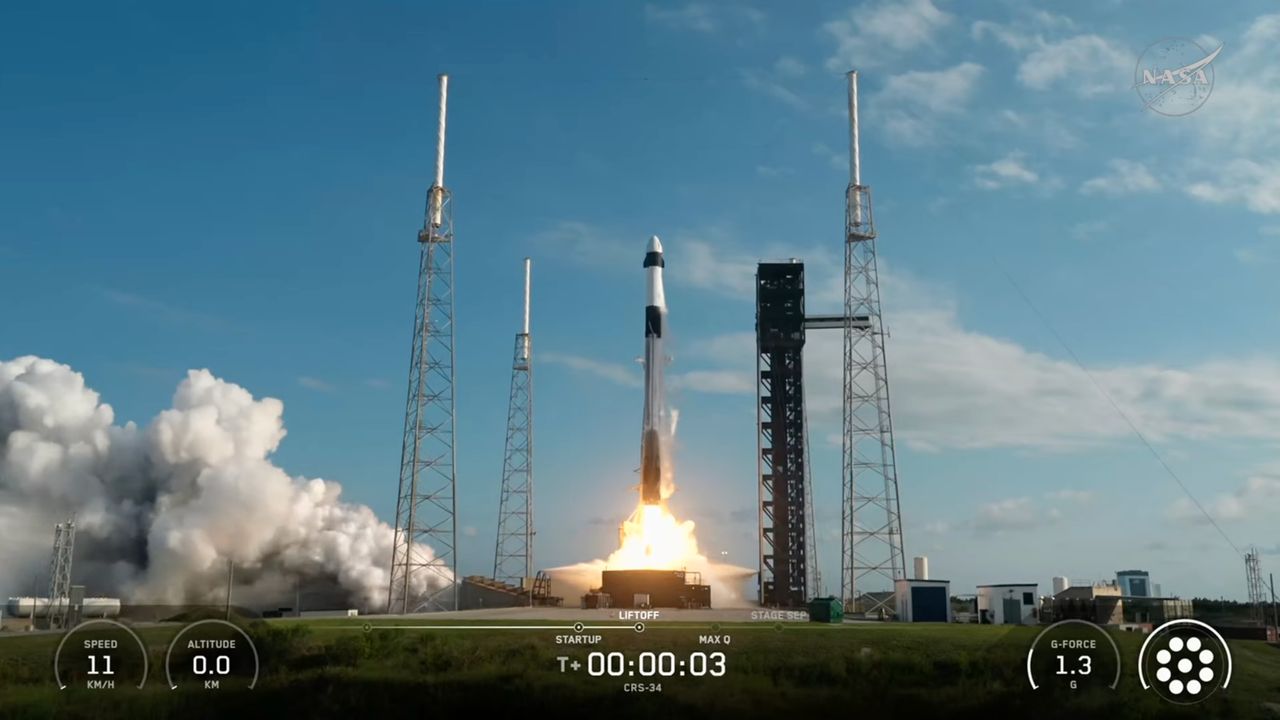
SpaceX launche its Dragon cargo capsule to the International Space Station today (May 15) after a weather delay.
The robotic Dragon lifted off atop a Falcon 9 rocket from Cape Canaveral Space Force Station in Florida today at 6:05 p.m. EDT (2205 GMT).
That amounted to a three-day delay; NASA and SpaceX called off attempts planned for both Tuesday (May 12) and Wednesday (May 13) due to weather, then waited until today for the next chance.
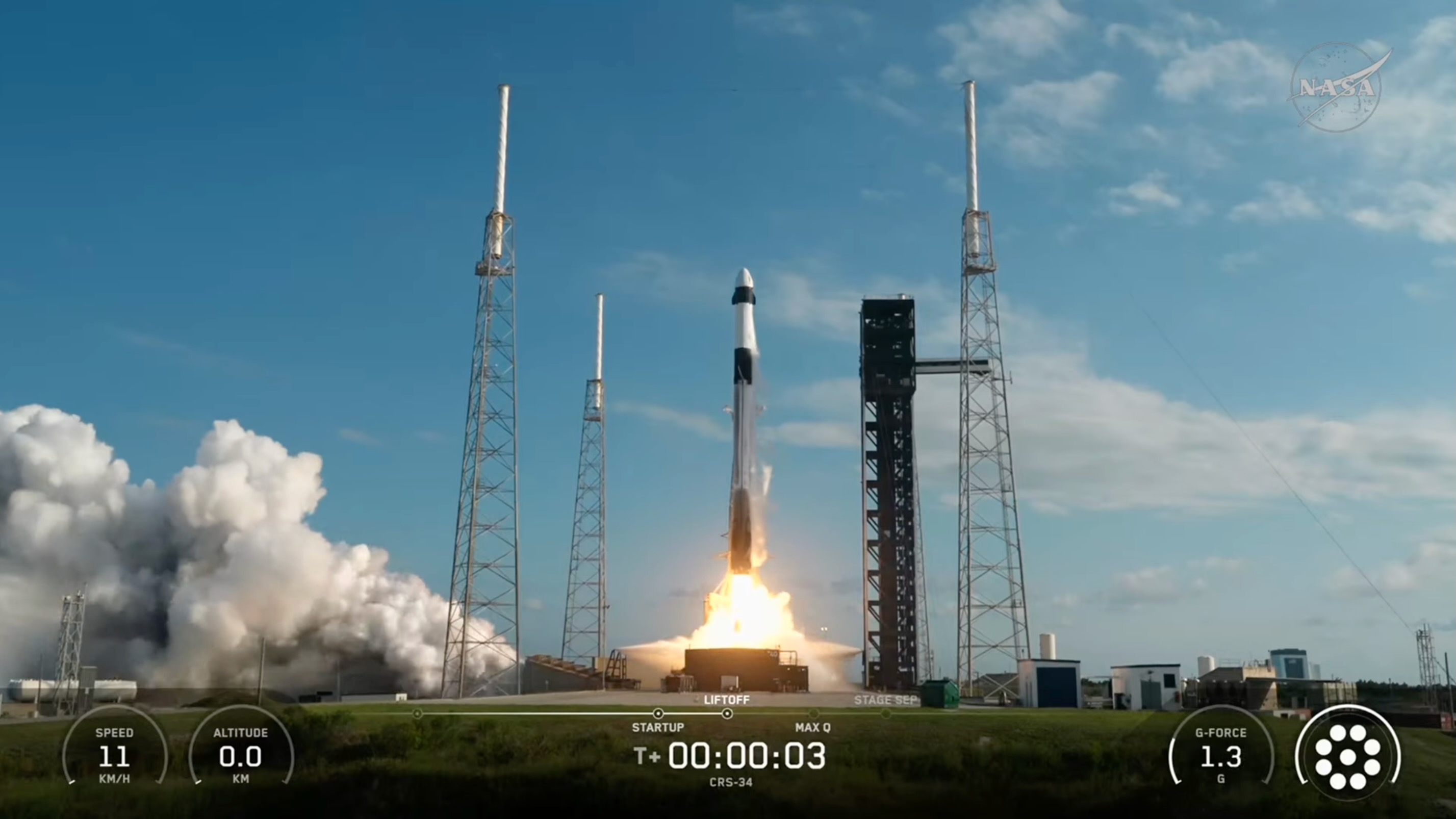
The launch kicked off the CRS-34 mission, so named because it's the 34th flight that SpaceX has conducted for NASA's Commercial Resupply Services program.
Dragon is loaded up with about 6,500 pounds (2,950 kilograms) of supplies, hardware and scientific experiments for CRS-34. Among the scientific gear are "a project to determine how well Earth-based simulators mimic microgravity conditions, a bone scaffold made from wood that could produce new treatments for fragile bone conditions like osteoporosis, and equipment to evaluate how red blood cells and the spleen change in space to protect future astronauts," NASA officials wrote in a CRS-34 media advisory.
This stuff will get to the International Space Station (ISS) on Sunday (May 17) around 7:05 a.m. EDT (1105 GMT), when Dragon docks autonomously to the forward port of the orbiting lab's Harmony module. You can watch this rendezvous live via NASA when the time comes.
CRS-34 is the sixth spaceflight for this particular Dragon capsule — a new record for a SpaceX cargo craft. One of the company's astronaut-carrying Crew Dragon capsules, named Endeavour, also has six missions under its belt.
The capsule will stay attached to the ISS for just a month, coming back down to Earth in mid-June "with time-sensitive research and cargo, ahead of splashing down off the coast of California," NASA officials wrote.
Dragon is the only ISS resupply ship that can haul material down to Earth. The other three operational robotic freighters — Japan's HTV-X, Russia's Progress and Northrop Grumman's Cygnus — are all designed to burn up in Earth's atmosphere when their time in orbit is up.
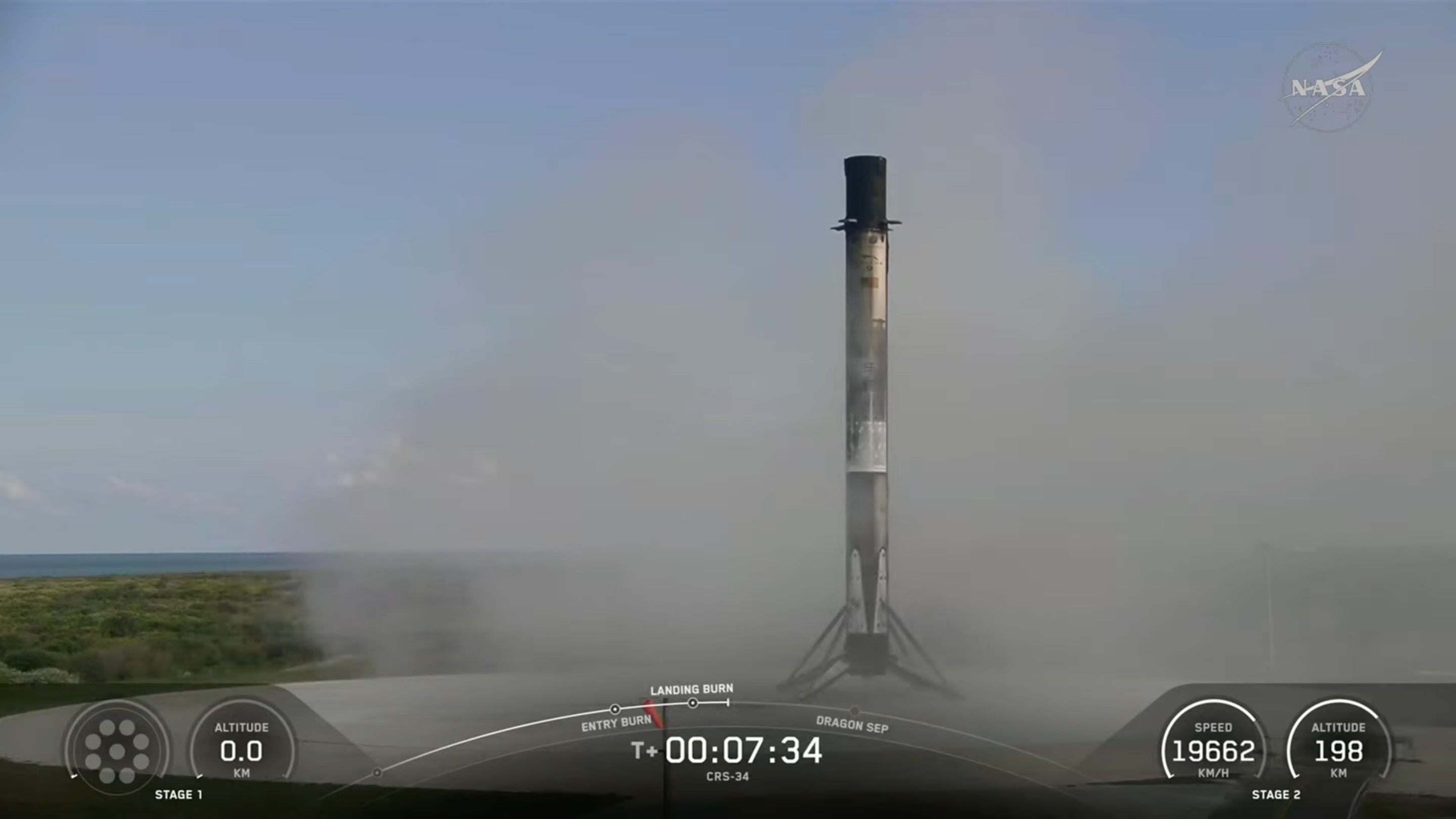
The Falcon 9's first stage came back to Earth for a landing at Cape Canaveral about 7.5 minutes after liftoff today as planned. It was the sixth liftoff and touchdown for this particular booster, according to SpaceX.
Dragon separated from the rocket's upper stage on schedule about 9.5 minutes after launch and began chasing down the ISS.
Editor's note: This story was updated at 4:35 p.m. ET on May 12 with the new target launch date of May 13, then again on May 13 with news of the weather scrub that day and the new target of May 15. It was updated again at 6:20 p.m. ET on May 15 with news of successful launch, rocket landing and spacecraft separation.