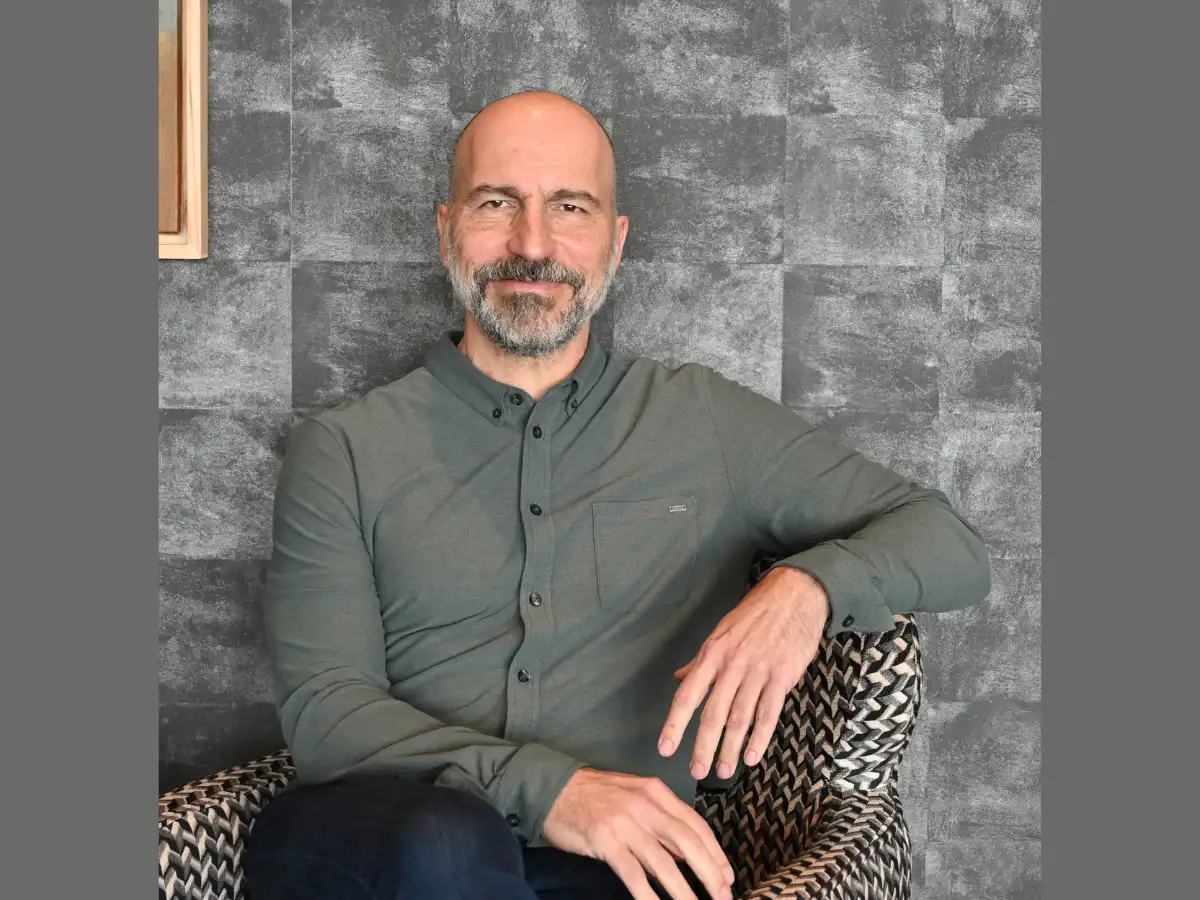
India is on course to becoming Uber’s largest market in the next 10 years in number of trips, up from third now, CEO Dara Khosrowshahi told ET in Mumbai during his five-day India visit last week. Khosrowshahi, who took over in 2017 amid the chaos that followed the ouster of founder Travis Kalanick, has transformed Uber into one of the most profitable ride-hailing platforms in the world. He spoke about Uber’s big India bets, its new data centre partnership, a possible return to food delivery, the threat of AI and autonomous vehicles and a potential partnership with Kalanick. Edited excerpts:
You’ve had a packed trip, announcing your data centre partnership with the Adani Group and two new tech centres. How has the past week been?
It’s been terrific. If there’s one word I’d use to describe the Indian market, it’s dynamic. Things are changing fast. There’s been a huge amount of growth for us here as a business, and I came to better understand both the opportunities and the challenges in India generally. But this remains an incredibly important market for us, both in terms of talent and growth. India is our largest talent base outside of the US, hence the investments in technology centres. It continues to be one of our most exciting growth markets as well, and I’ve met a lot of our partners, the finance minister … it’s been quite rewarding and I’m going to fly back with my brain buzzing about everything that’s going on in India.
The government has introduced labour sector reforms and a new gig worker policy. Have there been any deliberations on this during your meetings?
There’s been discussion around social security benefits and the new policy framework being considered here, which we’re quite supportive of. Historically, in many countries, people thought of full-time work as coming with benefits, while part-time or flexible work came without. We think the solution we’re talking about — part-time flexible work with benefits, including social security — is quite constructive, and we’re having a dialogue there.
Also Read: Uber still ahead despite stiffening competition, playing to win: CEO Dara Khosrowshahi
There’s been pushback from state governments, including threats of criminal action against bike taxi operators..how are you seeing that?
I think what we want is dialogue with the local authorities. There’s no question that bike taxis are making transportation more affordable for a greater percentage of the population and actually complement mass transit. A quarter of our bike taxi trips either start or end at mass transit points.
We’re investing now in beyond just being a car-hailing service. We think that bike taxis should be a part of the entire transit ecosystem and are a much more affordable way for earners to come to the platform and start earning. We’re hoping that we can find a win-win solution, where policymakers make sure they get what they need in terms of rules and regulations being followed. We hope we can continue expanding affordable mobility while also improving economic opportunity for a broader segment of the population.
Tune in| Uber CEO Dara Khosrowshahi on AI, EVs & why India could become Uber’s biggest market
There’s an energy crisis and fuel prices continue to rise. How does that impact Uber, both in India and globally?
It’s still very early here. It’s difficult to predict the impact on the business specifically. Globally, fuel prices have been a headwind, especially more recently as it relates to our earners and the cost of transportation, but they’ve been relatively modest. What we are seeing consistently is that demand for transportation of all types continues at a very robust pace. It is a relatively modest headwind compared to the increase in demand for all things on-demand in the physical world. We think it reinforces the transition to EVs as being healthy for the environment but also healthy in terms of diversification of energy sources for India and many other countries where we operate.
Uber Eats globally contributes significantly to your business, and food and grocery delivery in India has become a massive market. Amazon and Flipkart are now in quick commerce. Would Uber consider re-entering food delivery here?
I constantly ask myself hard strategic questions. At this point, when we look at the ecosystem in India, the mobility ecosystem and the local logistics sector are quite promising and have enormous growth potential. We’re going to keep revisiting it but at this point we don’t see us getting into food delivery. Maybe through some kind of partnership model to bring this ‘everything app’ concept… but not necessarily through ownership.
Is there anything on the anvil?
Stay tuned.
Also Read: Zomato acquires Uber Eats in an all-stock transaction
Rapido has taken 50% of the ride-hailing market after starting as a pureplay bike taxi player. It’s just raised $240 million. Is Uber willing to spend aggressively in India to protect market share?
We are the largest mobility player by gross bookings in India. Of course, competition here will be a fact of life because there is so much potential in this dynamic, growing market, and competitors always push us to be better and think differently. We continue building for the long term, and are playing to win over the next decade, too.