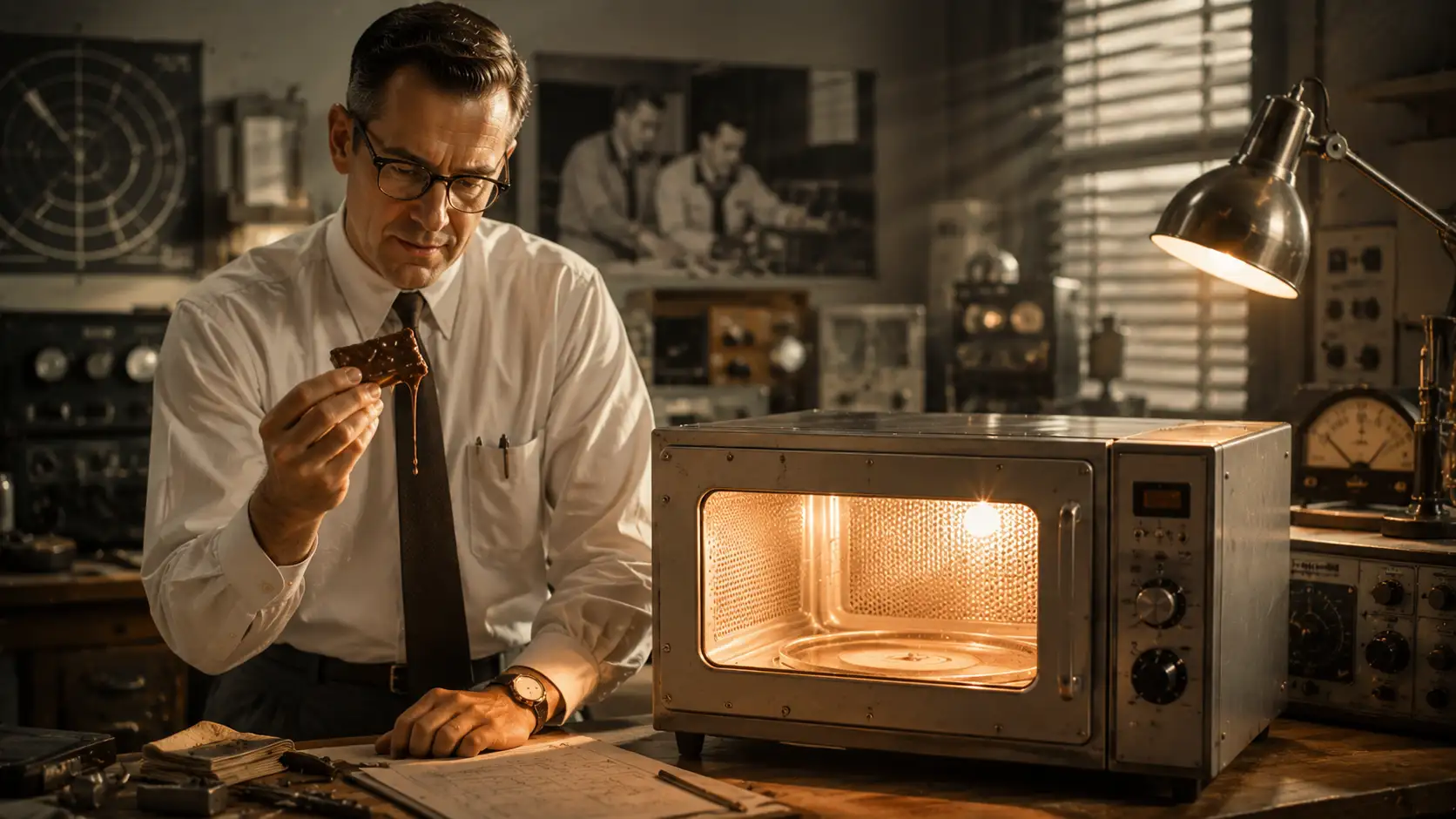
Most life-changing inventions begin with years of planning. The microwave oven began with a melted candy bar. In 1945, engineer Percy Spencer was working on radar technology for Raytheon when he noticed something unusual. A chocolate bar tucked inside his pocket had suddenly turned gooey while he stood near a magnetron, the powerful vacuum tube used in radar systems during World War II.
That small and unexpected moment would eventually transform kitchens across the world and change the way people cooked forever.
The accidental moment that sparked a revolution
Spencer was no ordinary engineer. Known for his curiosity and problem-solving skills, he immediately suspected that the magnetron had caused the candy bar to melt. Instead of ignoring the strange incident, he decided to test the theory.
He placed popcorn kernels near the machine. Moments later, they began popping across the room. Fascinated, Spencer tried another experiment using an egg. The pressure inside the egg built rapidly until it exploded.
READ ALSO: Word of the Day: Petrichorian
Those early experiments revealed a groundbreaking principle: microwave energy could heat food quickly from the inside. Spencer realized the technology had enormous potential far beyond military radar systems. That accidental discovery laid the foundation for one of the most important household appliances of the modern era.
What exactly was Spencer working on?
During World War II, radar technology became critical for detecting enemy aircraft and ships. Spencer was working with magnetrons, devices capable of generating high-powered microwave signals.
At the time, nobody was thinking about cooking food with electromagnetic waves. The magnetron’s purpose was strictly military. But Spencer’s experiments showed that microwaves could interact with water molecules in food, causing them to vibrate and produce heat.
In simple terms, microwave ovens cook food by exciting water molecules, creating heat much faster than traditional ovens. Today, that science powers millions of kitchens worldwide.
The first microwave oven was enormous
The first microwave oven looked nothing like the compact countertop appliances seen today.
After Spencer’s discovery, Raytheon developed the first commercial microwave cooking machine called the “Radarange.” Released in the late 1940s, the device stood nearly six feet tall and weighed hundreds of pounds. It was also extremely expensive, making it practical mainly for restaurants, ships and commercial kitchens.
Still, the invention represented a major leap in food technology.
As engineering improved during the 1950s and 1960s, microwave ovens became smaller, safer and more affordable. By the 1970s, they had entered mainstream American households and quickly became symbols of convenience and modern living.
From wartime technology to everyday convenience
The microwave oven changed more than cooking times. It reshaped eating habits, food industries and even work culture.
Frozen meals, instant snacks and reheatable dinners became popular largely because microwave cooking made preparation incredibly fast. Busy families embraced the convenience, while office workers relied on microwaves for quick lunches.
The invention also reflected a broader pattern in history: technologies developed during wartime often find unexpected civilian uses later. Radar research helped create a kitchen appliance that became as common as refrigerators and televisions.
Few inventions illustrate the power of accidental discovery better than the microwave oven.
Percy Spencer’s remarkable journey
Spencer’s story is equally inspiring because he had little formal education. Born into poverty in Maine, he taught himself engineering concepts through books and practical experience. By his teens, he was already working with electrical systems.
His natural curiosity and hands-on learning eventually earned him recognition as one of America’s most innovative engineers. Spencer later received hundreds of patents during his career.
Yet his most famous contribution began with a simple observation many people might have ignored. That ability to notice the unusual, and investigate it, became the true secret behind the microwave oven.
Why the microwave remains one of history’s greatest accidental inventions
History is filled with accidental discoveries, from penicillin to X-rays. But the microwave oven stands out because it became such an ordinary part of daily life.
Today, microwaves are used for reheating leftovers, making popcorn, defrosting food and preparing quick meals in homes around the globe. What once began as a strange wartime experiment became a cornerstone of modern convenience.
And it all started because one engineer paid attention to a melted candy bar in his pocket.
FAQs
Who invented the microwave oven?
Percy Spencer is credited with discovering the principle behind the microwave oven in 1945 while working with radar technology at Raytheon.
How did Percy Spencer discover the microwave oven?
According to the famous story, Spencer noticed a candy bar in his pocket melted while he stood near a magnetron. He then experimented with popcorn kernels and eggs, leading to the discovery that microwaves could cook food.