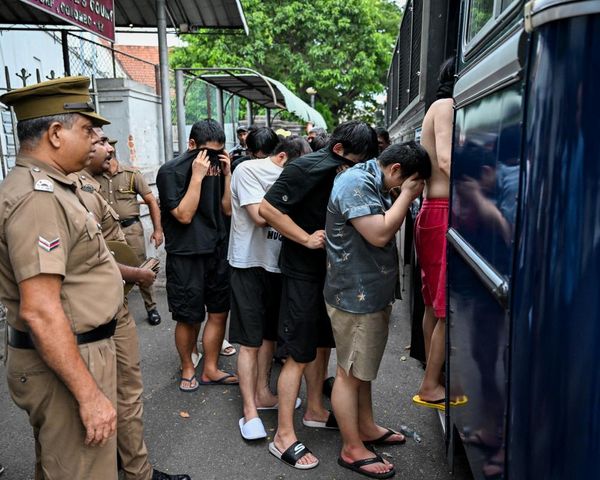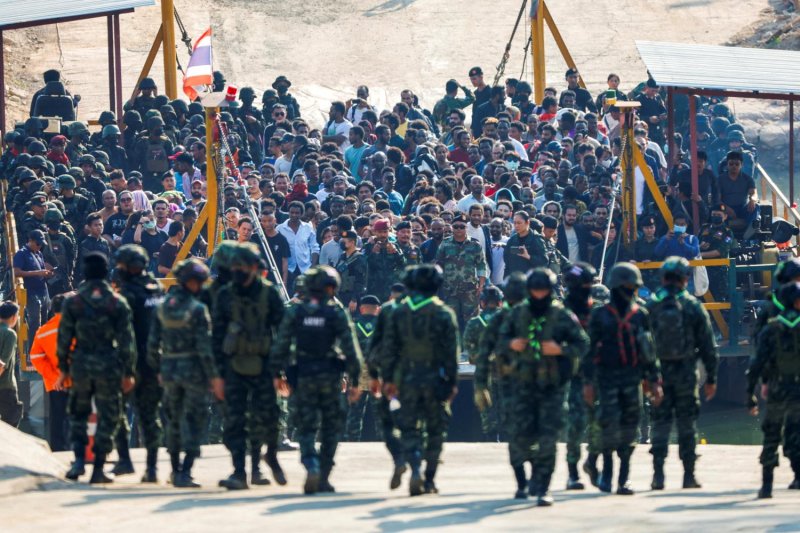
When many people in Thailand hear the words "human trafficking", they still picture distant and detached criminal activities such as a border crossing, a brothel raid, a fishing boat at sea, or a criminal gang operating in the shadows.
Trafficking in Thailand today is becoming more digital, more organised, more hidden, and more deeply woven into everyday life. It can begin with a job advertisement on social media, a chat message from a stranger, a hotel booking, a debt-financed recruitment process, or a child's online contact that adults dismiss as harmless. We will be more vulnerable if we still treat trafficking as a niche and distant crime.
The first truth we need to face is that trafficking is no longer one familiar problem. It is now a converging system in which sex trafficking, child sexual exploitation, labour exploitation, forced criminality, cyber-enabled fraud, corruption, and organised crime increasingly overlap.
In 2025, Thailand reported 279 human trafficking cases, of which 171 (61.29%) were committed through online channels. Online channels have become central to recruitment, grooming, control, advertising, payment, and concealment.
Sexual exploitation remained the most prevalent detected form. This should change how we think about prevention. Trafficking is no longer only about what happens in hidden physical spaces. It is also about what happens on phones, platforms, apps, booking systems, and payment networks.
The second truth is that children are a new and more vulnerable group. Online child sexual exploitation and abuse are expanding through self-generated sexual images, live-streaming, and abuse arranged through digital contact.
Too often, adults still imagine child trafficking risk mainly through poverty alone. But children's vulnerability today is also shaped by online exposure, secrecy, shame, peer pressure, and weak reporting pathways.
The trafficking process often begins with traffickers trying to earn the trust of potential victims through grooming, manipulation, gifts, emotional pressure, or promises of benefits. By the time adults notice something is wrong, the harm may already be serious. That is why child protection in Thailand can no longer be separated from a safe cyberspace.
The third truth is that trafficking is no longer limited to sex or labour exploitation in the traditional sense. One of the most important shifts in 2025 was the rise of trafficking for forced criminality linked to online scam compounds.
Thailand screened 13,195 individuals of 83 nationalities under its National Referral Mechanism and identified 443 trafficking victims. In addition, authorities screened people assisted from scam centres in neighbouring countries and confirmed 4,407 victims of forced criminality.
That number alone should be enough to end any outdated assumption that trafficking is only about brothels or sweatshops.
Today, trafficked people may be forced to commit online fraud under threat, confinement, violence, and debt. Some are deceived by what appear to be legitimate job offers. Some pass through Thailand. Some are returned through Thailand. This has turned Thailand not only into a country of origin, destination, and transit, but also into a major protection and screening hub for a fast-changing regional crime economy.
The fourth truth is that Thailand's most visible economic spaces, such as tourist areas, are also at high risk of and vulnerable to trafficking. Tourism-dependent areas such as Pattaya are examples.
Accommodation, nightlife, online booking, transport, and child sexual exploitation intersect in tourist areas. We should stop talking about these areas only as tourism or business zones. They are also child-protection and anti-trafficking priority areas.
Bangkok matters too. It is not just the capital but also a transit point and corridor where trafficking activities can make use of modern facilities such as hotels, residences, entertainment venues, transport systems, and digital advertising to facilitate their underground activities.
At the same time, Thailand should not make the mistake of assuming that lower official numbers mean lower labour trafficking risk. Labour trafficking remains seriously under-detected.
Migrant workers and stateless people still face document control, wage withholding, debt bondage, fear of authorities, and restricted freedom, particularly in sectors such as fisheries, construction, agriculture, seafood processing, and domestic work.
Thailand has made real progress. But traffickers are adapting faster. The challenge is not only to identify victims after serious harm has occurred but also to detect risks in advance so that we can disrupt the crime and protect vulnerable groups.
This is why the next phase of Thailand's anti-trafficking response must be broader than policing alone. Police, prosecutors, social workers, and multidisciplinary teams remain essential. But they cannot do this work by themselves.
Families need to know how to respond calmly and safely when a child discloses harm. Schools need real digital-safety pathways, not just awareness talks.
Hotels and accommodation providers need child-safety and reporting protocols. Platforms, telecom providers, and internet service providers should be required to maintain accessible, user-friendly, and child-friendly reporting channels, ensure timely escalation and transparent responses, and cooperate promptly with lawful investigations.
Financial institutions need stronger KYC (Know Your Customer) verification and due diligence to detect and disrupt suspicious transactions. Suspicious or abusive recruitment advertisements should be removed at the source.
The private sector should not be treated only as a donor or public-relations partner. It is part of the operating environment traffickers use, and it must become part of the solution.
In today's Thailand, the most dangerous myth is that trafficking is far away. It is not. It is closer to our lives than many of us think.
If you notice possible signs of trafficking, call 1300 or 1599. For cybercrime-related concerns, call 1441.
Kohnwilai Teppunkoonngam is a human rights lawyer and policy practitioner working on child protection, gender equality, and anti-trafficking issues.