August live cattle (LEQ26) futures on Friday fell $1.50 to $241.175 and for the week were down 47 1/2 cents. August feeder cattle (GFQ26) lost $2.225 to $357.425 and for the week were up $3.525.
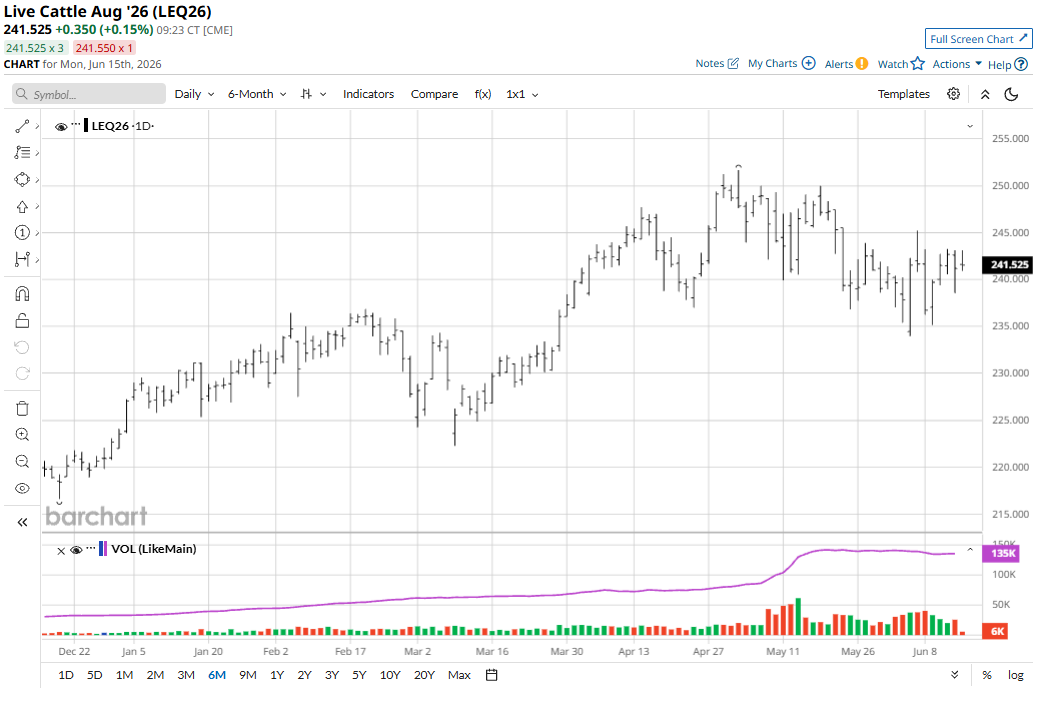
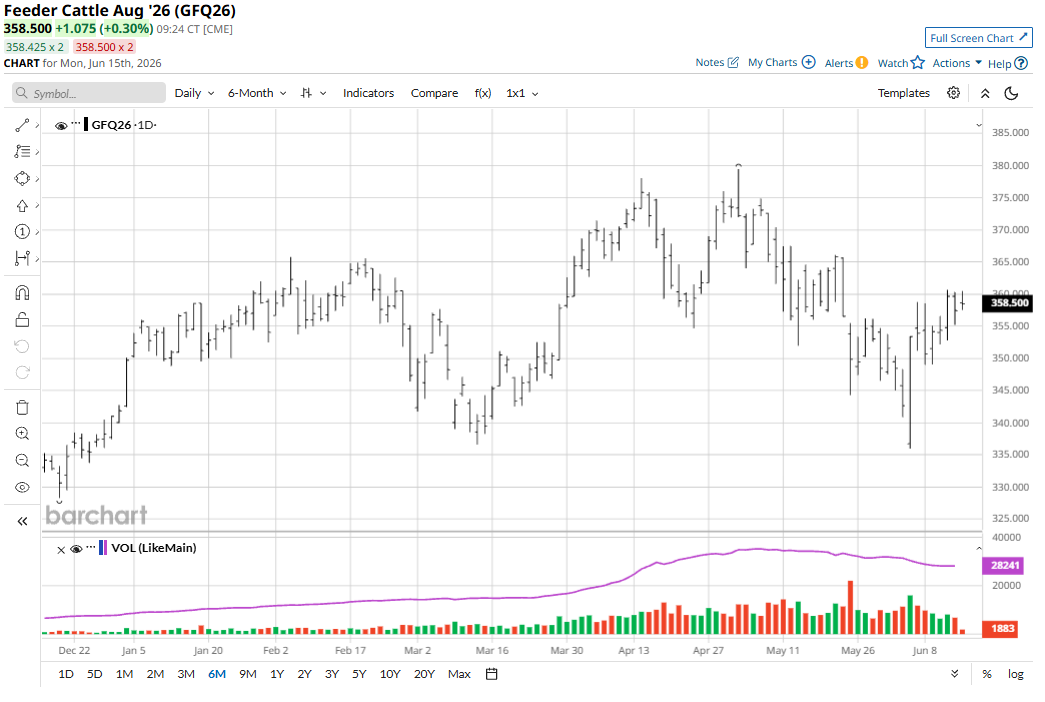
The cattle futures markets have turned choppy recently, as traders digest the potential ramifications of New World screwworm (NWS) on the U.S. cattle industry. On up days in futures prices, it appears the potential for less cattle supplies coming to market is center stage. On down days in cattle futures markets, the keen uncertainty regarding the NWS matter, including consumer attitudes toward NWS, seems to prevail. Uncertainty is generally bearish in raw commodity markets.
The USDA Animal and Plant Health and Inspection Service (APHIS) on its NWS website now reports 12 total detected New World screwworm cases, in Texas and New Mexico.
“U.S.’s screwworm fix is still a year away, risking more spread.” That’s a weekend news headline from Bloomberg. “The U.S.’s key tool for suppressing the New World screwworm, a facility that breeds sterile flies, isn’t slated to begin operating until November 2027,” said the report. “The U.S. currently has only a fraction of the sterile flies needed to mount an effective response, with a facility in Panama producing 100 million insects a week and another plant in Mexico expected to come online soon. The U.S.’s best weapon against a deadly cattle parasite threatening the beef industry is more than a year away from showing meaningful results, raising concerns over how far the outbreak could spread before then,” said the Bloomberg report.
The next few weeks, or longer, will likely find NWS remaining on the front burner for the cattle futures markets. Concerns have so far leaned slightly price-friendly for cattle futures due to potentially lower U.S. beef production going forward, which is already lagging 6.5% behind last year’s pace.
Potentially bearish for the cattle futures markets is that U.S. inflation has now outpaced wage growth for multiple months. Despite inflation in beef cooling month over month, prices for that category are still up 12.9% from last year and are met by consumers that are being continually squeezed from other sectors in the economy as well.
The major U.S. stock indexes had backed off their recent record highs but have rallied back to trading not far below them, at present, due to the U.S.-Iran peace prospects. Any resumed and sustained selling pressure in U.S. equities could dent consumer demand for higher-priced beef at the meat counter. Also, gasoline prices at the pump above $4.00 a gallon for a sustained period would also likely crimp consumer demand for beef.
Cash cattle trading was still very light as of midday Friday, with the USDA reporting that steers were averaging $254.15. That compares to the week prior’s USDA-reported cash cattle trading average of $256.53. The USDA will update last week’s cash cattle trading average price at midday Monday.
On Thursday (June 18) comes the monthly USDA cattle-on-feed report for June, which will be closely scrutinized by cattle futures traders. The May report showed U.S. cattle and calves on feed for the slaughter market in the United States for feedlots with capacity of 1,000 or more head totaled 11.6 million head on May 1. The inventory was 2% above May 1, 2025. Placements in feedlots during April totaled 1.70 million head, 6% above 2025. Net placements were 1.65 million head. Marketings of fed cattle during April totaled 1.64 million head, 10% below 2025. Thursday’s cattle-on-feed report is expected to favor the bullish camp, as supplies on feedlots are expected to remain at historically low levels.
Lean Hog Futures Prices Still Trapped in a Downtrend
August lean hog (HEQ26) futures prices on Friday rose $0.45 to $96.35 and for the week were down 87 1/2 cents. The hog futures market saw tepid short covering in a bear market Friday. Chart-based speculators are still primed to play the short side in the near term as a price downtrend remains firmly in place on the daily bar chart.
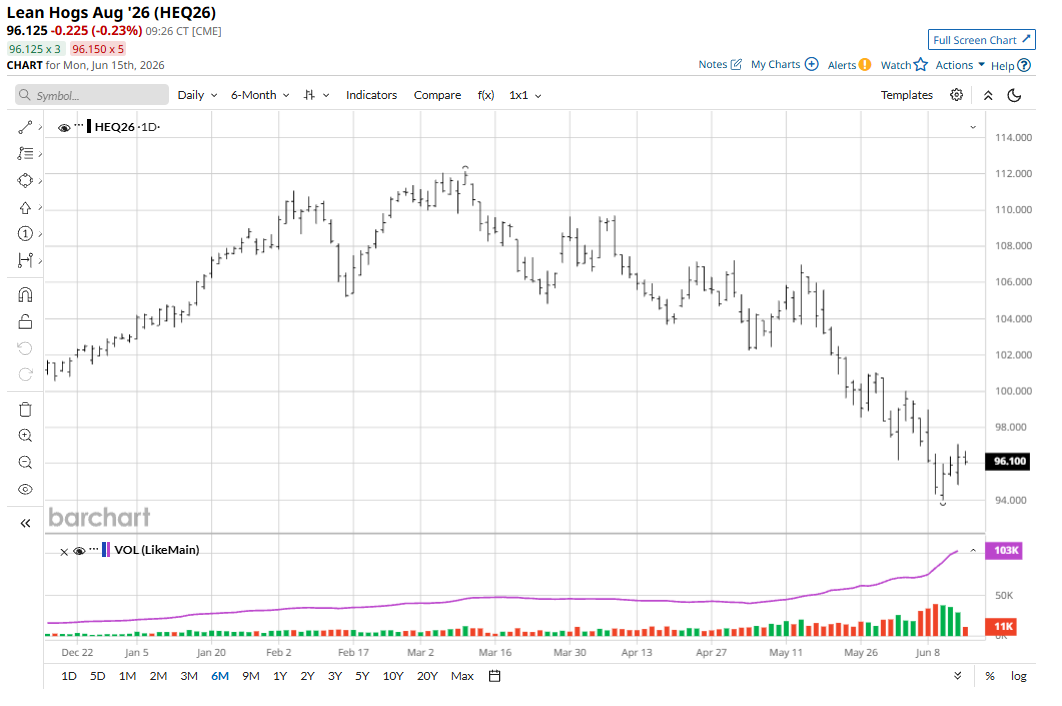
The latest CME lean hog index is down 2 cents to $92.90. Today’s projected CME index price is down 15 cents at $92.75. The national direct five-day rolling average cash hog price quote for Friday was $96.73.
The start of the summer grilling season has yet to offer much support to cash hog and pork fundamentals as cutout values moved lower again last week. Pork production is up 0.3% compared to last year at this time, highlighting that no major supply story exists to help lift futures at this time, explaining the inability of hogs to capitalize on any spillover strength from cattle.
Substitution demand for pork over beef may finally occur in the coming weeks or months if U.S. inflation continues to nip at the heels of household budgets and if gasoline prices remain above $4.00 a gallon.
Tell me what you think. I enjoy hearing from my valued Barchart readers from all around the globe. Email me at jim@jimwyckoff.com