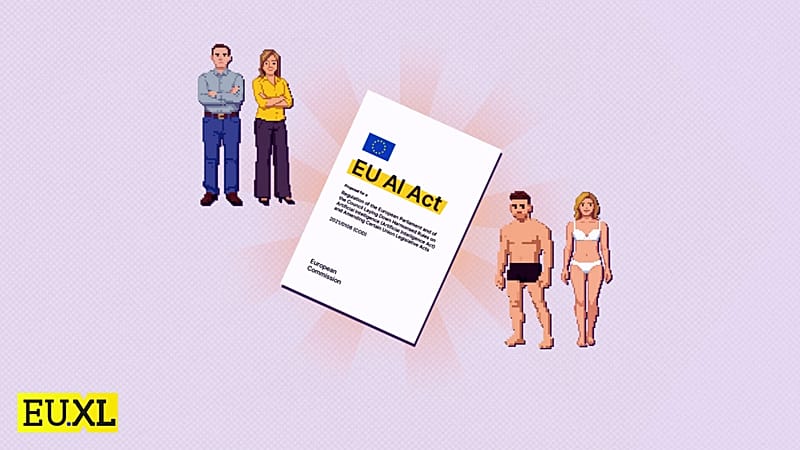
EU governments and the European Parliament struck a provisional deal on May 7th to amend the AI Act, the landmark legislation that entered into force in August 2024.
The deal delays tough rules on high-risk AI systems covering biometrics, critical infrastructure, law enforcement, and employment decisions by 16 months. Enforcement is now pushed to December 2027. Supporters call it pragmatic relief for businesses struggling to compete with the US and China. Critics say it hands a victory to Big Tech at the expense of workers and fundamental rights.
But the deal also adds something: a total ban on nudification apps, AI tools that generate fake explicit images of real people without consent. The ban covers images, video, and audio, and explicitly includes AI-generated child sexual abuse material.
The measure was championed partly in response to AI-generated intimate images of Italian Prime Minister Giorgia Meloni circulating on social media in early May 2026.
Violations carry fines of up to €35 million or 7% of global turnover. The ban takes effect on December 2, 2026.
The deal still requires formal approval. Even amended, the AI Act remains the world's strictest AI law.