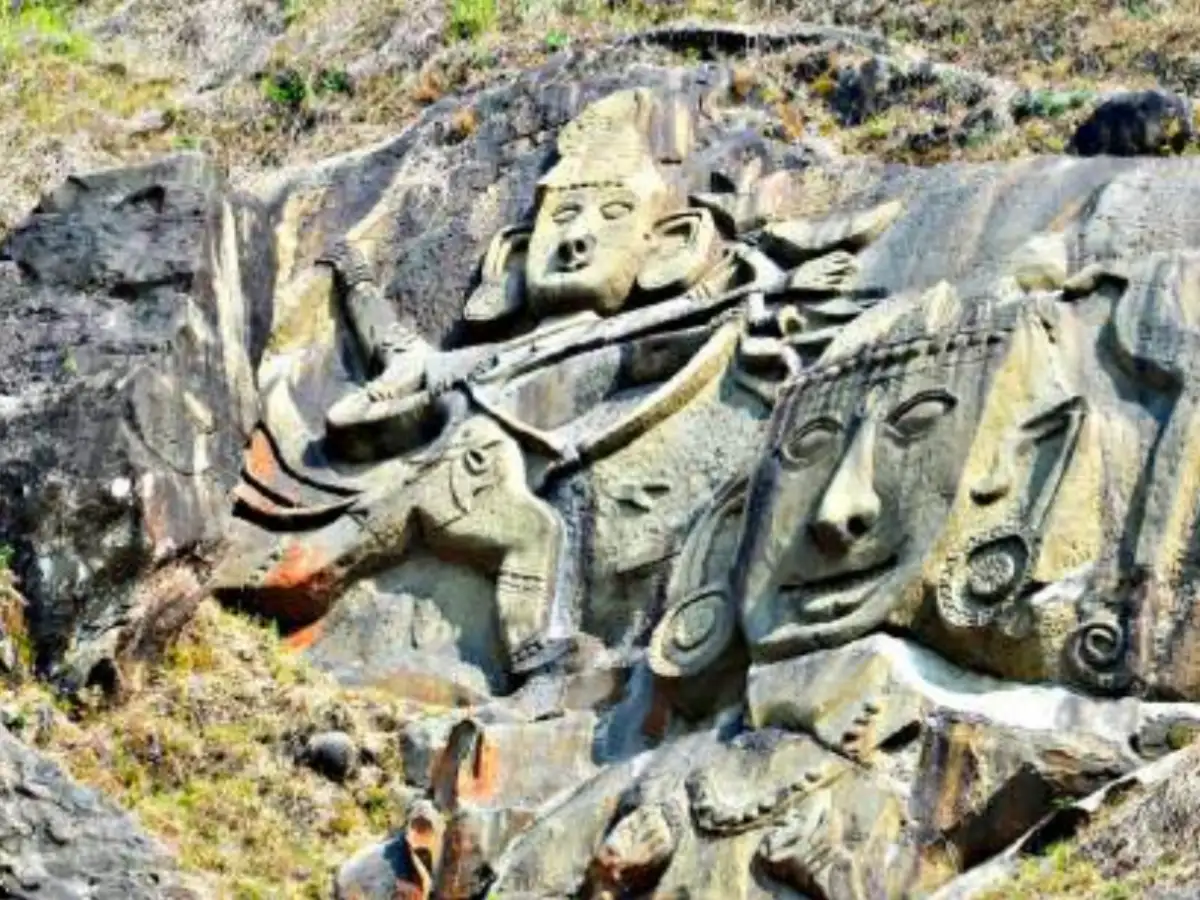
Unakoti is a hidden gem nestled amid the verdant landscapes of Tripura, India. Dating back to the 7th century, this ancient Shaivite site is renowned for iconic figures of gods and goddesses, each narrating stories rooted in ancient mythology.
Unakoti is an important archaeological site known for its ancient rock-cut sculptures and is regarded as a historic Shaiva pilgrimage centre, dating back to the 7th–9th centuries or possibly earlier.
The site is famed for its natural setting amid hilly terrain, dense greenery, and nearby waterfalls, which enhance its scenic and cultural appeal.
The carvings at Unakoti are broadly of two types—rock-cut figures and stone images. Among the most prominent are the central Shiva head and the massive Ganesha figures.
The central Shiva head, known as Unakotiswara Kal Bhairava, stands about 30 feet high, including a 10-foot-high elaborately carved head-dress. Flanking the head-dress are two large female figures—one depicting Durga standing on a lion, and another female figure on the opposite side. The site also features three huge Nandi bull figures, partially buried in the ground.
Unakoti is notable for housing India’s largest bas-relief sculpture, along with several other rock-cut and stone images spread across the site.
How to Reach Unakoti
By Air:
The nearest airport is Maharaja Bir Bikram (M.B.B.) Airport in Agartala, which is well connected with major cities like Delhi, Kolkata, Guwahati, and Chennai. From Agartala, Unakoti is approximately 186 km away.
By Rail:
The nearest railway station is Dharmanagar, located about 18 km from Unakoti. Another option is Kumarghat railway station. From either station, Unakoti can be reached in about 30 minutes by local transport such as taxis, auto-rickshaws, or buses. Trains are also available from Agartala to Dharmanagar or Kumarghat.
By Road:
Unakoti is well connected by road from Agartala, the state capital of Tripura. It is about 186 km from Agartala and around 8 km from Kailashahar. The journey takes roughly 4 hours by road. Regular services such as buses, luxury coaches operated by private and public transport operators, tourist cabs, and private vehicles are available on this route.
Best time to visit
The best time to visit Unakoti is between October and March, when the weather remains dry, cool, and ideal for exploring the ancient rock-cut carvings. During this period, temperatures are generally pleasant, ranging from mild to moderately cool, making outdoor sightseeing comfortable.
Additionally, one can also visit the site in April when a large fair known as the Ashokastami Mela is held, attracting thousands of pilgrims from across the country. A smaller festival is also organised in January. Apart from these events, tourists visit the site throughout the year from different parts of India to witness this natural and archaeological marvel.