This column's quest to uncover Canberra's oldest photograph continues unabated.
The late Robert Campbell believed a photo of the St John's Church and Schoolhouse in Reid after a fire in 1864 was likely the oldest, however, while sifting through the filing cabinets at the Canberra & District Historical Society headquarters in Curtin, I've since found several more contenders.

While there are numerous photos of Duntroon taken circa 1870, if we extend the geographic range beyond present-day Canberra (the Federal Capital Territory wasn't founded as a separate territory until 1911) to include our good friends in Queanbeyan, then there is another photo that can lay claim to being the oldest.
The photo (actually, a daguerreotype) which features Edward Barnabas Wesley Hutchison, his wife Emily, and their son, Alex, who later became a Methodist minister, was taken in late 1855.
"Lawson Insley set up his daguerreotype portrait studio in Byrne's (now Royal) Hotel in Queanbeyan in December 1855," explains Nick Swain of the historical society.
Oh, and don't worry, if you hadn't heard of a daguerreotype before - join the club.
"The daguerreotype was a direct positive, so therefore each daguerreotype was unique, meaning copies of the same quality as the original could not easily be made," Nick says.
But it seems the subjects of that photo weren't overly happy with their likeness.
In First Light on the Limestone Plains (Hale & Iremonger [for] Canberra & District Historical Society, 1986), Errol Lea-Scarlett quotes from the very letter that Emily Hutchison wrote to her parents in London, on January 14, 1856, in which a copy of the 1855 daguerreotype was enclosed.

"We send you by this mail our likenesses - they are very inferior, but we have done the best we could, for Edward has not been able to procure all the material. When he does, he must send mine and Alex's again, for they are very bad. I am quite satisfied with Edward's. It is very exact, but badly coloured. Mine is not unlike, but there is something very peculiar. Certainly, it was a very hot day, and I was far from well, which doubtless gave the likeness a gloomy appearance. The artist makes all his blue-eyed faces alike. I had on my silver-grey silk with full laced sleeves, but you see nothing of this. I am most vexed about the dear boy's. He looks like a little fat pudge of three or four months without sense [or] understanding."
Oh dear. No AI-powered tools to touch up your photos back then.
After Insley's visit, no further photographer is known to have visited Queanbeyan until August 1860.
Lea-Scarlett also reports that Edward Hutchison was "a frustrated pioneer photographer... a camera enthusiast (who, it was claimed, had been taught photography by Louis Daguerre, inventor of the art) and was always planning to set up his own equipment in Queanbeyan, but the cares of making a home and the difficulty of obtaining supplies frustrated the idea, and he died very young in 1857 without having taken any photographs in the town."
No doubt, despite this disappointment, if Edward is looking down on us from the big darkroom in the sky, he'd be chuffed to discover a photo of his family is now bandied about as our region's oldest surviving photo.
While fossicking through the historical society's albums, two striking photos caught my attention. Taken at the Duntroon estate circa 1870, each shows children with a cart drawn by goats.

While the date clearly rules the photographs out of contention as the oldest taken in our region, they provide a real insight into 19th-century recreation, especially for children.
According to Lea-Scarlett "the Campbell children enjoyed many happy hours in their splendid four-in-hand around the drives of their home. Goats - when available for the purpose - were favoured for children's conveyances because of their docility ... Any small carriage was likely to be called a 'goat cart' even though it might be drawn by ponies".

Of course, the term "billycart" is a shortened form of the "billy-goat cart" which previously applied to all small carts like that owned by the Campbells and is now used for just about any homemade go-cart. Although sadly, insurance premiums have put an end to most local billy cart derbies.
While I'm not aware of any photographic evidence of any other animals apart from horses, bullocks and goats pulling carts around our region, it's a different case in London, where eccentric British banker, politician and zoologist Walter Rothschild (1868-1937) owned a zebra-drawn carriage.

Now while most folk in Victorian-era London regarded zebras as wild animals resistant to being tamed, Walter strongly believed otherwise, and to prove it, in the late 1800s, drove his zebra-drawn carriage around central London. In 1898 he even took it for a spin around the grounds of Buckingham Palace.
Oh, and if you look closely at the photo below, there's a horse hiding behind the first zebra. It is believed this horse was purposefully positioned by Walter to provide a calming influence for his zebras, which, despite being trained, were notoriously stubborn, had short strides, and panicked easily.

Did You Know? The first photograph taken in Australia was reported (but photos couldn't be printed at that time) in The Australian of May 15, 1841. It was a view of Bridge Street and a part of George Street taken from the fountain in Macquarie Place, Sydney. The daguerreotype was subsequently lost and the identity of the photographer is the subject of conjecture.
This column's recent exposé on the tragedy at Ginninderra where Edward Crace of Gungahlin Homestead and his coachman George Kemp drowned while attempting to cross a flooded Ginninderra Creek in 1892 prompted several readers to point out the remarkable story of how Edward met his wife, Kate Marion Mort.

In fact, their chance first meeting is described on a wall panel as part of a current exhibition at the Hall Heritage Centre titled Palmerville 1826, a Bicentennial Exhibition.
In 1865, aged 21, Edward was shipwrecked on the Duncan Dunbar after it ran aground on a reef about 350km north-east of Pernambuco, Brazil. The stranded passengers had to survive on a sandbank of about 800 square metres.
Canvas shelters were rigged from sails and stores salvaged from the wreck, "but they suffered the utmost discomfort with day temperatures of between [43 and 49 degrees Celsius]. Thankfully the reef was the home of many birds and crabs, but they were desperately short of drinking water, being limited to one cup each day".

Among the other 116 passengers on board was 13-year-old Kate Marion Mort who was sailing back to Australia from a holiday in England, and who "gathered the younger children around her and comforted them".
The marooned passengers were rescued after 10 days, but not before Kate caught the eye of young Edward, for four years later, after he returned to NSW, despite her being only 16 and still at school, he tracked her down and asked Kate's father for her hand in marriage.
The bewildered father apparently exclaimed "she's still in the classroom". However, he eventually consented to the engagement and the couple married several years later in Sydney in 1871, before settling at Gungahlin in 1877.

Rating: Medium - Hard
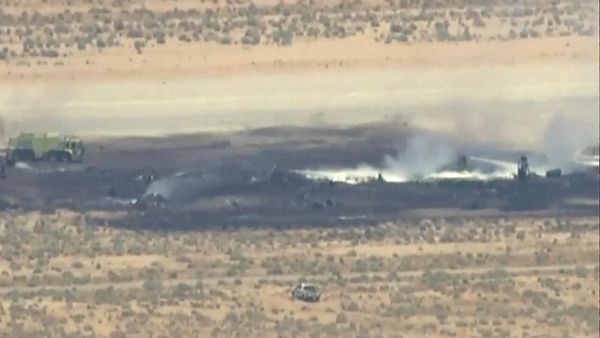
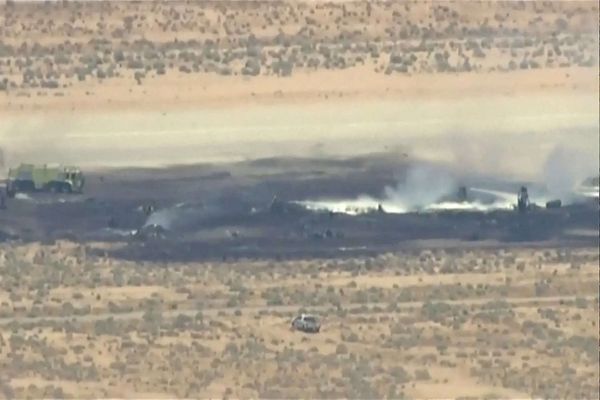
Clue: Charred legs
How to enter: Email your guess along with your name and address to tym@iinet.net.au. The first correct email received after 10am, Saturday June 13wins a double pass to Dendy, the Home of Quality Cinema.

Last week: Congratulations to Glenn Schwinghamer of Kambah who was first to identify last week's photo as curtains at Albert Hall. Glenn just beat several other readers to the prize, including Kerry Boden of Palmerston whose mother "grew up in Canberra and would go along with her sisters to the weekly dances at the hall". Several other readers, including Geoffrey McDougall of O'Connor and Tony Corp of Curtin, pointed out the clue (Doc Evatt was here) was a reference to Dr H.V. Evatt, who, as leader of the opposition, appeared before The Royal Commission at Albert Hall in 1954 on espionage charges.

I've been swamped by photographs of your favourite mountain huts and will share a selection over coming weeks. First up is Teddys Hut, located in the remote Pilot Wilderness Area of Kosciuszko National Park, near the headwaters of the Thredbo River. Teddys was nominated by high-country historian Matthew Higgins who was recently appointed a Member of the Order of Australia (AM) in the 2026 Kings Birthday Honours list "for significant service to heritage conservation, and to the environment". I'm sure those who know Matthew will agree that at the top of his valuable contributions to our community is his extensive documentation and continued celebration of our high-country history.

"I first visited Teddys Hut in 1987 when writing a booklet about the 1940s hut for the Kosciuszko Huts Association," he reports. "Visits were made winter and summer, after I'd interviewed two of the hut's builders, brothers Noel and Dave Pendergast, and Ian McGufficke, son of the third builder, Teddy, after whom the hut is named."
According to Matthew: "Teddys is one of the highest stockmen's huts in Kosciuszko and in a good year a ski trip to the now restored slab hut is always a wonderful experience. With views north-east to Drift Hill, and steep slopes rising north-west to Paddy Rushs Bogong, this little shelter in the wilderness south of Thredbo is always attractive. Whispers of its history accompany me on my journeys there."
CONTACT TIM: Email: tym@iinet.net.au or Twitter: @TimYowie or write c/- The Canberra Times, GPO Box 606, Civic, ACT, 2601