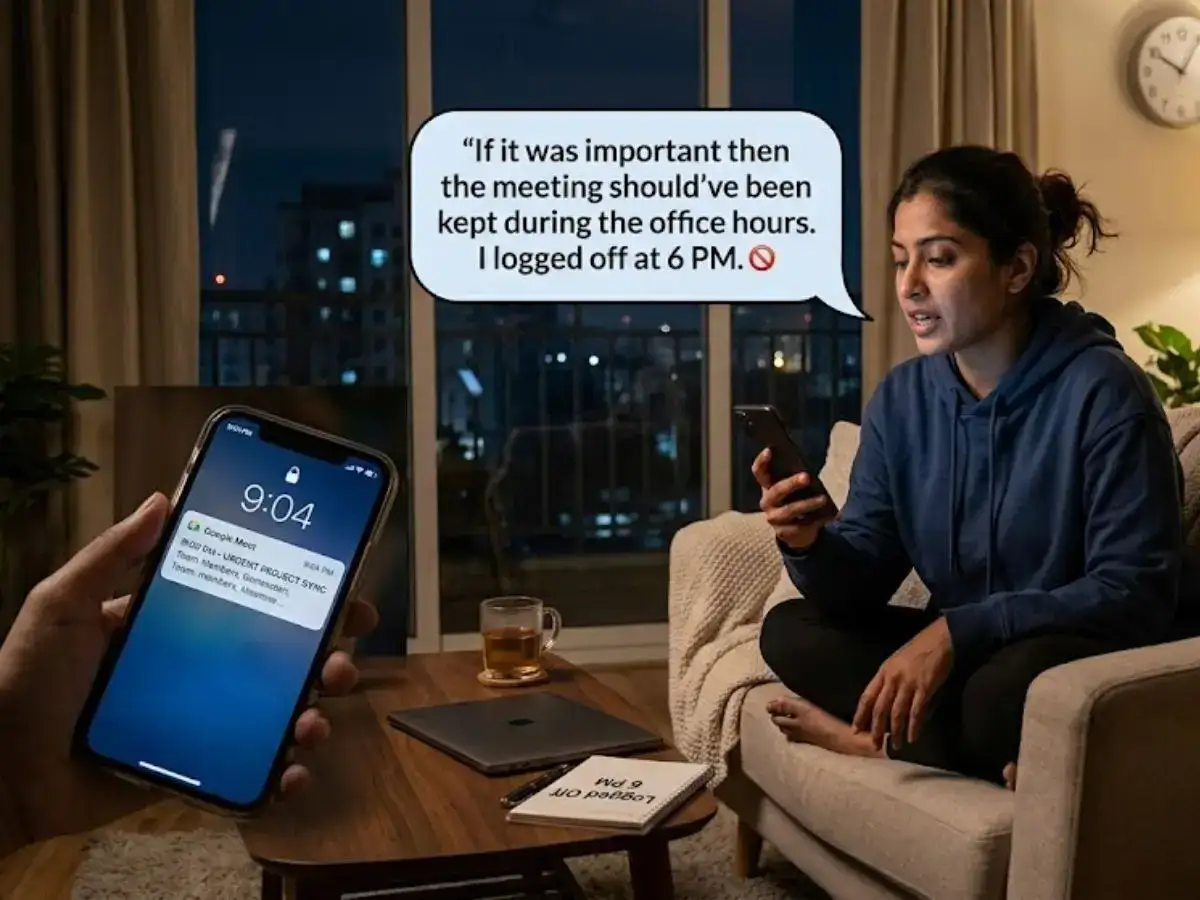
A LinkedIn post about a Gen Z employee declining to attend a 9 PM meeting has triggered widespread discussion on workplace expectations, work-life balance and employee availability beyond official working hours.
Shared by Sanchit Goyal, the post recounted how a young employee refused to join a late-night meeting, arguing that if the discussion was genuinely important, it should have been scheduled during office hours.
Employee cites work-life balance concerns
According to Goyal, the employee was invited by her manager to attend a meeting at 9 PM. When informed that the discussion was important, she reportedly responded that important meetings should take place during regular working hours.
The manager then noted that other team members had joined the call. In response, the employee reportedly said those colleagues were already experiencing burnout and that she did not want to reach the same stage.
When the meeting was described as "just one meeting", she disagreed, stating that burnout often begins with small exceptions that gradually become normalised.
The employee logged off at 6 PM and did not participate in the meeting.
Sharing the incident, Goyal wrote that it is better to establish boundaries before burnout occurs rather than after.
Post resonates with professionals
The post struck a chord with many professionals who have experienced work extending beyond official hours. Several users viewed the employee's response as reflective of a growing preference among younger workers to maintain a healthier balance between professional and personal life.
Many commenters argued that setting limits on after-hours work can help prevent exhaustion and support long-term productivity.
Mixed reactions online
The incident generated a range of opinions from LinkedIn users.
One commenter said healthy boundaries help prevent burnout, while employee ownership drives results. The user added that the best workplaces are those where after-hours work remains an exception rather than an expectation and where both employees and leaders respect each other's time.
Another commenter agreed on the importance of boundaries but argued that the manner in which they are communicated also matters. The user said there is a fine line between protecting personal well-being and appearing unsupportive to management.
Several users strongly backed the employee's decision. One commenter described the response of asking for important meetings to be scheduled during work hours as simple but unusually bold in some workplace environments.
Another user said healthy boundaries should not be viewed as a lack of commitment and can contribute to sustainable long-term performance.
Debate over career impact and workplace culture
Not everyone supported the employee's stance. One commenter suggested the decision could affect future promotion prospects, describing it as a short-term win that may carry long-term career consequences.
Others viewed the incident as evidence of a broader cultural shift in modern workplaces. Some users argued that Gen Z employees are reshaping workplace norms and expectations regarding personal time and professional commitments.
The discussion has reignited debate over whether employees should remain available after working hours or whether disconnecting on time is the most effective way to avoid burnout.
Disclaimer: This article is based on claims, statements, images, videos and other information shared by users on social media platforms. The Economic Times has not independently verified the authenticity, accuracy or completeness of these claims unless expressly stated otherwise. The views, allegations and assertions contained in the social media content are those of the respective users and do not reflect the views of The Economic Times. The publication bears no responsibility for the accuracy of such claims and readers are advised to exercise their own judgment and seek independent verification where necessary.