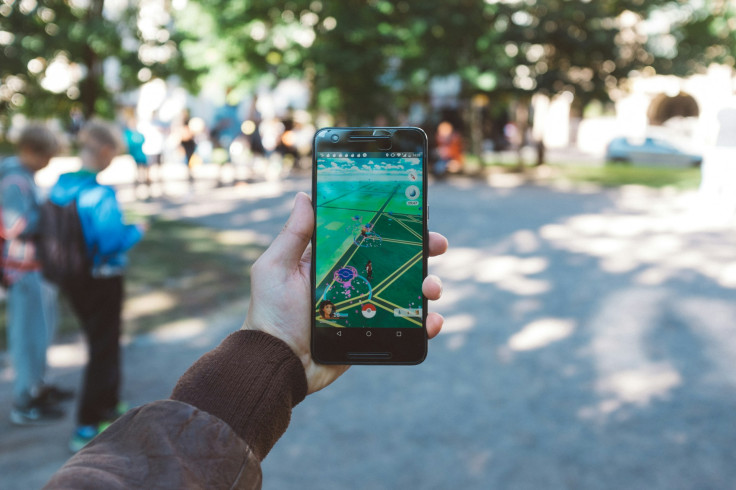
Data collected from Pokémon Go players has been used to train artificial intelligence models that could eventually assist military drones operating in areas where GPS signals are unavailable.
The revelation has raised questions about how information gathered through consumer technology can later be applied in entirely different fields. Pokémon Go became a global phenomenon after its launch in 2016, encouraging players to explore real-world locations and capture virtual creatures through their smartphones.
Years later, some of the location-based data that players voluntarily submitted has become part of a technology pipeline with potential military applications. While the companies involved insist that no Pokémon Go scans were directly shared with military-focused partners, the historical data was used to train AI systems designed to understand and interpret physical environments. Critics argue that the development highlights the growing gap between what users believe they are consenting to and how their data may ultimately be used.
How Pokémon Go Scans Became Part Of AI Development
Pokémon Go's popularity extended far beyond gaming, with the company reporting more than 800 million downloads worldwide by 2018. In 2021, the game introduced a feature that allowed players to scan real-world locations through their mobile devices. These scans were tied to Pokéstops, which rewarded users with in-game benefits for uploading recordings of physical spaces.
The feature required users to opt in before participating. The scans collected through the game were gathered by Niantic, the company behind Pokémon Go, before it sold its gaming division in 2025.
According to reports first highlighted by DroneXL, those historical scans later became part of the training data used for Niantic's AI models. The goal of the technology was to help AI systems recognise and interpret real-world environments more effectively.
The development gained additional attention after Niantic Spatial, a spin-off company created from Niantic, announced a partnership with Vantor in December. Vantor specialises in spatial detection software for drones, including systems used by some military organisations.
The partnership focuses on helping drones navigate accurately when GPS signals are unavailable or compromised. In announcing the agreement, the companies pointed to challenges such as GPS spoofing, interference, and jamming.
'The partnership addresses a critical vulnerability in modern operations: GPS unavailability, spoofing, interference, and jamming,' the announcement stated.
'When satellite signals are compromised, autonomous systems and field teams lose their ability to orient, coordinate or maintain accurate situational awareness.'
Vantor chief product officer Peter Wilczynski also discussed the value of the collaboration during a December interview with Tectonic Defence.
'The modern battle space is going to be complete with different systems, and you're going to want to upgrade those systems quickly, bringing new hardware online faster than new software,' he said.
Critics Raise Concerns Over Civilian Data Use
Both Niantic Spatial and Vantor have stressed that Pokémon Go ground scans were not handed over as part of their partnership. However, the companies confirmed that scans collected through the game were used to train Niantic's foundation AI models.
A spokesperson for Niantic Spatial said participation in the scanning programme had been voluntary.
'AR Scans collected through Pokémon Go were submitted voluntarily by players who opted into the feature and were subject to the applicable Terms of Service and Privacy Policy at the time,' the spokesperson said.
The companies also noted that the partnership remains in its early stages.
Despite those assurances, privacy and technology experts have expressed concern about the implications of civilian-generated data being used to support systems that may be used in military operations.
Tom Sulston, head of policy at Digital Rights Watch, argued that many users are unlikely to fully understand how their information could be used in the future.
'While they may have disclaimers in their Ts&Cs, we know that most people don't read vast legal documents when they want to play a video game,' he said.
Sulston called for stronger regulatory protections and greater focus on whether data practices genuinely serve users' interests.
'We need regulators to focus on "best interests of the user" or "fair and reasonable" tests to keep users safe from exploitation like this,' he said.
'While we're waiting for the government to catch up, it's important that we remember that "free" software services often treat the user not as a customer but as the product to be sold.'
Dr Rob Nicholls, a senior researcher associated with the University of Sydney's Centre for AI, Trust and Governance, suggested the case may represent only a small part of a much larger trend involving app-generated data.
'We have already seen that Strava data has been used to identify the location of military facilities,' he said.
'Indeed, directives not to use devices with GPS and sharing have come from a number of different militaries.'
The story also comes against the backdrop of major business deals involving the companies. Vantor announced a deal with the US Army worth up to approximately £160 million for training software in February. Separately, Niantic sold its video game division to Saudi Arabian-owned Scopely for approximately £2.58 billion in 2025.
While the companies involved maintain that no Pokémon Go scans were directly provided to military partners, the case has renewed debate about how data collected for entertainment purposes can later be used in technologies with far-reaching applications.