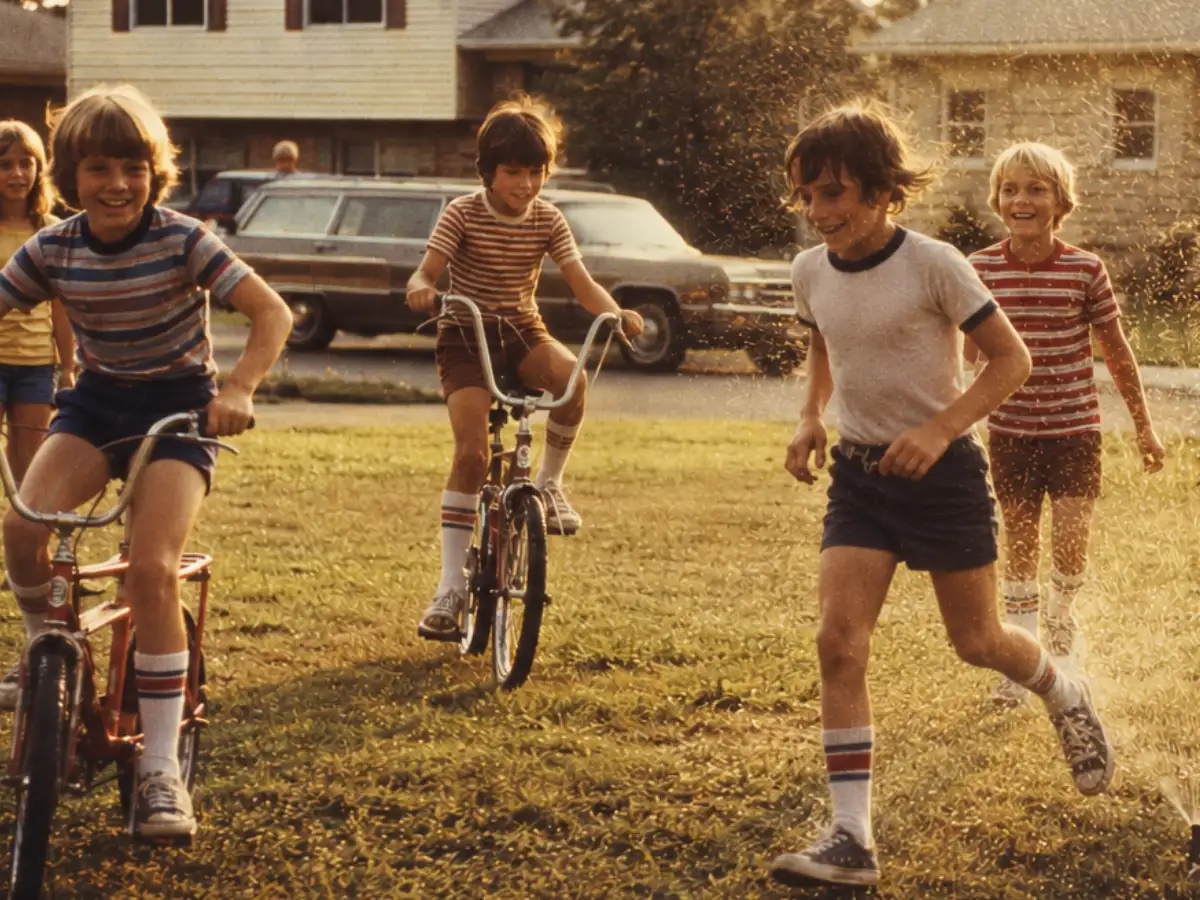
If you grew up in the 1970s or earlier, you probably remember summer as one long, shapeless stretch of nothing. There were no camps, no extra classes, no color-coded chart on the fridge. Just mornings that started with “go outside” and ended with someone yelling dinner was ready.
To a modern parent staring at that picture, that could be a red flag, months of unsupervised time with no plan attached. But the American Academy of Pediatrics says newer research has provided stronger evidence of the critical importance of play in facilitating parent engagement and promoting safe, stable, and nurturing relationships. In other words, that “wasted” summer may have been doing more for kids than any jam-packed schedule could ever do.
Today's kids get a packed calendar; you got an empty one
The modern American summer isn’t the one many millennials grew up with. It’s usually a lineup of camps, lessons, and programs to keep kids busy and supervised, and to build a resume, even before they get to middle school. That’s not parents being overprotective; that’s what two incomes, safety issues, and a more competitive culture have bred.
But the empty summer had something the busy one didn’t: total responsibility for one’s own time. No activity arrived at ten, and no pickup arrived at three: just you, the house, the yard, hours to fill.
So you filled them in. Couch cushion forts. Digging projects in the backyard for no real reason. Games in which the rules took longer to argue than to play.