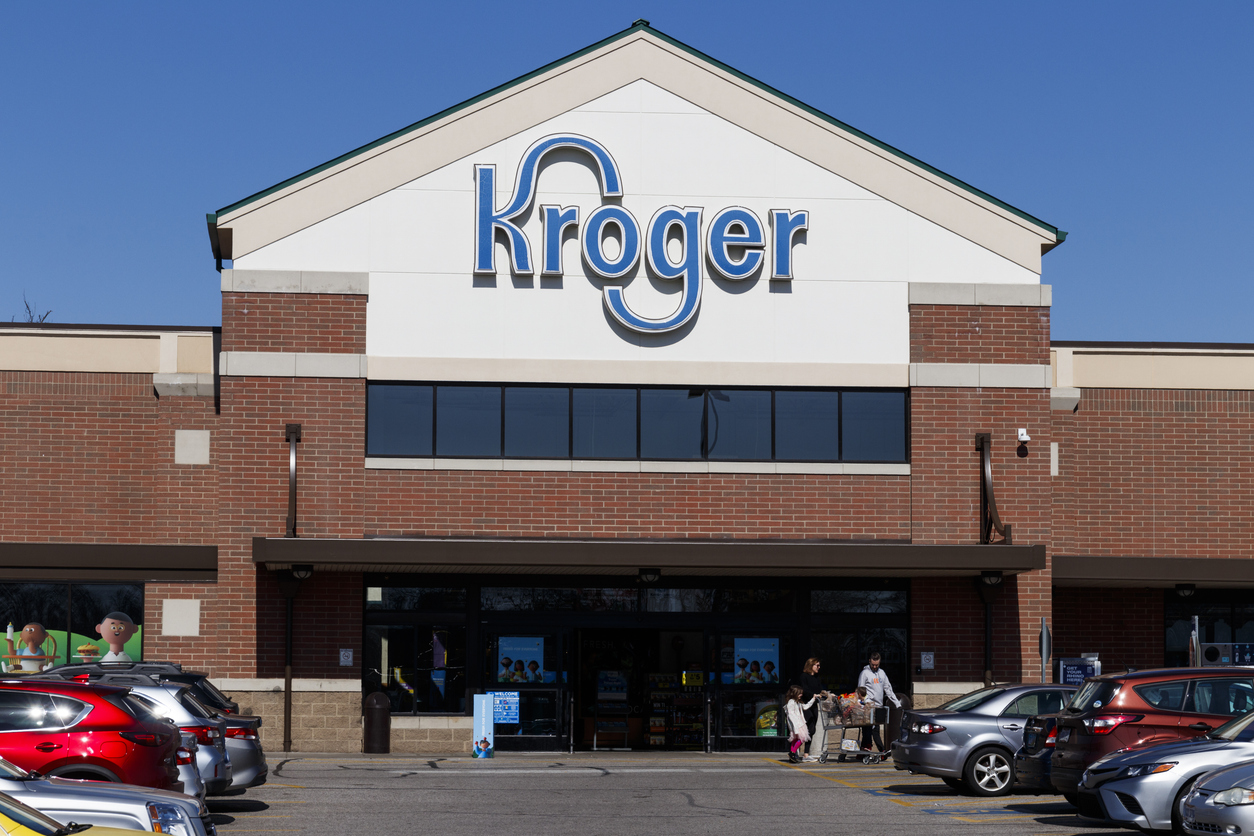
Cincinnati, Ohio-based The Kroger Co. (KR) operates as a food and drug retailer in the United States. Valued at a market capitalization of $38.6 billion, the company operates a combination of food and drug stores, multi-department stores, marketplace stores, and price-impact warehouses, which offer products ranging from natural foods, general merchandise, pharmaceuticals, organic produce, home fashion and furnishings, and more.
Companies with a market cap of $10 billion or more are typically referred to as “big-cap stocks.” KR fits right into that category, with its market cap exceeding this threshold, reflecting its substantial size and influence in the grocery store industry.
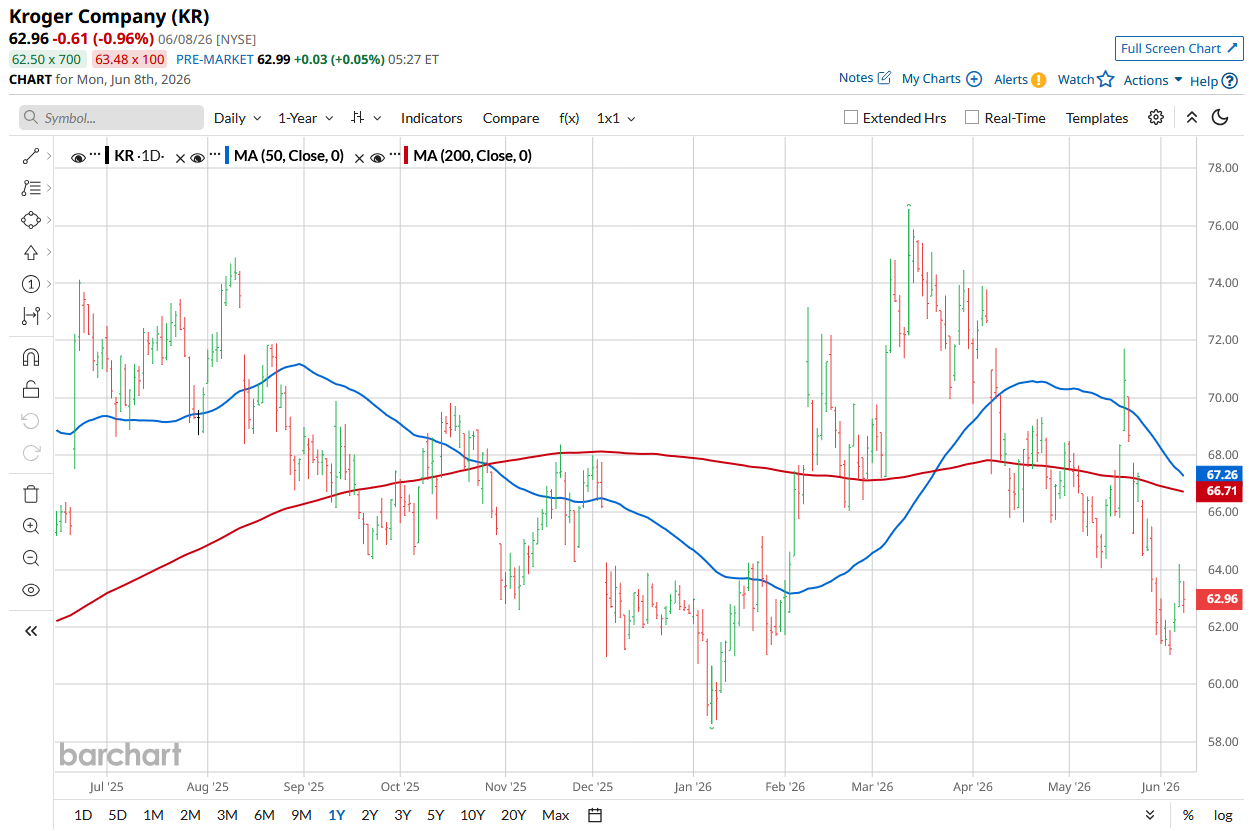
Despite its strength, KR stock slipped 17.8% from its 52-week high of $76.58, reached on Mar. 12. The stock is down 15.1% over the past three months, underperforming the S&P 500 Index’s ($SPX) 9.9% rise during the same time frame.
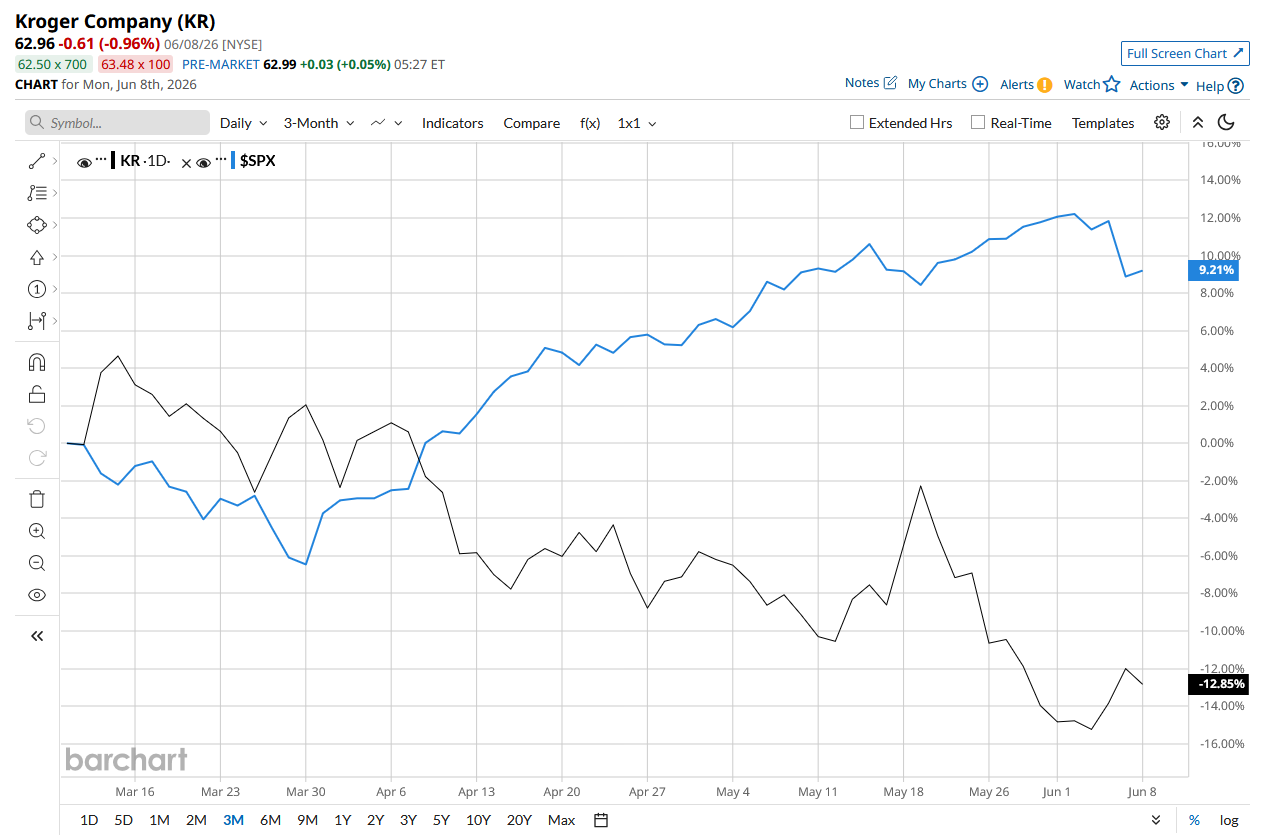
Moreover, KR has lagged behind the broader market over the longer term. The stock has declined 4.8% over the past 52 weeks, while SPX delivered 23.4% returns over the same time frame.
KR has been trading below its 200- and 50-day moving averages since the end of May.
On Mar. 5, KR shares rose 5.3% following the release of its mixed Q4 2025 earnings. The company’s sales increased 1.2% year-over-year to $34.7 billion, but failed to touch the Street’s estimates. However, its adjusted EPS for the quarter amounted to $1.28, which successfully exceeded Wall Street estimates.
When stacked against its peer, Albertsons Companies, Inc. (ACI), KR has outperformed. Over the past year, ACI stock has declined 24.7%.
Wall Street has a somewhat optimistic view of the stock currently. Among the 22 analysts tracking KR, the overall consensus stands at a “Moderate Buy.” Its mean price target of $76.65 suggests 21.7% upside potential from current price levels.