

FirstEnergy Corp. (FE), headquartered in Akron, Ohio, generates, transmits, and distributes electricity as well as explores, produces, and distributes natural gas. Valued at $27.2 billion by market cap, the company owns and operates coal-fired, nuclear, hydroelectric, wind, and solar power generating facilities, and provides energy management and other energy related services.
Companies worth $10 billion or more are generally described as “large-cap stocks,” and FE perfectly fits that description, with its market cap exceeding this mark, underscoring its size, influence, and dominance within the utilities - regulated electric industry. FirstEnergy's diversified presence in regulated and competitive markets balances its revenue streams.
Despite its notable strength, FE slipped 10.1% from its 52-week high of $52.34, achieved on Apr. 9. Over the past three months, FE stock has declined 7.5%, underperforming the Dow Jones Industrials Average’s ($DOWI) 9.7% gains during the same time frame.
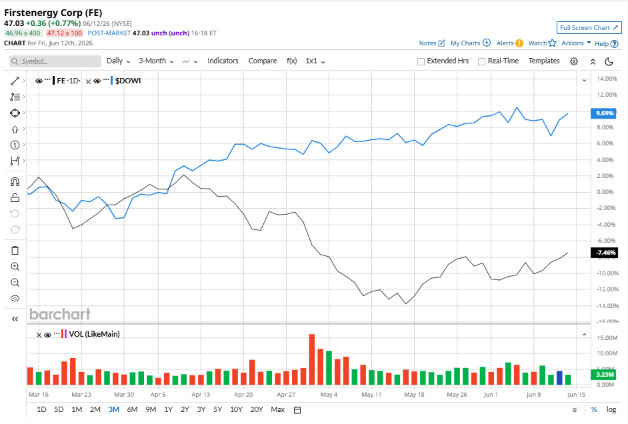
Shares of FE rose 5.1% on a YTD basis and climbed 15.6% over the past 52 weeks, underperforming DOWI’s YTD gains of 6.5% and 19.2% returns over the last year.
To confirm the bearish trend, FE has been trading below its 50-day moving average since mid-April. However, the stock is trading above its 200-day moving average recently.
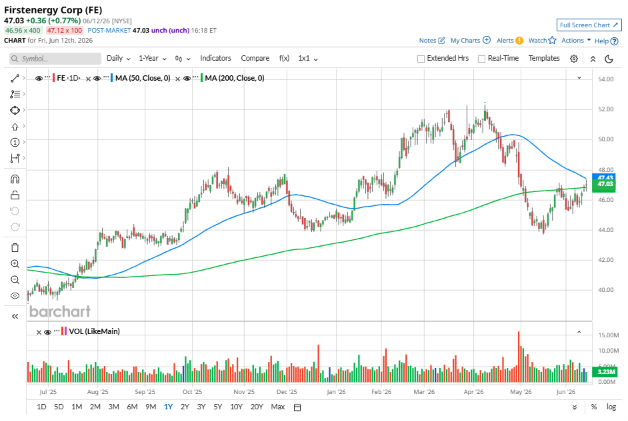
On Apr. 28, FE shares closed up marginally after reporting its Q1 results. Its adjusted EPS of $0.72 matched Wall Street expectations. The company’s revenue was $4.2 billion, exceeding Wall Street forecasts of $3.9 billion. FE expects full-year adjusted EPS in the range of $2.62 to $2.82.
In the competitive arena of utilities - regulated electric, Duke Energy Corporation (DUK) has taken the lead over FE, showing resilience with a 6.6% gain on a YTD basis, but lagged behind the stock with a 6.6% uptick over the past 52 weeks.
Wall Street analysts are moderately bullish on FE’s prospects. The stock has a consensus “Moderate Buy” rating from the 17 analysts covering it, and the mean price target of $52.67 suggests a potential upside of 12% from current price levels.