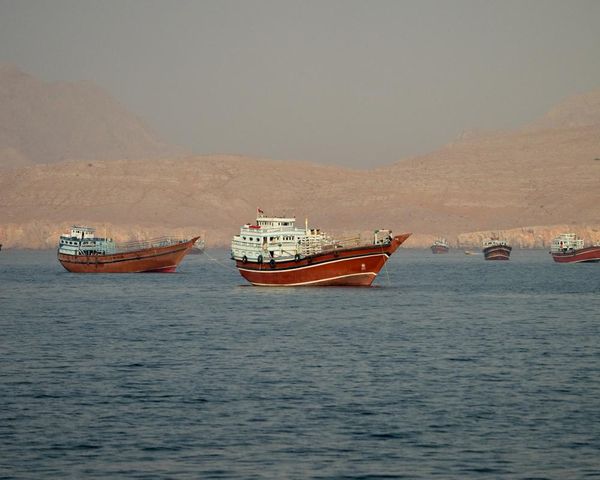
Iran told mediators on Wednesday that it will limit transit through the Strait of Hormuz to a dozen ships a day and charge them fees, a departure from announcements made by U.S. officials following the ceasefire agreement on Tuesday night.
The Wall Street Journal noted that the ships selected to go through the key waterway will need to coordinate with the Islamic Revolutionary Guard Corps (IRGC).
It is the latest of several such claims made by Tehran, which contradict remarks from U.S. officials about the strait being open after the announced deal.
The ceasefire appears to be in shaky grounds, with different sides claiming different conditions to uphold it.
Earlier on Wednesday, the speaker of the Iranian Parliament, Mohammad Baqer Qalibaf, said the ceasefire with the U.S. has been violated in three different ways since its announcement and cast doubt on negotiations with Washington.
In a social media publication, Qalibaf rejected remarks by Trump and U.S. officials, who said Iran's demands in private negotiations were different than those stated publicly.
He claimed that the 10 points outlined are indeed what it requires to end the war, and three of them have been violated.
The first one is an end to Israeli attacks in Lebanon, something Qalibaf said was included in the agreement announced by Pakistani Prime Minister Shehbaz Sharif.
Both the U.S. and Israel rejected the notion that the ceasefire involves Lebanon, with President Donald Trump saying on Wednesday it is a "different skirmish."
The second point mentioned by Qalibaf is "the entry of an intruding drone into Iran airspace, which was destroyed in the city of Lar in Fars Province, in clear violation of the clause prohibiting any further violation of Iran airspace."
And the third one involved alleged demands by Tehran of the recognition of its right to continue enriching uranium, something rejected by other parties.
"Now, the very "workable basis on which to negotiate" has been openly and clearly violated, even before the negotiations began. In such situation, a bilateral ceasefire or negotiations is unreasonable," he concluded.
Several countries in the Gulf have reported sustaining Iranian attacks, with Saudi Arabia reporting a hit to its key East-West pipeline, which transports about seven million barrels a day.