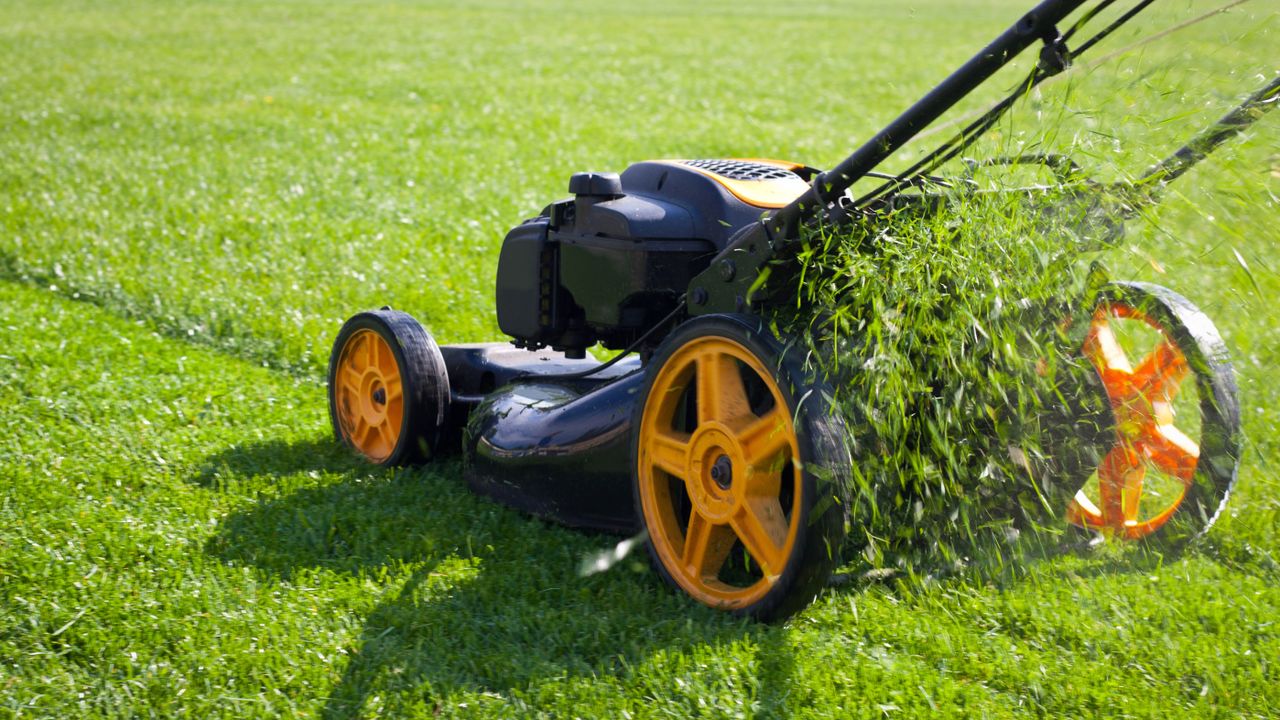
Dull mower blades are the most overlooked cause of an unhealthy lawn. Instead of cutting grass cleanly, dull blades tear and shred grass blades, leaving ragged edges that turn brown, invite disease, and stress roots.
Sharp mower blades can make all the difference between a pristine lawn and a damaged one. Sharpening your lawn mower blades takes about 30 minutes, requires no professional help, and saves you money on premature blade replacements.
Whether you're using a metal file or an angle grinder, this step-by-step guide covers exactly how to sharpen your mower blade safely, at the right angle, and correctly balanced, so your grass stays healthy all season long.
1) Prepare your mower for blade removal

Before you sharpen lawn mower blades, safety comes first. Disconnect power immediately. Electric mowers should be unplugged with the battery removed completely.
For gas mowers, disconnect the spark plug wire to prevent accidental starting. To prevent gas spills, either drain the tank or place a piece of plastic wrap under the gas cap and screw it back on tightly to seal the vent hole.
Carefully tip the mower onto its side, keeping the air filter and carburetor facing up to stop oil and gas from leaking into the engine. Before removing the blade, mark it with spray paint or a marker so you know which side faces downward.
Installing a mower blade upside-down means it simply won't cut, which is a frustrating mistake that's easy to avoid.
2) Remove and inspect the blade
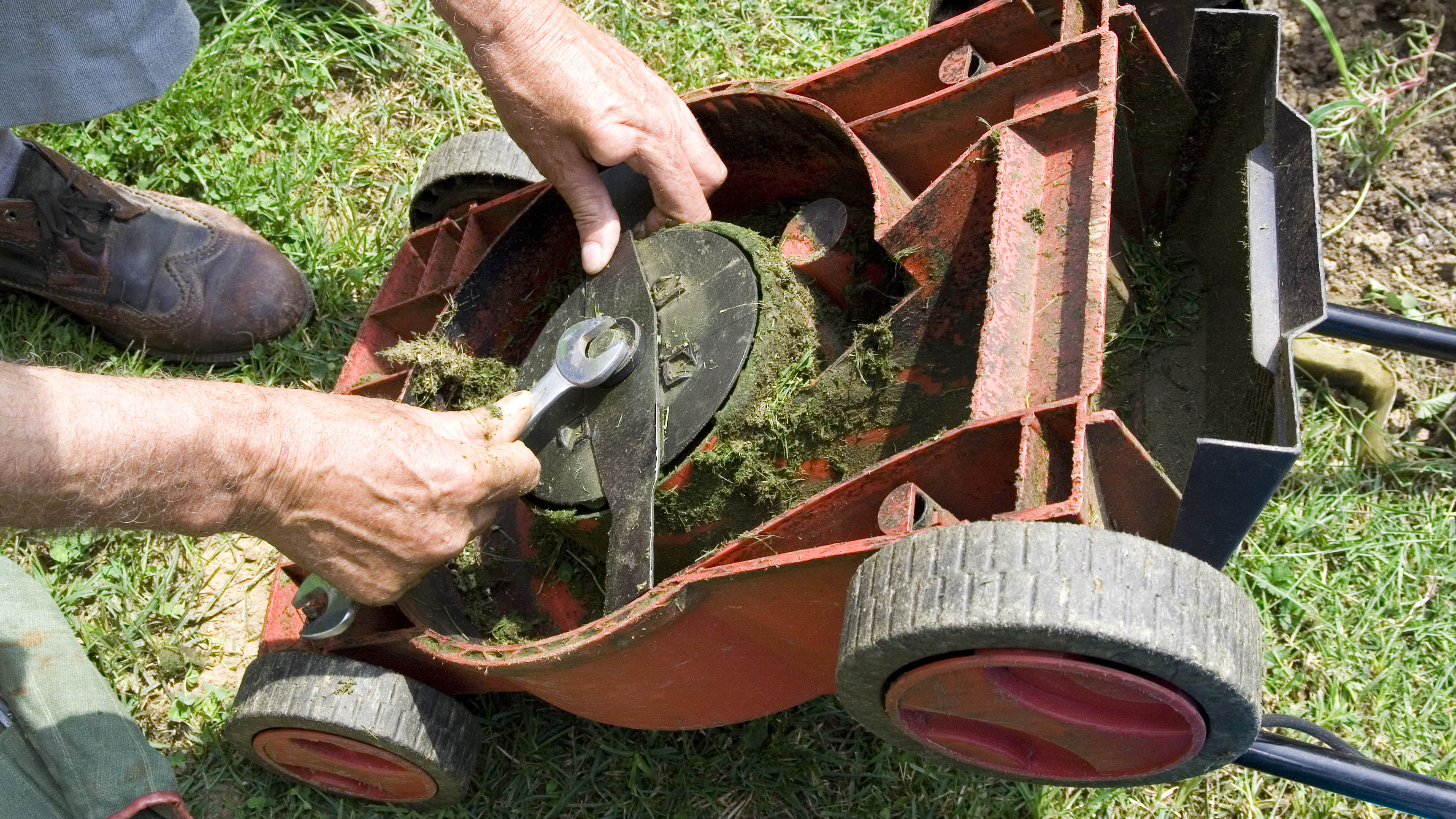
Use a wrench to loosen and remove the bolt or nut, keeping the fastener somewhere safe. With the blade off, take the opportunity to clean any grass buildup from inside the mower deck while you have clear access.
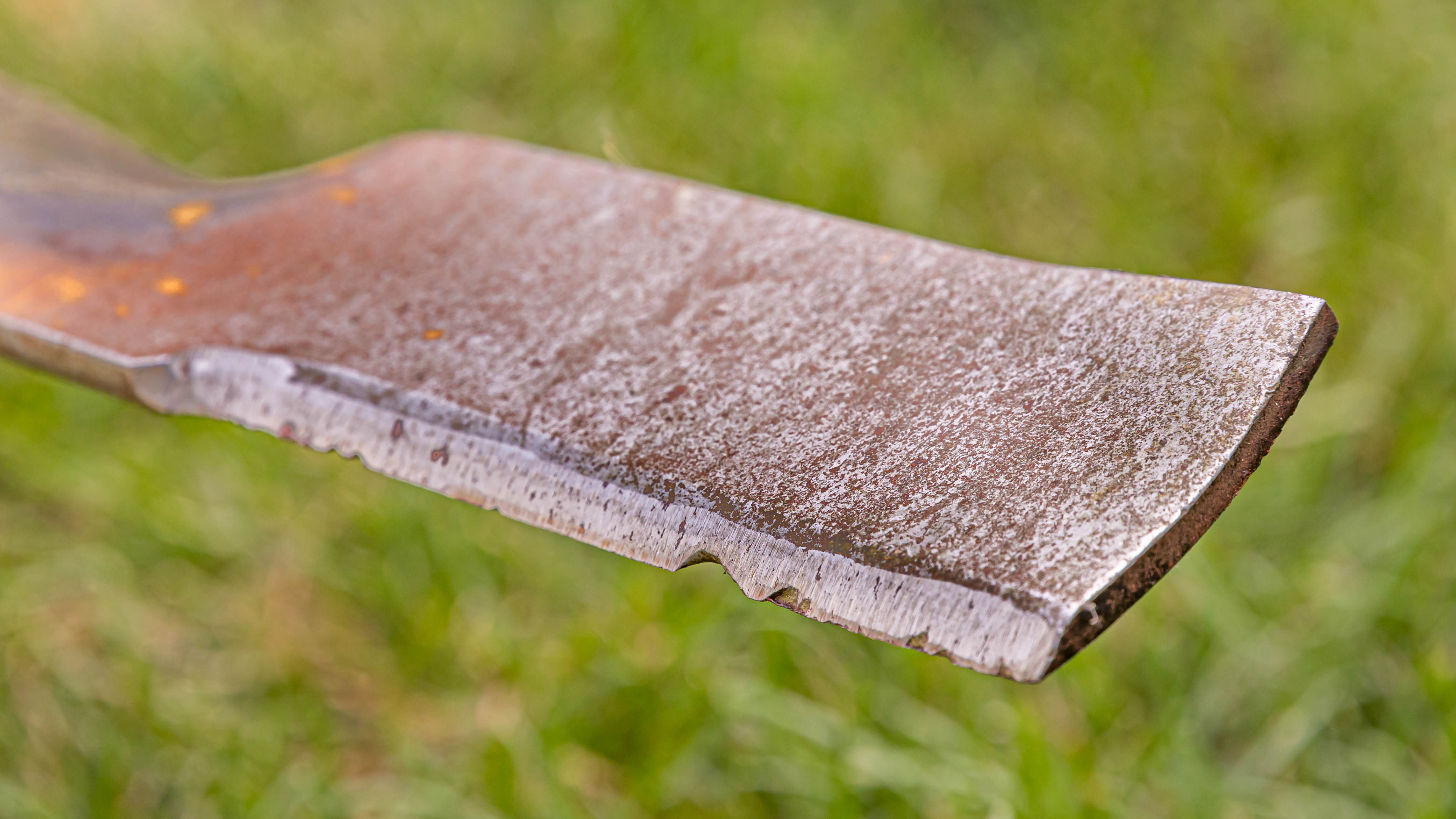
Wipe the blade clean and inspect it carefully. Small nicks and dull edges are entirely fixable through sharpening. Deep cracks, large dents, or severe bends are a different story. Structural damage like that means the blade needs replacing, not sharpening.
3) Sharpen the mower blade at the right angle
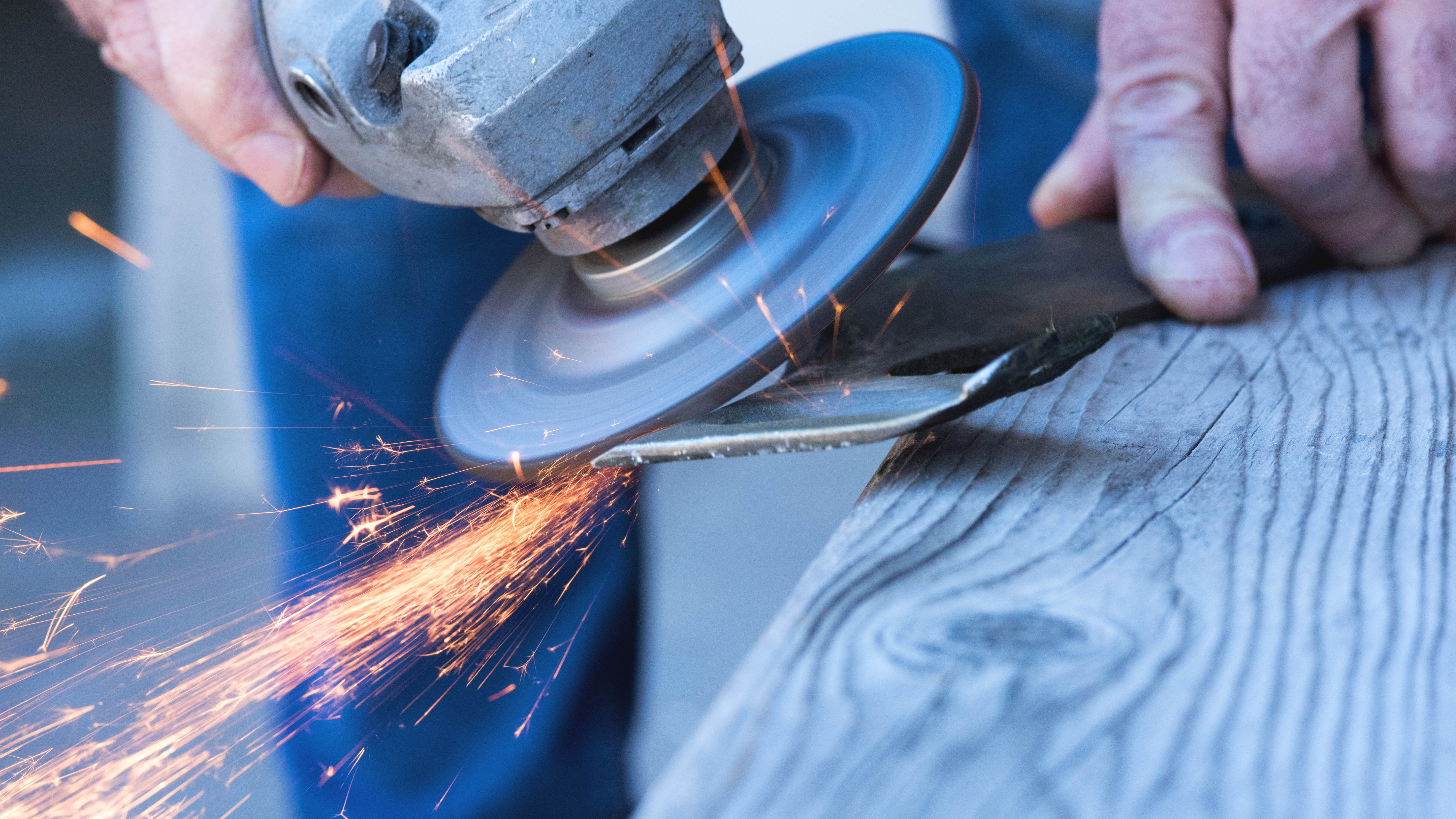
The correct angle to sharpen a mower blade is 30 to 35 degrees, matching the manufacturer's original factory bevel. Getting this angle wrong is where most people's results fall short; a steeper angle will chop rather than cut, while a shallower angle will dull instantly.
Clamp the blade in a vise with one cutting edge facing up. A metal file held at 30 degrees, pushed away from your body in smooth, consistent strokes, is the most controlled method and ideal if you haven't done this before. Around 50 strokes per edge is usually enough. The goal is "butter knife sharp."
An angle grinder gets the job done faster and works just as well in experienced hands. The main thing to watch is heat. Use light pressure and take frequent breaks to let the metal air-cool.
Never dip a hot blade into cold water, as this can quench-harden the steel unevenly, making it brittle and prone to shattering. Whichever method you use, sharpen one edge fully before flipping the blade and repeating on the other side. Expect around 15 minutes of sharpening time either way.
4) Check and correct blade balance
Skipping the balance check is one of the most common mower blade mistakes. An unbalanced blade vibrates excessively, and over time that vibration wears out the engine and spindle bearing.
Rest the blade horizontally on a nail or screwdriver through the center hole. If one side dips, that side is heavier and needs more metal removed. Go back to sharpening and take a little more off the heavy side until the blade sits level.
A dedicated blade balancer tool, inexpensive and available at most hardware stores, gives a more precise result.
5) Reinstall and test your sharpened blade
Using your earlier markings, verify the blade is facing the correct direction before reinstalling. Tighten the bolt or nut securely to the manufacturer's torque specifications.
Remove the plastic wrap from the gas cap if you used it, reconnect the spark plug wire, and do a test cut on a small patch of grass.
A properly sharpened blade cuts cleanly with no tearing or ragged edges. If the quality is still poor after sharpening, remove the blade and sharpen more aggressively, or consider whether replacement is the better call.
How often should I sharpen my lawn mower blade?
Sharpen your lawn mower blades after every 25 hours of mowing, which is roughly twice per season for regular users.
Beyond the schedule, torn or ragged grass edges after cutting, a lawn that yellows a day or two after mowing, or visible nicks on the blade are all signs it needs attention sooner. Hitting a rock, stick, or hard object while mowing warrants an immediate inspection too.
Always sharpen before storing your mower for winter. It prevents corrosion and means the mower is ready to go the moment spring arrives.
Not every dull blade is worth sharpening. Cracks or fractures anywhere on the blade, a severe bend that sharpening won't correct, or metal worn so thin from repeated sharpening that it won't hold an edge — these are all signs replacement is the right move.