Increasing distance is a goal for many amateur golfers, perhaps because the data tells us that hitting the golf ball farther is one of the most effective ways to cut your handicap in 2026.
However, adding distance off the tee is not a straightforward task. The best driving tips can help, of course, but there is also a key movement that golfers need to make that is linked to increased power and boosted clubhead speed.
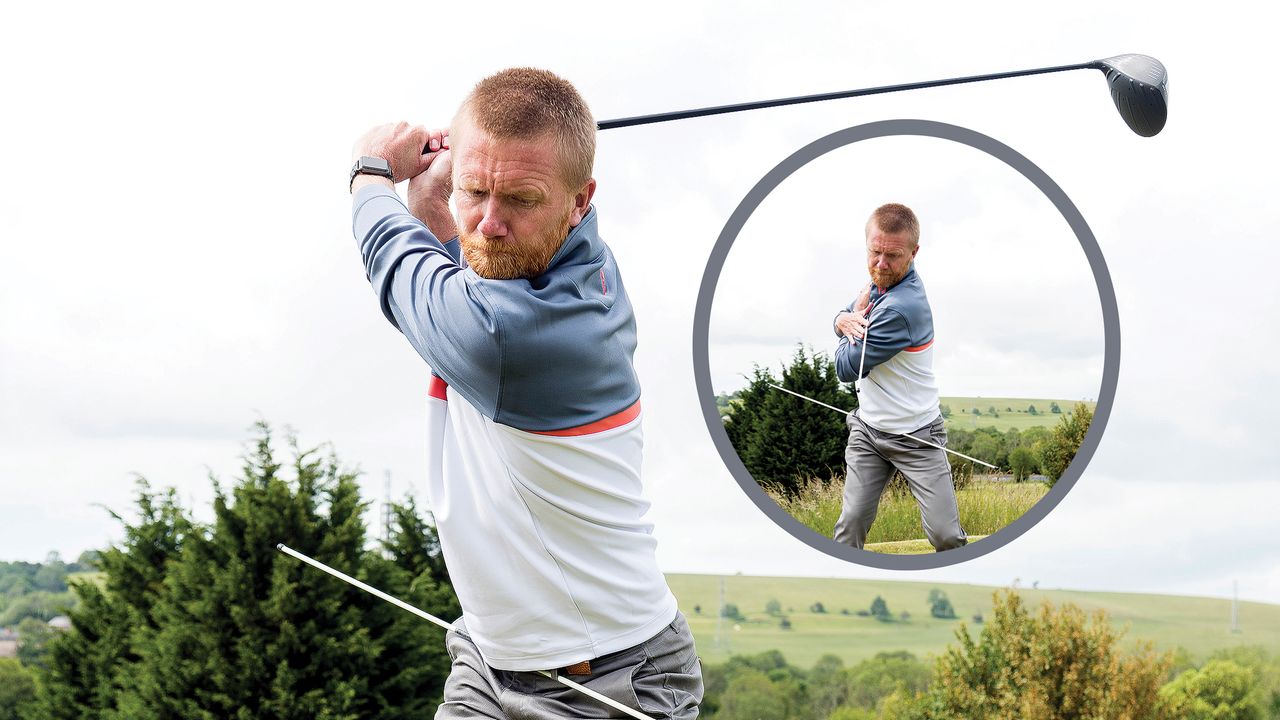
Coiling in the backswing is crucial for generating energy to then release it in the downswing - and any golfer can learn how to do it.
If you can master this you are on the path to unlocking huge distance gains, so we asked Top 50 Coach and PGA professional Andrew Jones to break it all down for you.
Below, Andrew uses decades of experience to boil down a complex topic into simple and actionable tips that will make a difference to your game right now...
How To Coil In The Backswing For Huge Distance Gains In 2026
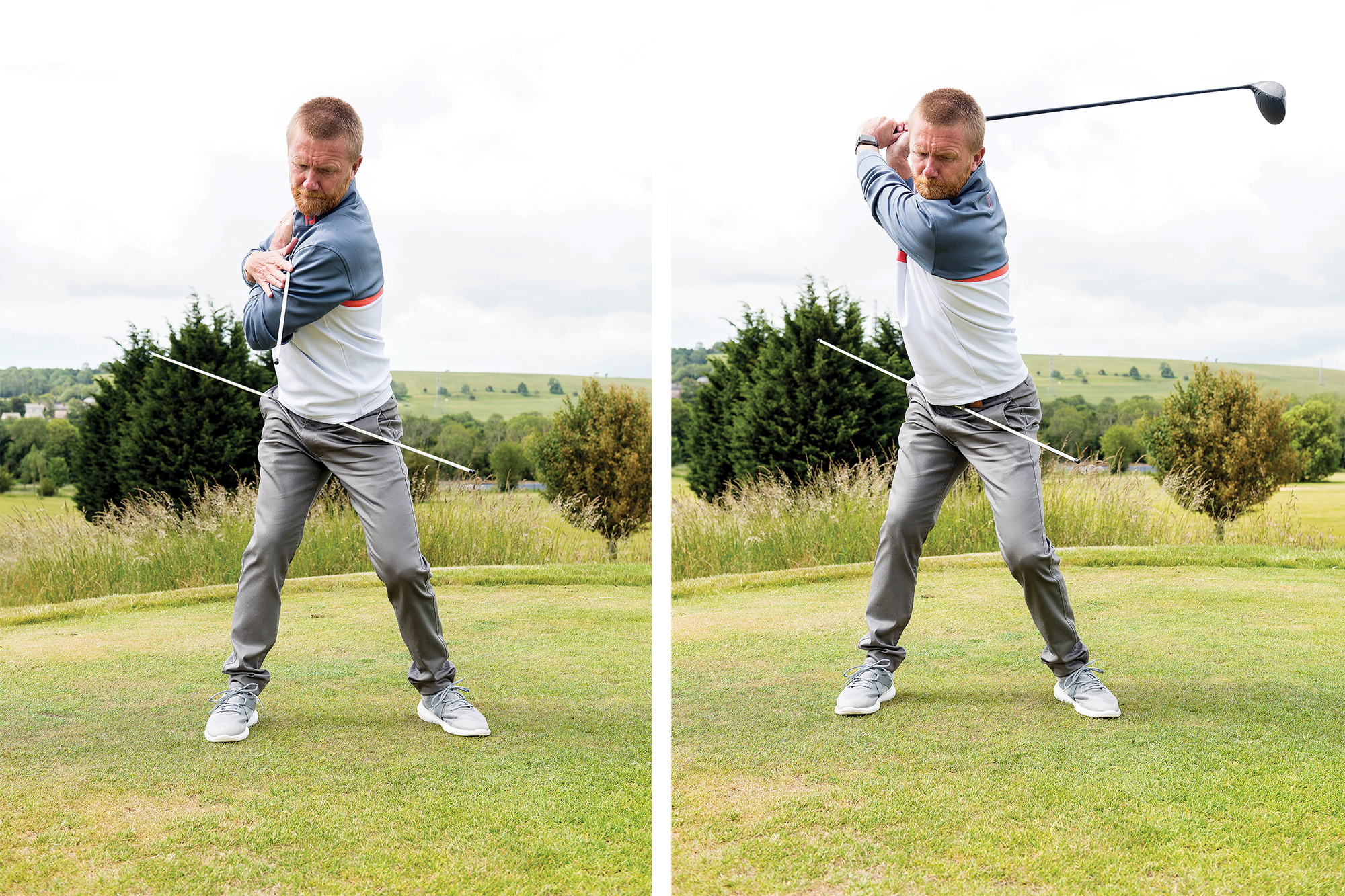
To coil effectively, there has to be resistance. First, you need a nice stable base to turn from, then it’s about resistance between your shoulder and hip turn, represented by the two alignment sticks in the image above.
As you turn, you’re looking for a ballpark figure of about 45° rotation in the hips and around 90° of rotation in the shoulders.
Another key to coiling and storing power is keeping the right leg braced and loaded. Straightening it as you turn back can be a real power leak.
You will create resistance by keeping the right leg flexed to turn against in the backswing. This restricts hip rotation to help create the difference between shoulder and hip turn, which generates coil and power.
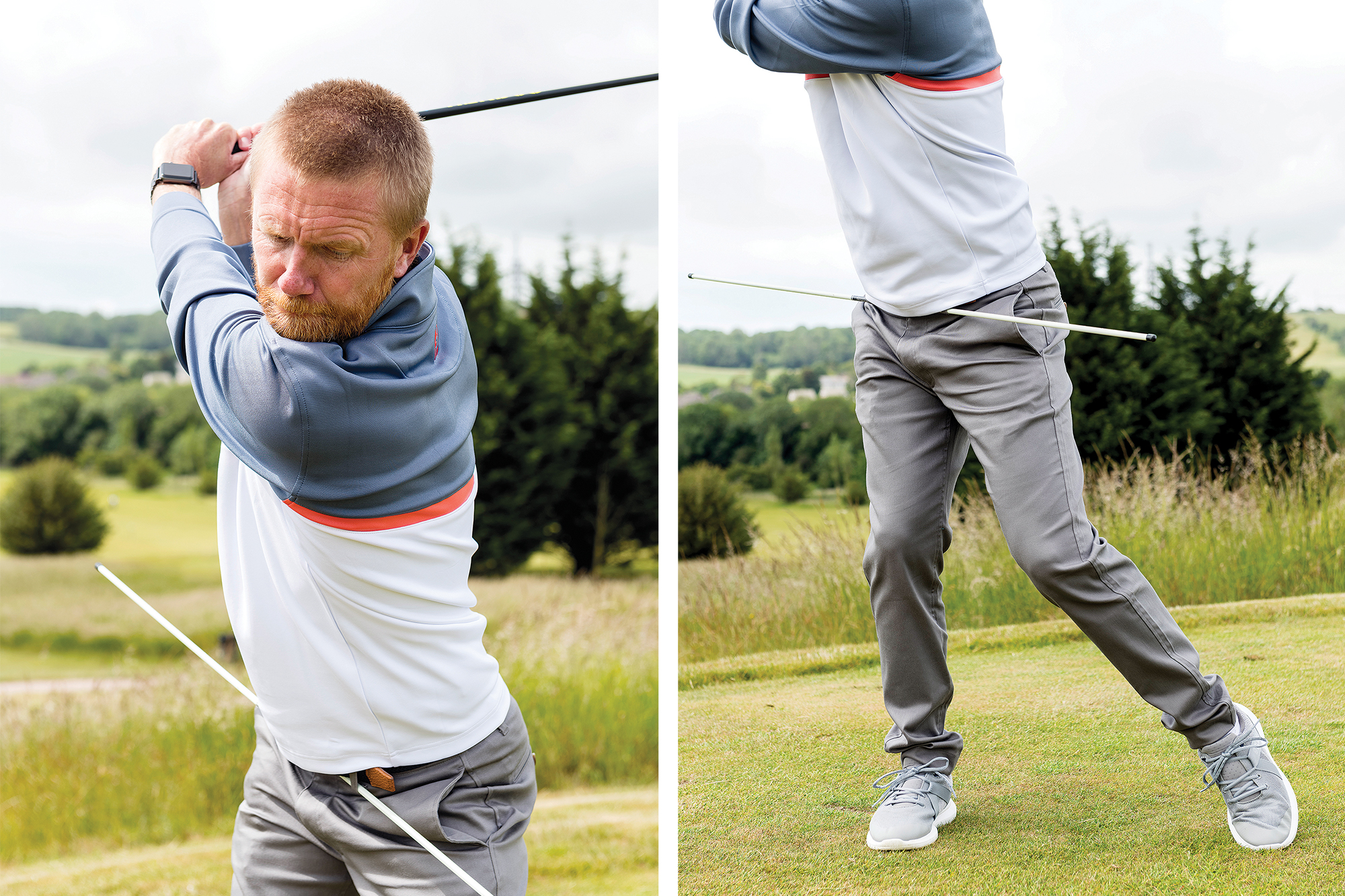
Your arms are important, too. The triceps in your left arm should be nicely loaded at the top.
Another power leak is allowing the left arm to bend or collapse so you lose that tension.
It’s important to retain that left arm tension by maintaining a straight left arm as you rotate back, as your muscles will then be ready to contract and unwind to release all that stored energy back into the ball.
A very big shoulder turn isn’t necessarily a sign of power. If there’s no resistance, perhaps as a result of the left leg coming off the ground too much and the left knee moving across too far, you could turn beyond 90° but generate little coil and power.
Jon Rahm is a great example of a shorter but really powerful and loaded-up backswing.
Remember, we’re not all made the same and some of us are more flexible than others. Take care not to try and find positions beyond your body’s range of movement.