Homeowners are being warned about the dangers of using a common kitchen cleaning staple on their wooden floors. If used incorrectly, it could damage the surface.
White vinegar is highly regarded as a cheap, eco-friendly cleaning solution, but a flooring specialist warns it can gradually strip protective finishes, leaving surfaces dull, worn and more vulnerable to long-term damage.
White vinegar is too acidic
According to Barry Darragh, director at block wood flooring specialists Wooden Floors, the issue often comes down to well-intentioned cleaning habits that aren’t suitable for sealed timber surfaces.
“White vinegar has become one of those household ‘fix-all’ products people reach for without really thinking about the material they’re using it on.
“The problem is that wooden floors aren’t designed to be cleaned with acidic solutions. Over time, it can break down the protective layer that keeps the wood sealed and looking its best,” he says.
White vinegar could be doing more harm than good
Vinegar is a popular eco-friendly, budget-friendly cleaning solution that we often recommend at Tom’s Guide for cleaning appliances and preventing pests. Some homeowners also dilute it with water and apply it directly to wooden floors, but don’t realize the damage it can cause until it’s too late.
“It’s not something that causes instant damage in most cases. It’s more of a slow build-up, “ says Darragh, “The finish starts to look patchy, the floor loses its shine, and in some cases it can make the surface more prone to marking.”
And he adds that the biggest problem is misinformation online about what is safe for different types of flooring.
“People are trying to do the right thing by using natural products, but wood is a living material with protective coatings. It needs care that’s designed for it,” he adds.
The hidden cost of using white vinegar on wooden floors
While white vinegar is a cheap cleaning staple, the long-term costs can be significantly higher if the floors need repairing or replacing.
“In some cases, if the protective seal has been worn away, you’re looking at professional refinishing work or even replacement if it’s severe. That’s where costs can quickly add up into the hundreds or even thousands, depending on the size of the space and the condition of the floor,” he warns.
How to clean your floors without using white vinegar
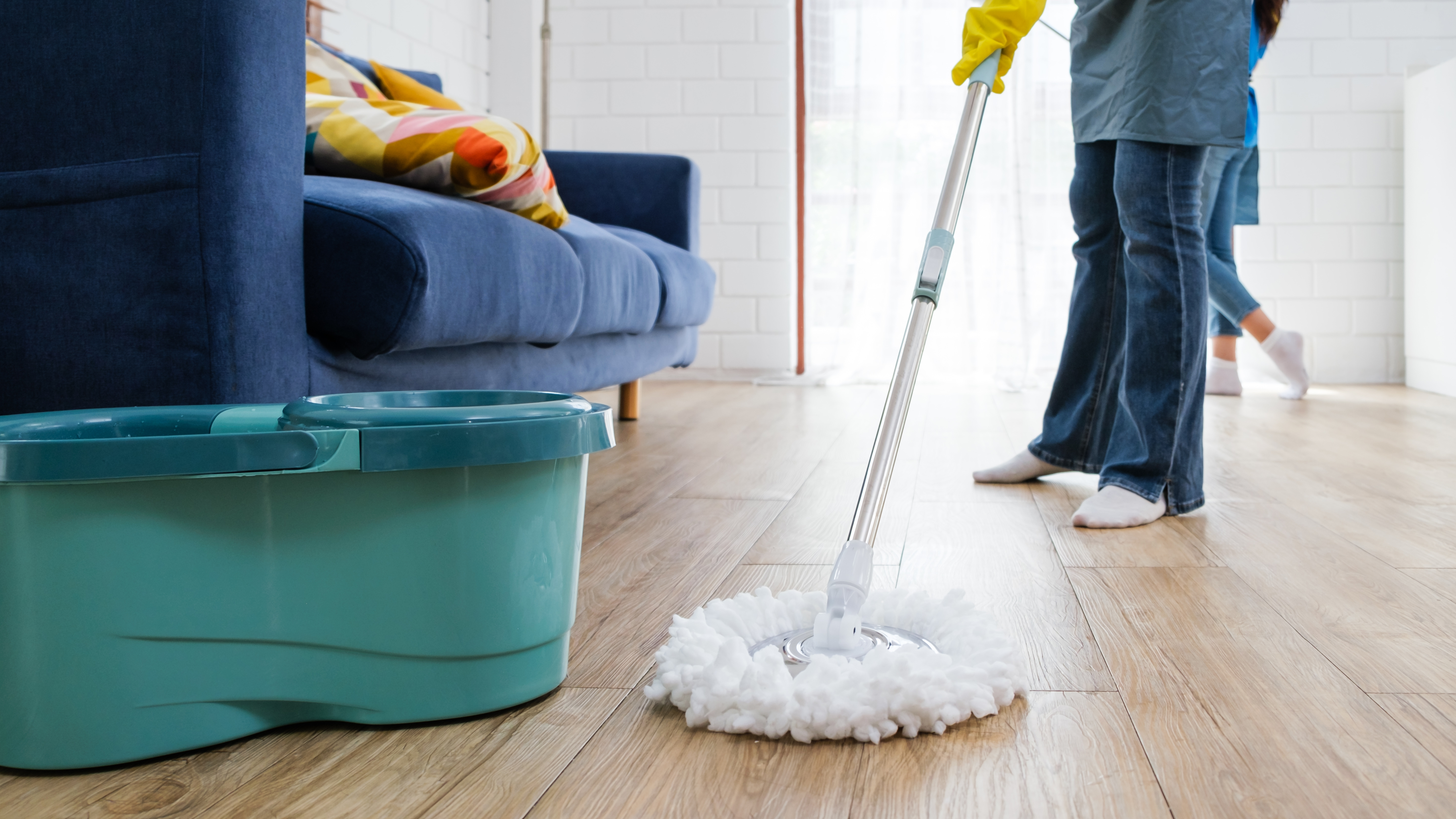
Darragh warns against using acidic or abrasive solutions on wooden flooring, and instead says, “a slightly damp mop and warm water is usually all you need for regular cleaning.”
And when the floors need a deeper clean, he suggests adding a tiny drop of mild dish soap into a bucket of water to help lift the dirt without harming the finish in the way vinegar can.
“It doesn’t need to be complicated. The key is being gentle and consistent rather than using strong household products that weren’t designed for the job, ” he adds.