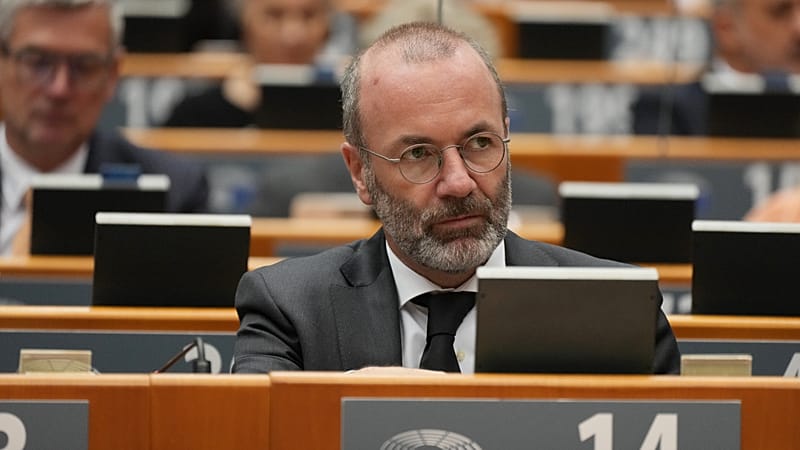
"Europe needs to open a new chapter regarding its relationship with China," warned Manfred Weber, head of the European People's Party in the European Parliament, in remarks to Bild am Sonntag.
"The era of naivety is over," he said, urging the bloc to defend its economic interests more clearly and consistently and to reset its relationship with China.
Ahead of the EU summit on 18 June, several member states, led by France, are pressing for a firmer line on Beijing, warning that Chinese overproduction and low-priced exports are undercutting an already fragile European economy.
Think tanks, politicians, and the media have all been sounding the alarm on a looming EU-China trade war. On May 29, the European Commission said in a press release that while China is a critical partner, "the current state of the trade and investment relationship is not sustainable."
EU Trade Commissioner Maroš Šefčovič affirmed this notion after meeting with his Chinese counterpart, trade envoy Li Chenggang, in Paris on Thursday. He told reporters that EU and Chinese authorities will engage in deeper dialogue to resolve "what is becoming an unsustainable trade deficit with China."
Weber echoed this sentiment, telling Bild that the trade deficit of "almost one billion euros per day” is jeopardizing Europe's industrial base and high-quality jobs. "Either we fight back, or China will cripple parts of our industry. The EU must now use its trade policy instruments decisively and without hesitation.”
He cited EU tariffs on Chinese electric vehicles as an example of the kind of tools Brussels should be prepared to use more broadly and maybe even expand.
He also addressed emerging criticism over EU funds indirectly benefiting Chinese firms. One recent case involved EU-backed development aid used to procure 380 natural gas buses for Senegal, where a lower-cost Chinese bid prevailed over a European competitor.
He insisted this must not happen again: "European development aid funded by taxpayers must not benefit Chinese companies." He added that in the future, "anyone wishing to sell in Europe must play by European rules."
A tougher trade stance, however, carries potential downsides. Beijing could retaliate by restricting exports of critical materials such as rare earths, posing risks for European manufacturing, particularly in Germany. Existing trade agreements with partners, including Canada, Mercosur countries, and India, may not fully offset such disruptions.
Weber maintains that Europe holds significant leverage, stressing that access to the single market remains vital for China. “China needs us,” he said, arguing that this dependency should be used to ensure fair competition.