California health officials have detected evidence of measles in routine wastewater testing, raising fresh concerns as the state experiences its largest outbreak of the highly contagious disease in seven years, reports The New York Post.
The discovery was reported by the Merced County Department of Public Health. While no confirmed measles cases have been identified in the county so far, officials say the finding could signal undetected community transmission.
The development comes as California's confirmed measles cases have risen to 74 across seven counties, significantly higher than the 25 cases reported during all of 2025.
ALSO READ: James “Weston” Higginbotham case update
Why health officials are concerned
Measles is often described as one of the world's most contagious diseases. According to health authorities, a single infected person can spread the virus to up to nine out of 10 unvaccinated people in an enclosed space.
The virus can also remain suspended in the air for up to two hours after an infected individual leaves an area, allowing others to become infected even without direct contact.
California Public Health Officer Dr. Erica Pan highlighted the seriousness of the situation.
"The United States is experiencing the highest numbers of measles cases, outbreaks, hospitalizations and deaths in more than 30 years, driven by populations with low vaccination rates."
Most infections linked to low vaccination rates
Public health data shows that approximately 96% of infected individuals were either unvaccinated or had an unknown vaccination status.
Although California maintains an overall kindergarten vaccination rate of about 95% — a level generally associated with herd immunity — experts warn that clusters of unvaccinated individuals can still create conditions for outbreaks.
Officials say these immunity gaps are allowing the virus to spread despite strong statewide vaccination coverage.
What is measles?
Measles, also known as rubeola, is a highly contagious viral infection that spreads through respiratory droplets released when an infected person coughs, sneezes, or talks. The virus can also survive on surfaces and in the air for extended periods.
While many patients recover within about 10 days, measles can lead to serious complications, particularly in young children, pregnant women, and people with weakened immune systems.
Symptoms of measles
Symptoms typically appear seven to 14 days after exposure to the virus, according to Mayo Clinic. Early signs include:
High fever
Dry cough
Runny nose
Red, watery eyes
Tiny white spots inside the mouth, known as Koplik spots
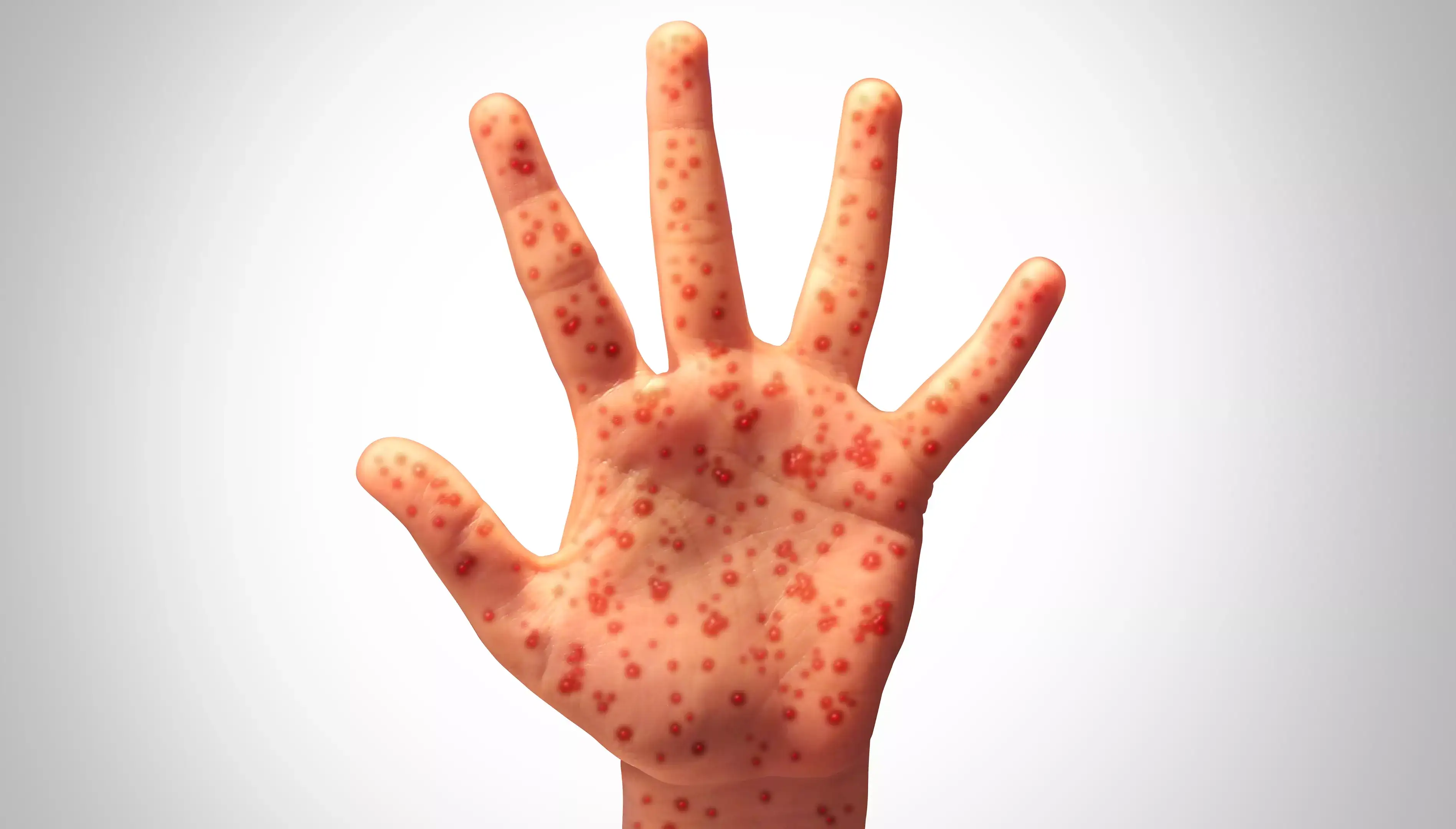
A few days later, a distinctive rash usually develops on the face and neck before spreading across the body.
How does measles spread?
The virus spreads extremely easily through the air. According to medical experts, about 90% of unvaccinated people exposed to someone with measles will become infected.
People with measles can transmit the virus from four days before the rash appears until four days afterward, making outbreaks difficult to contain.
Experts warn against misinformation
Health officials are also battling a surge of misinformation surrounding measles prevention and treatment.
During previous outbreaks, poison control centers reported increased calls involving children exposed to supplements promoted online as alternatives to vaccination.
Experts emphasize that vitamin A supplements and cod liver oil do not prevent measles and should not be viewed as substitutes for the MMR (measles, mumps, and rubella) vaccine.
While high-dose vitamin A may sometimes be used under medical supervision to manage complications in severely deficient children, unsupervised use can lead to toxicity and other health risks.
How can measles be prevented?
Health experts continue to stress that vaccination remains the most effective protection against measles. The MMR vaccine provides long-lasting immunity, with two doses offering protection for the vast majority of people.
Doctors also advise people to review their vaccination records, especially before international travel or during outbreaks in their community.
As California's case count continues to rise, health officials are urging residents to remain vigilant, verify their vaccination status, and rely on trusted medical guidance rather than social media claims.