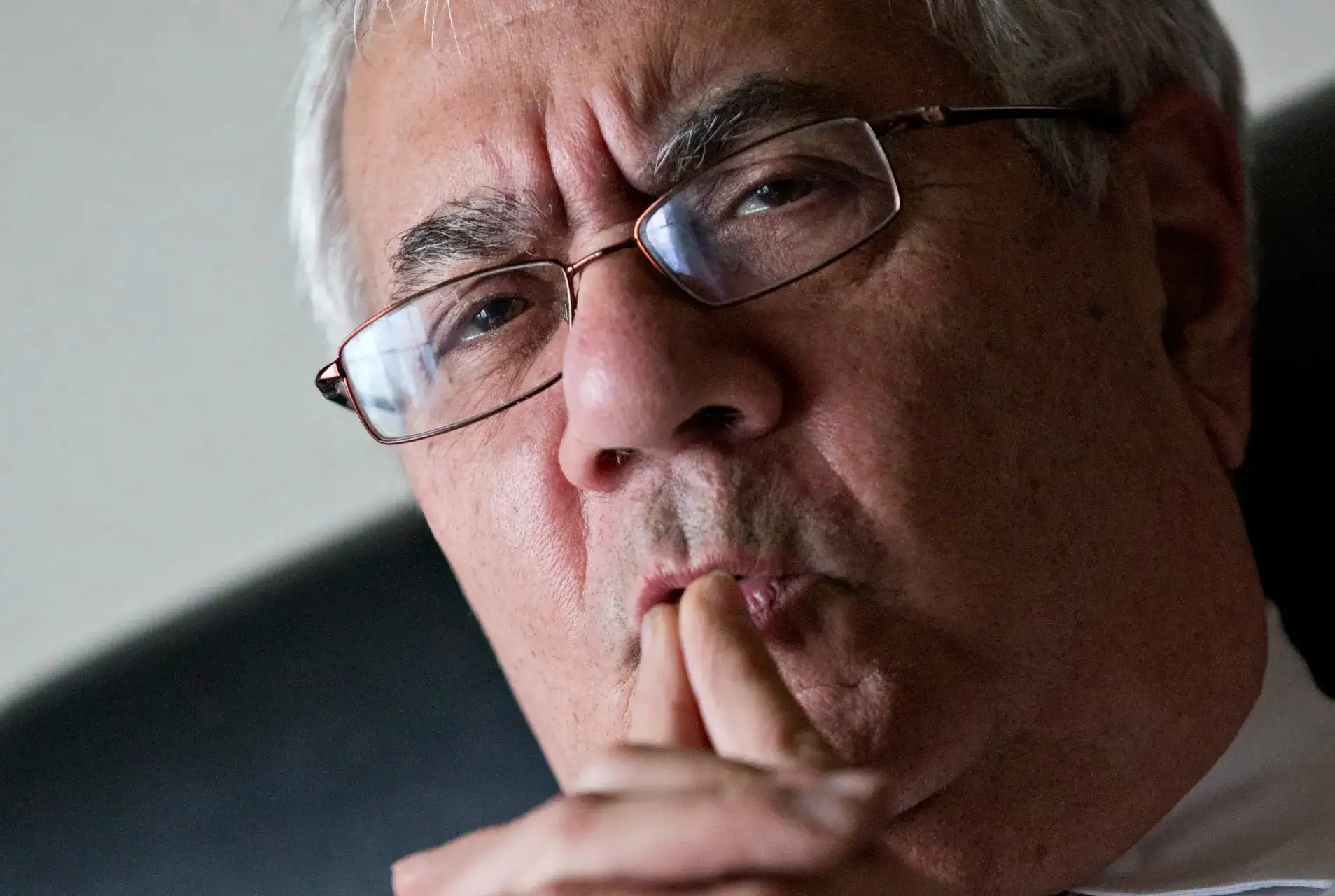
Who was Barney Frank: Barney Frank, the sharp-tongued Massachusetts congressman who spent 32 years daring America to see both its gay citizens and its banks more honestly, died Wednesday at his home in Ogunquit, Maine. He was 86. His friend James Segel confirmed the death, weeks after Frank publicly announced he had entered hospice care with congestive heart failure.
In a political era that often rewards caution and punishes candor, Barney Frank was an anomaly — a man who said exactly what he meant, meant exactly what he said, and somehow kept winning. His passing closes a chapter in American political history that touched LGBTQ rights, financial regulation, and the very idea of what an openly gay man could accomplish inside the most powerful legislature on earth.
Frank represented Massachusetts's 4th Congressional District starting in 1981, a diverse suburban Boston district that sent him back to Washington fifteen more times.
He chaired the House Financial Services Committee during the catastrophic 2008 financial meltdown and co-authored the Dodd-Frank Wall Street Reform and Consumer Protection Act with Senator Chris Dodd — the most sweeping overhaul of American financial regulation since the Great Depression. He came out voluntarily as gay in 1987, becoming the first sitting House member to do so without a scandal forcing his hand.
And in 2012, he became the first member of Congress to enter a same-sex marriage, marrying his longtime partner Jim Ready. Barney Frank did not just occupy political space. He expanded it.
Who Was Barney Frank? The Gay Pioneer Who Changed Congress and Wall Street Forever
Barnett Frank was born on March 31, 1940, in Bayonne, New Jersey, into a working-class Jewish household that taught him early that sharp thinking was its own form of armor.
He earned his bachelor's degree from Harvard in 1962, stayed on as a government instructor and doctoral student, then left academia to become chief of staff to Boston Mayor Kevin White — plunging into city politics during one of the most racially fractured periods in the city's modern history. That experience shaped him. Frank understood that the distance between prejudice and acceptance was not abstract argument. It was personal encounter. It was the living example.
When he came out to the Boston Globe in 1987 during his fourth term in Congress, he did it with a sentence that could only have come from him: "If you ask the direct question: 'Are you gay?' the answer is yes. So what?"
He had watched a closeted colleague die. He feared being outed by others. And he decided — as he would on most things — that the most effective move was complete honesty delivered without apology. "Prejudice is based on ignorance," he told the Globe years later. "And the best way to counterbalance it is with a living example, with reality." His coming out did not end his career. His constituents returned him to office again and again.
What Barney Frank proved, more than any poll or study could, was that voters could accept a gay representative. That proof mattered enormously to every openly LGBTQ candidate who came after him.
His political career did wobble in 1989 when it emerged he had paid a male escort for sex, and that the escort had later used Frank's Washington apartment to run a prostitution service. Frank acknowledged the relationship and fired the man once he learned what was happening.
The House voted 408-18 to reprimand him — but rejected the harsher censure — and Frank's constituents returned him to office in 1990 with 66 percent of the vote. The episode revealed something durable about his relationship with voters: they trusted the whole person, not just the polished version.
How Did Barney Frank Reshape Wall Street After the 2008 Financial Collapse?
Barney Frank's greatest legislative legacy was born from catastrophe. When American financial markets collapsed in 2008, dragging millions of households into foreclosure and unemployment, Frank was chair of the House Financial Services Committee — the most consequential perch in Congress for exactly this kind of crisis.
What emerged from the legislative battle that followed was the Dodd-Frank Wall Street Reform and Consumer Protection Act, signed into law by President Obama on July 21, 2010, with Frank and Senator Chris Dodd standing at his side.
The law was vast and deliberately disruptive. It created the Consumer Financial Protection Bureau, established the Financial Stability Oversight Council to monitor systemic risk, imposed new capital requirements on large banks, and tried to end the era of institutions too interconnected to be allowed to fail.
Dodd-Frank drew criticism from both directions — progressives argued it did not go far enough in breaking up big banks, while the financial industry and Republicans called it regulatory overreach that strangled lending. Frank was unbothered. In a late interview with Politico, he said he was "very proud of Dodd-Frank," and added: "I think we have been vindicated against our critics from both the left and the right."
He also faced scrutiny for his earlier, vocal support of Fannie Mae and Freddie Mac, the government-backed mortgage giants whose near-collapse critics linked to the housing bubble. Frank acknowledged the tension but never retreated from his belief that expanding homeownership access to lower-income Americans had been worth fighting for.
His intellectual reputation inside Congress was singular. Colleagues routinely voted him the "brainiest," "funniest," and "most eloquent" member of the House. Former Speaker Nancy Pelosi, who served alongside Frank for over 25 years, told NBC News last month: "He was a real mentor to so many of us here. I learned so much."
Even in his final months, Frank was not coasting. He was writing — finishing a book titled The Hard Path to Unity: Why We Must Reform the Left to Rescue Democracy, set for publication in September, publicly criticizing the progressive left for pushing sociocultural change faster than political reality could absorb.
What Is Barney Frank's Lasting Legacy for LGBTQ Rights and American Politics?
The full arc of Barney Frank's life is almost too compressed to believe. He was born the year France fell to Nazi Germany. He entered Congress the year Reagan was inaugurated. He came out as gay when the AIDS crisis was gutting a generation and the political establishment wanted nothing to do with homosexuality.
And he lived to marry his partner under the laws of the country he helped shape — tweeting simply "#lovewins" the day the Supreme Court's Obergefell v. Hodges decision legalized same-sex marriage nationwide in 2015.
Mary Bonauto, who argued before the Supreme Court in that landmark case, said of Frank: "He was a fighter and fearless. When you look at his record more generally, you see his advocacy for people of color, women — it wasn't just gay people. He had his sharp eye on a lot of people and a lot of issues, and I think it's partly from his own journey."
Frank's 2015 autobiography, Frank: A Life in Politics from the Great Society to Same-Sex Marriage, traced that journey from Bayonne to the floor of the House — from a young man carefully concealing who he was to a congressman who made concealment itself seem like the stranger choice.
He is survived by his husband, Jim Ready. What Barney Frank leaves behind is not a monument or a museum. It is a template — for how someone can be fully themselves inside a public life, and for how that honesty, more than any strategy or poll, turns out to be the most persuasive thing of all.