The second quarter of the year has been a rocky one for aerospace and telecommunication services newcomer AST SpaceMobile (NASDAQ: ASTS).
Between a failed BlueBird satellite deployment in April and a monumental Q1 FY2026 earnings miss in May, headline risk has put considerable pressure on ASTS.
But the stock’s dramatic price swings are nothing new to shareholders. The volatile yet popular SpaceX competitor hasn’t just proven resilient; it has proven time and time again that it is capable of defying analyst ratings. Over the past month, the stock has gained more than 37%, and since its year-to-date low on May 5, ASTS has surged nearly 66%.
Now, on the back of a proposed joint venture announcement from strategic partners AT&T (NYSE: T), T-Mobile (NASDAQ: TMUS), and Verizon (NYSE: V), the space-based cellular company is eyeing mid-June for the deployment of the next three satellites in its direct-to-device (D2D) constellation.
AST SpaceMobile’s June Launch Becomes a Key Test After BlueBird 7
Currently, AST SpaceMobile has six BlueBird satellites—the largest commercial arrays currently in low Earth orbit (LEO)—deployed. That figure should be seven, but on April 19, Blue Origin’s New Glenn rocket deposited BlueBird 7 into an altitude too low for it to sustain operations.
BlueBird 7 has since been deorbited with the cost absorbed by AST SpaceMobile’s insurers, leaving the company’s total satellites in orbit at six and sparking speculation that the Midland, Texas-based company will not be able to meet its 2026 launch target.
That goal remains lofty, with the company aiming for 45 to 60 BlueBirds in LEO by year’s end. But BlueBird 8, 9, and 10 are tentatively scheduled for June launches, which would go a long way in keeping AST SpaceMobile on track to hit its year-end target.
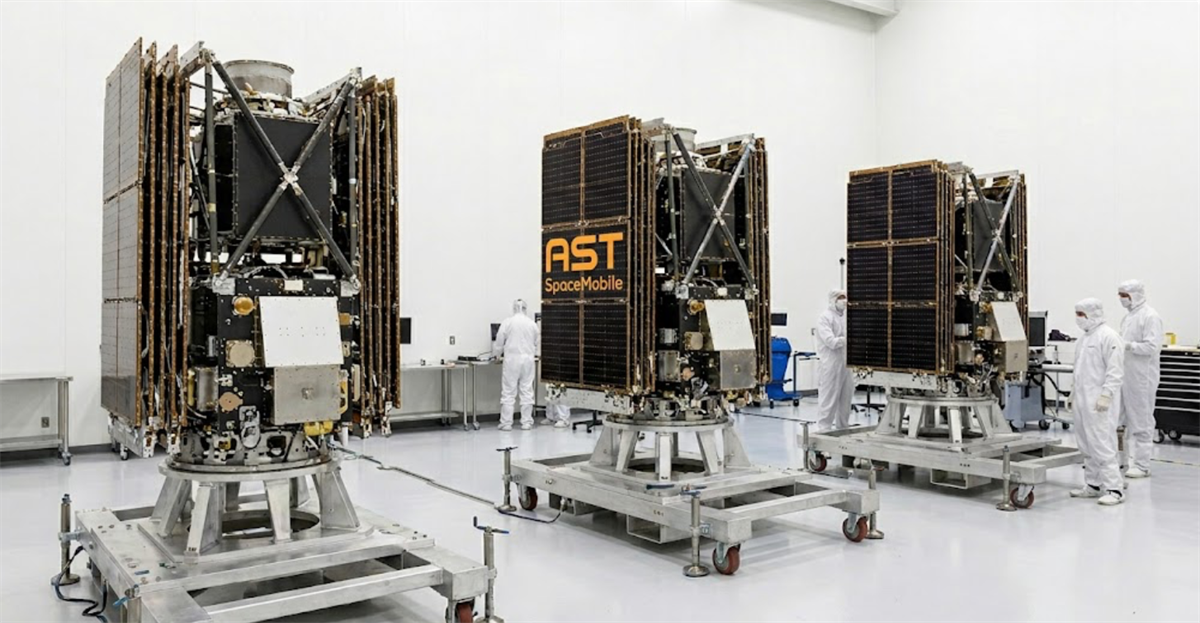
Each of the upcoming deployments is scheduled for Cape Canaveral Space Force Station, and as of late May, Bluebirds 8 and 10 have arrived in Florida/ with BlueBird 9 currently en route from Texas before all three are processed, tested, and prepped for SpaceX’s Falcon 9 encapsulation.
Can AST SpaceMobile Still Meet Its 2026 Launch Target?
While the BlueBird 7 failure was a setback for the company, William Blair analyst Louie DiPalama noted in an April research note that “the silver lining is that there was only one satellite on board, whereas future…launches may have as many as eight of AST’s BlueBirds.”
Although that capacity isn’t precisely the case for the June launches, next month’s scheduled deployments are indicative of an acceleration that could keep the company on track to reach its 2026 goal. BlueBirds 8, 9, and 10 will mark the return to multi-satellite cluster deployment for AST SpaceMobile.
That is something that could become a norm for the company rather than the exception after receiving commercial authority from the U.S. Federal Communications Commission for its constellation to provide D2D cellular broadband connectivity from space nationwide in the United States.
At the same time, AST SpaceMobile has scaled to 95% vertical integration, with its manufacturing capable of producing up to six fully assembled BlueBirds per month. That would put the firm on pace for 36 more satellites by the end of 2026, with CEO Abel Avellan reaffirming the target of 45 satellites in orbit during his Q1 earnings call comments on May 22.
Wall Street Remains Wary of AST SpaceMobile’s Short-Term Performance
In the near term, analysts forecast AST SpaceMobile for a dramatic mean reversion that could see shares correct over the next year.
The stock has an average 12 month price target that is nearly 25% lower than where it is trading at the time of writing. Meanwhile, ASTS carries a consensus Reduce rating, with only two of 11 analysts covering the stock assigning it a Buy.
However, AST SpaceMobile finds itself on firm financial footing. Despite the company’s annualized burn rate of approximately $1.45 billion, it has a cash position of around $3.5 billion, with its financial health in TradeSmith’s Green Zone, where it has been for more than 13 months.
As AST SpaceMobile looks beyond 2026 and pursues 100 BlueBirds in its satellite fleet, it is forecast to remain unprofitable until 2027 or 2028. The stock currently boasts a high beta of 2.60 and trailing 12-month earnings per share of negative $1.78.
But as its constellation of BlueBirds continues to increase, so too should AST SpaceMobile’s growth metrics. That has been illustrated by the company’s revenue over the past three quarters, during which time it has averaged $27.92 million, up from an average of just $926,666 over the three preceding quarters.
The article "AST SpaceMobile’s June Launch Plan Puts Its 2026 Satellite Goal Back in Focus" first appeared on MarketBeat.