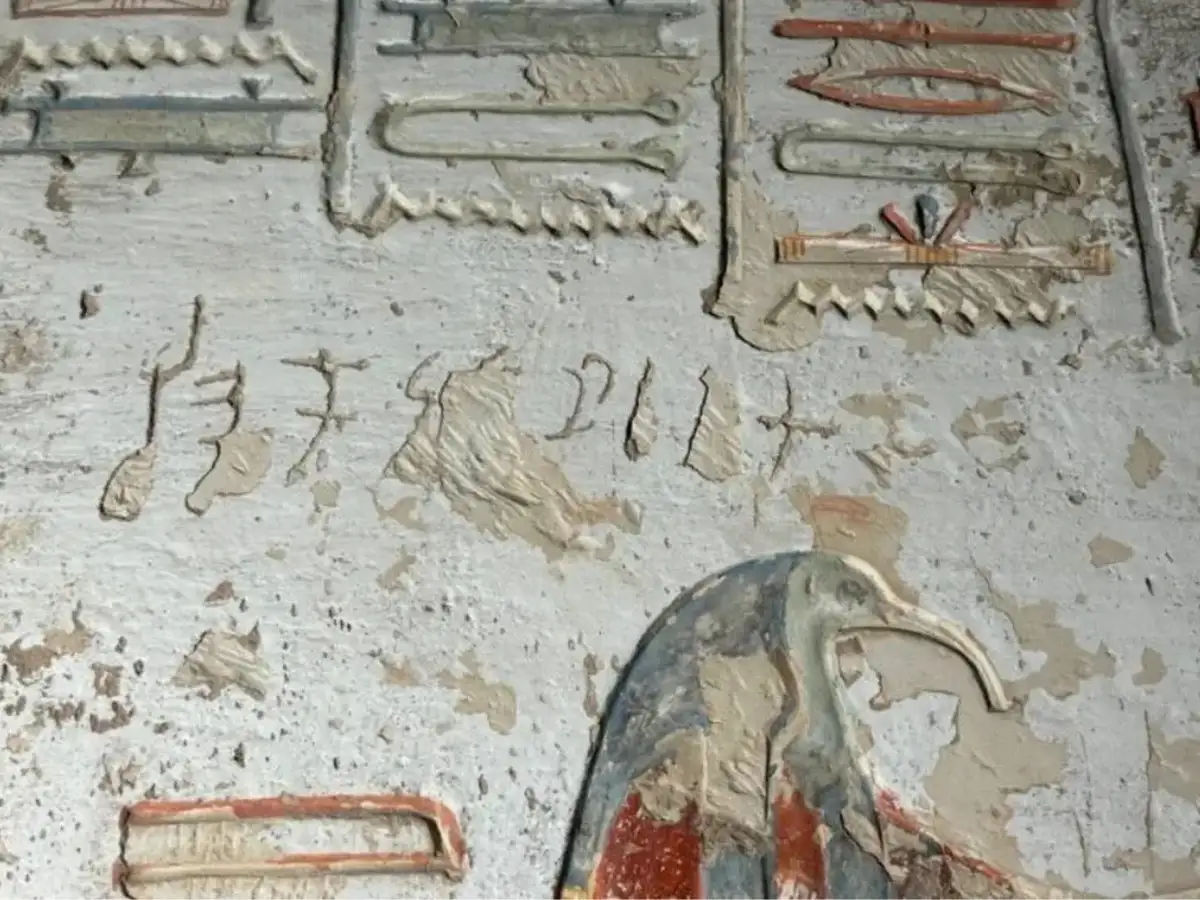
2,000 years ago, a man called Cikai Korran did what is arguably the most dedicated tourist flex in human history. He traveled thousands of miles from probably from the Tamil-speaking India to Egypt and wrote his name in not one, not two, but five of the ancient tombs in the Valley of the Kings, eight times in total. Now researchers have confirmed he was just one of dozens of Indian visitors to Egypt’s most sacred burial sites during the first through third centuries CE, leaving behind nearly 30 inscriptions in Indian languages and scripts, including Old Tamil, Sanskrit, Prakrit and Gandhari-Kharosthi.
This discovery is quietly changing what we know about the ancient world's version of globalization.
The find that almost went unrecognized
The story of the discovery of these inscriptions is almost as interesting as the inscriptions themselves. In January of 2024, Ingo Strauch, a professor at the University of Lausanne in Switzerland, noticed unfamiliar markings while visiting the Valley of the Kings. Some markings on the tomb walls caught his eye that didn't seem to be the Greek or Latin graffiti scholars had cataloged for almost a century. He took pictures, went home and began to study them.
More than 2,000 inscriptions in Greek and Latin had been cataloged since French scholar Jules Baillet documented them in 1926, but their South Asian language context had not been recognized. Charlotte Schmid of the French School of Asian Studies in Paris, to whom Strauch sent the images, confirmed they were looking at Old Tamil. Together they recorded nearly 30 inscriptions across six tombs, written in Tamil, Sanskrit, Prakrit and Gandhari-Kharosthi. Their findings were presented in February 2026 at the International Conference on Tamil Epigraphy conducted in Chennai.
Cikai Korran: the most enthusiastic tourist of ancient history
Of all the Indian travelers who left their mark, Korran is the most outstanding. He left eight inscriptions on five different tombs, and he appears to have chosen conspicuous, inaccessible locations, often high above other graffiti, to ensure that his name would remain visible and untouched by subsequent visitors. One of his inscriptions inside the tomb of Ramses IX is about 16 to 20 feet above the entrance. No one’s quite sure how he got up there, which Schmid called “weird, to be frank,” in the conference presentation.
Korran also made his mark on the entrance of the tombs of pharaohs Tausert and Setnakhte and, interestingly, his was the only graffiti found there, suggesting the tomb might still have been sealed when he visited.
His inscriptions said only “Cikai Korran came here and saw,” the same sort of thing you find in Greek tourist graffiti in the same tombs. Researchers are not oblivious to that parallel. It suggests that Korran was not just a passerby, but culturally involved enough to follow the local custom of marking a visit.