The U.S and Iran have agreed to a two-week ceasefire, reaching a deal less than two hours before President Donald Trump's deadline for Tehran to reopen the Strait of Hormuz or face the wiping out of "a whole civilization".
Tuesday evening, just hours before the planned strike, Trump announced on Truth Social that he had reversed his decision.
“Based on conversations with Prime Minister Shehbaz Sharif and Field Marshal Asim Munir, of Pakistan, and wherein they requested that I hold off the destructive force being sent tonight to Iran, and subject to the Islamic Republic of Iran agreeing to the COMPLETE, IMMEDIATE, and SAFE OPENING of the Strait of Hormuz, I agree to suspend the bombing and attack of Iran for a period of two weeks,” Trump wrote.
Trump has, once again, turned to his familiar “two weeks” timeline as a go-to solution in a moment of crisis.
During his first address to the nation on the Iran war earlier this month, he claimed the war was “nearing completion” and that almost all of America’s military objectives were accomplished.
However, the President offered little clarity on how he would wind down a conflict that has led to a sharp dip in his approval ratings.
Trump said: “Tonight, I’m pleased to say that these core strategic objectives are nearing completion … In these past four weeks, our armed forces have delivered swift, decisive, overwhelming victories on the battlefield – victories like few people have ever seen before.”
He added: “The countries of the world that ... receive oil through the Hormuz Strait must take care of that passage. Just take it, protect it, use it for yourselves.”
He also thanked “our allies in the Middle East – Israel, Saudi Arabia, Qatar, the UAE, Kuwait and Bahrain. They’ve been great, and we will not let them get hurt or fail in any way, shape or form”.
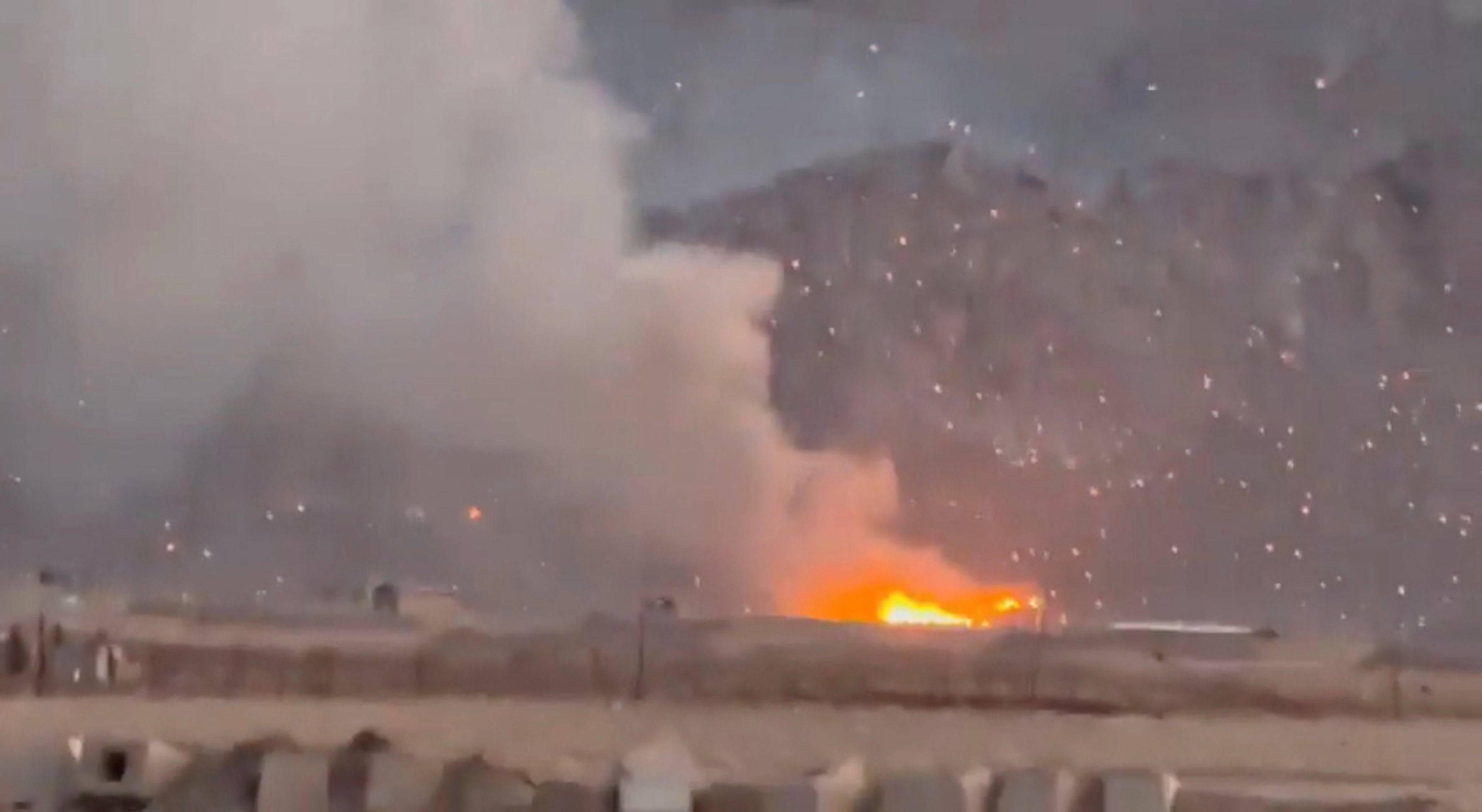
While some had expected the address to herald some form of de-escalation, instead he threatened to strike Iran “extremely hard” over the next two to three weeks and bring “them back to the Stone Ages, where they belong”.

This was not the first time Trump had trumpeted “two to three weeks” as a timeline to end a crisis. Over his time as president, there have been multiple occasions when he has touted this as a deadline to end any conflict.
Last year, as tensions with Iran escalated, the president said that he would decide on whether to order US warplanes to strike Iranian nuclear facilities within the next two weeks, depending on whether or not Tehran engages in talks over ending their nuclear weapons program.
In a statement relayed through White House Press Secretary, Karoline Leavitt, Trump said: “Based on the fact that there's a substantial chance of negotiations that may or may not take place with Iran in the near future, I will make my decision whether or not to go within the next two weeks.”
NOW - Trump on Iran: "We're going to hit them extremely hard over the next 2-3 weeks. We're going to bring them back to the stone ages, where they belong!" pic.twitter.com/knSmNB9OQk
— Disclose.tv (@disclosetv) April 2, 2026
In May last year, when Trump was pressed on whether Russian President Vladimir Putin was serious about ending the war in Ukraine, he said: “We’ll know in about two weeks.
“Within two weeks. We're gonna find out whether or not (Putin is) tapping us along or not. And if he is, we'll respond a little bit differently,” the president said.
At the time it was unclear what underpinned the relatively short deadline for a conflict that had, at that point, been waged for over three years. It ultimately passed without a breakthrough.
Then again in July, Trump said he was “very disappointed” with Putin and shortened Russia’s deadline from 50 days to “about 10–12 days” to make progress on ending the Ukraine war or face tougher sanctions.
Trump: American involvement in WW1 lasted one year, seven months and five days. WW2 lasted for three years, eight months and 25 days. The Korean war lasted for three years, one month, and two days. The Vietnam war lasted for 19 years, five months, and 29 days. Iraq went on for… pic.twitter.com/AaCxsJWQFB
— Acyn (@Acyn) April 2, 2026
Throughout his campaign and presidency, Trump has repeatedly promised to end the war quickly – initially claiming he could do it in 24 hours, before shifting to longer timelines, including weeks.
In January this year, Trump revived the infamous “two weeks” timeline when he was asked about his proposed deal involving Greenland. Flying back from Davos, he promised yet another major announcement on his “concept of a deal” on Greenland.
“We’ll have something in two weeks,” he said, according to Mediaite. “There’s a good spirit to get something done, and we have to have a strong freedom. We have to have the ability to do exactly what we want to do.”
On that occasion it was a matter of two days rather than two weeks before Nato and the U.S. announced the “framework” of a deal granting greater access for America to Greenland’s natural resources, although months later the precise terms of the agreement are still yet to materialise.
US Army Secretary says he’s not going anywhere despite reported clashes with Hegseth
Pope Leo welcomes Iran war ceasefire after condemning Trump’s ‘unacceptable’ threat
US is no longer a reliable ally, former national security adviser warns Starmer
How Pakistan deployed ‘flattery as foreign policy’ to broker US-Iran ceasefire
Can a president be removed from office? Here’s what the Constitution really says
US transport secretary insists soaring flight costs are ‘short term’ thanks to Trump