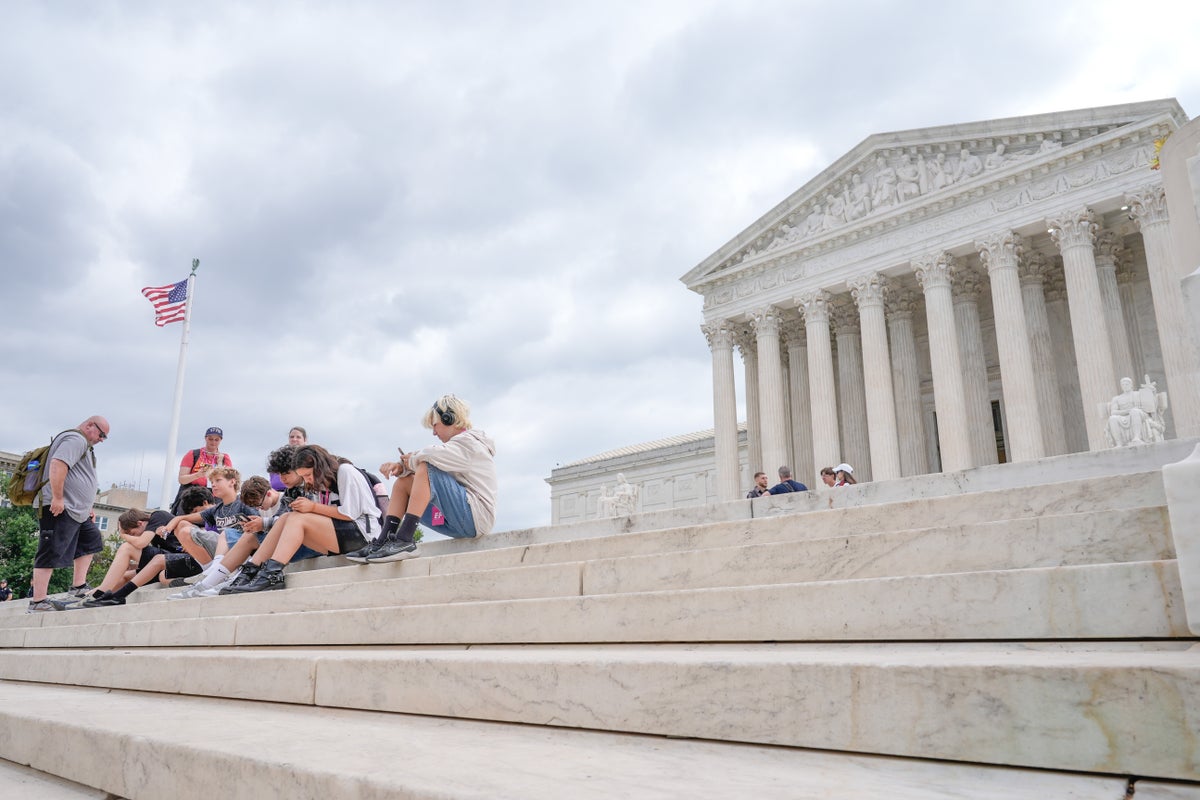
The Supreme Court on Monday agreed to decide whether states can use juries made up of only six people in criminal cases, instead of the usual 12. The case puts a Florida chiropractor convicted of practicing with a suspended license in an unlikely leading role in a constitutional clash.
The justices will hear arguments in the fall in the case of Hamed Kian, who argues that a six-person jury violates his constitutional rights.
Florida uses six-person juries for all criminal cases that don’t involve the death penalty. Five other states, Arizona, Connecticut, Indiana, Massachusetts and Utah, also conduct some criminal trials with six-member juries.
The 45-year-old Kian’s license was suspended after three women who were his patients complained he either kissed or touched them inappropriately, according to court records.
Prosecutors sought an indictment after amassing evidence that Kian, who had an office in Jupiter, continued to see patients even after the suspension. He was convicted by a six-person jury.
Kian's lawyers argue that the smaller jury violates the Sixth Amendment, which guarantees “a speedy and public trial, by an impartial jury of the state.”
The amendment does not explicitly set the size of the jury, but Kian's lawyers contend that the word jury could only have meant a body of 12 people at the time the amendment was adopted in 1791. Just over 100 years later, the Supreme Court ruled that juries had to have 12 people.
But in 1970, the justices changed course and ruled by a 7-1 vote that the number 12 was not sacrosanct, also in a case from Florida. Justice Thurgood Marshall was the only dissenter.
More recently, the court has placed renewed emphasis on the original understanding of the Constitution. In another Sixth Amendment case, the court ruled in 2020 that juries must be unanimous in criminal cases, effectively overturning a 1972 decision that had allowed for non-unanimous convictions in criminal cases in Louisiana and Oregon.
“The same reasoning applies to the historical right to a jury of twelve,” Kian's lawyers wrote in their appeal to the court to step in. “When the People enshrined the jury trial right in the Constitution, they did not attach a rider that future judges could adapt it based on latter-day social science views.”
In trying to persuade the Supreme Court to leave Kian's conviction in place, Florida Attorney General James Uthmeier wrote that the 1970 case was correctly decided and “overruling it also would imperil thousands of criminal convictions in Florida and five other states that for more than 50 years have relied on its rule.”