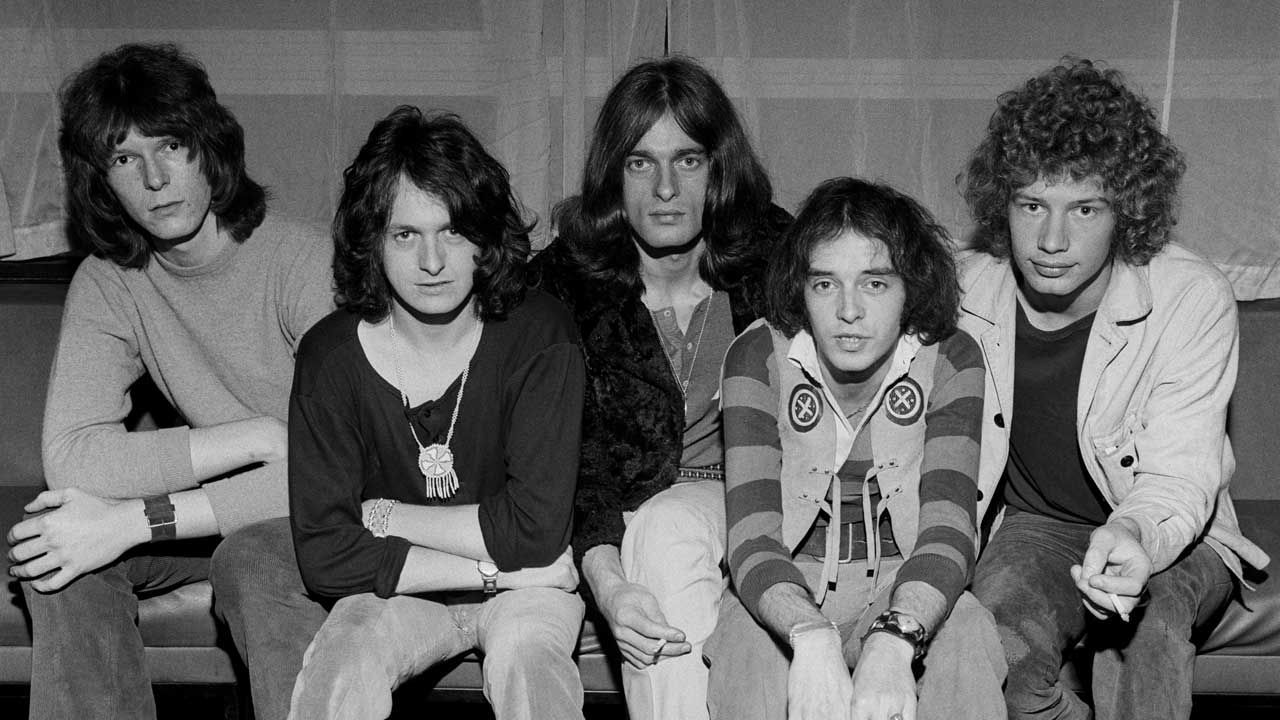
Before they were filling arenas with sprawling, cosmic soundscapes, seashell-shaped backdrops, and the scent of drifting patchouli, progressive rock legends Yes were just five ambitious London musos chasing sonic alchemy.
Formed in 1968, they set out to smash the boundaries of the late-sixties underground. And, by-and-large, they succeeded, aided in no small part by Jon Anderson's angelic voice, Chris Squire's Rickenbacker bass rumble, Peter Banks' jazzy fretwork, Tony Kaye’s driving organ, and Bill Bruford’s intricate, thrilling drumwork. This early incarnation wasn’t yet the symphonic beast of the seventies, but they were a fierce, high-energy live act, fusing the melodic muscle of The Beatles with fiery bursts of proto-prog.
Their self-titled 1969 debut, and 1970’s Time And A Word, showcased a band testing the limits of their own ambition, blending original material with heavily rearranged, symphonic covers of The Beatles, The Byrds, Simon & Garfunkel and Leonard Bernstein. The music was breathless, unusually complex, and surprisingly raw.
These formative years might have lacked the sure-footed ambition that resulted in later, long-form masterpieces like Fragile and Close To The Edge, but they laid the foundations of all that followed. And by the time The Yes Album arrived in early 1971 – with Steve Howe replacing Banks – all the building blocks were in place. Well, apart from cover artist Roger Drean. He arrived later that year.
How much do you know about Yes's early years? Try our quiz below, and let us know how you got on in the comments. And don't cheat. We're watching.