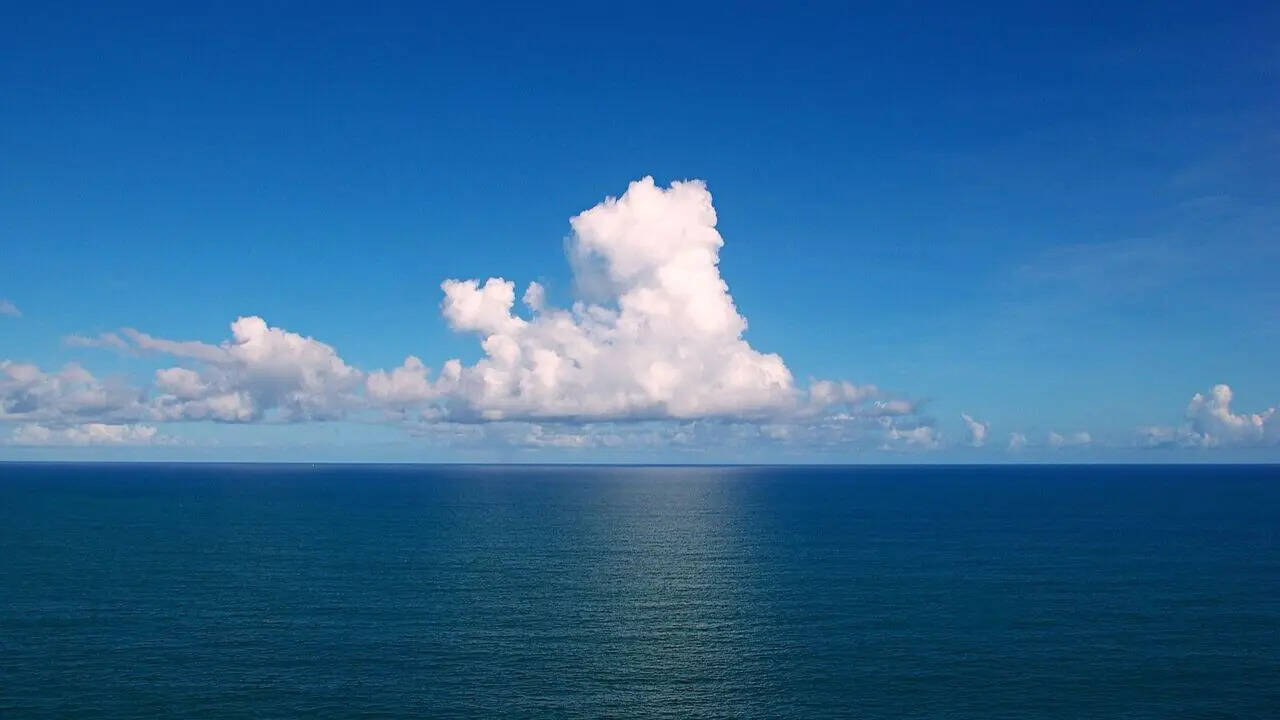
Far from the shipping corridors and crowded industrial coastlines of the Northern Hemisphere, the South Atlantic Ocean stretches across a quieter part of the planet. Its waters connect South America with Africa, covering enormous distances where human presence becomes sparse and maritime traffic thins out considerably. That relative isolation has shaped the ocean’s modern reputation.
Discussions about the cleanest ocean in the world usually come with caveats because cleanliness can be measured in several ways. Some scientists focus on floating plastic concentrations, while others examine chemical pollution, biodiversity stress, or water clarity. According to data referenced by WorldAtlas , the South Atlantic consistently appears among the least polluted ocean regions on Earth, particularly in terms of floating plastic debris.
Why the South Atlantic is called the cleanest ocean in the world
The South Atlantic is not pristine in the literal sense. Plastic particles are still present within its currents, and coastal pollution remains visible around some urban shorelines. Yet compared with heavily industrialised northern oceans, contamination levels remain noticeably lower. According to WorldAtlas, the South Atlantic contains the smallest estimated concentration of floating plastic among the world’s major oceans. The difference becomes more apparent when compared with regions shaped by dense shipping routes and highly populated coastlines.
Part of that comes down to geography rather than deliberate protection. Large sections of the South Atlantic border regions have lower coastal population density. Industrial activity across much of its southern extent is comparatively limited, and several stretches of open water remain distant from major commercial ports.
Ocean circulation patterns also influence how waste accumulates. Some marine debris becomes trapped in large rotating gyres elsewhere in the world, while the South Atlantic experiences different current systems that alter the movement and concentration of floating material. Research published through ResearchGate titled “ South Atlantic Ocean ” points to the broader environmental character of southern oceans, where remoteness and lower human pressure often shape marine conditions differently from northern waters.
How the cleanest ocean in the world shapes climate and marine systems
Its cleaner reputation sometimes creates the impression of a smaller or more contained ocean, though the South Atlantic is immense. It forms the southern portion of the Atlantic Ocean basin, extending from the Equator towards Antarctic waters.
Depth changes dramatically across the region. Some continental shelf areas remain relatively shallow, especially near coastal margins, while deeper central basins descend several thousand metres beneath the surface. Mid-ocean ridges cut through parts of the Atlantic floor, shaping underwater geography that remains largely invisible from above. The ocean also influences climate patterns across neighbouring continents. Moisture transport, storm systems, fisheries, and temperature circulation are tied closely to South Atlantic waters. In practical terms, it is both an environmental system and a commercial route connecting multiple continents.
South Atlantic Ocean: Size, depth and environmental facts
|
Parameter
|
Details |
| Ocean name | South Atlantic Ocean |
| Location | Between South America and Africa, extending southward towards Antarctica |
| Approximate area | Around 40 million square kilometres |
| Average depth | Roughly 3,300 metres |
| Deepest point | South Sandwich Trench |
| Maximum depth | More than 8,000 metres |
| Known for | The lowest estimated concentration of floating plastic among major oceans, according to WorldAtlas |
| Major bordering continents | South America, Africa, Antarctica |
| Important currents | Brazil Current, Benguela Current, South Atlantic Current |
| Environmental significance | Lower coastal population density and reduced industrial concentration compared with many northern oceans |
| Marine life | Tuna, whales, sharks, squid, seabirds, and deep-sea organisms |
| Main economic uses | Shipping, fisheries, offshore oil and gas exploration |
Interesting facts about the South Atlantic Ocean and its deep waters
- The South Atlantic contains some of the world’s most isolated marine regions. In several areas, ships can travel for days without encountering major ports or densely populated coastlines. That remoteness partly explains why pollution concentrations remain lower than in many northern waters.