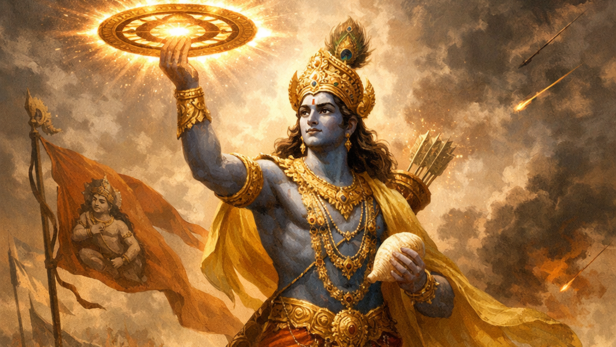
There are moments in the Mahabharata that feel deeply unsettling- moments where even the divine seems silent. One such moment is Karna’s final battle. A warrior of immense strength stands alone, his chariot wheel trapped in the earth, his knowledge failing him at the most critical instant. And in that moment, Krishna- who had protected Arjuna time and again- does not step in to save him.
So the question arises, almost painfully: why didn’t Krishna save Karna?
The real reason is simpler- and harsher-than most expect. Krishna did not save Karna because Karna had knowingly chosen to stand against dharma. And Krishna’s role in the Mahabharata was not to protect individuals, but to protect dharma itself.
Krishna Knew Exactly Who Karna Was
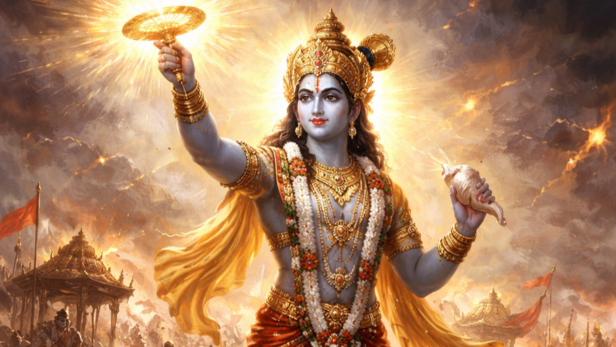
Karna was not invisible to Krishna. In fact, he was one of the few who truly understood him. Before the war began, Krishna approached Karna privately and revealed a truth that could have changed everything- Karna was the eldest son of Kunti, the rightful first-born of the Pandavas.
In that moment, Krishna offered him a different destiny. He asked Karna to leave Duryodhana’s side and join his brothers. He promised him honour, recognition, even kingship. It was not just an offer- it was a way out. Karna listened. He understood. And then he refused.
Not because he was unaware of the truth- but because he chose loyalty over it. From that moment onward, Karna’s path was no longer shaped by fate alone. It was shaped by a conscious decision.
Krishna Stood With Dharma- Not With Individuals
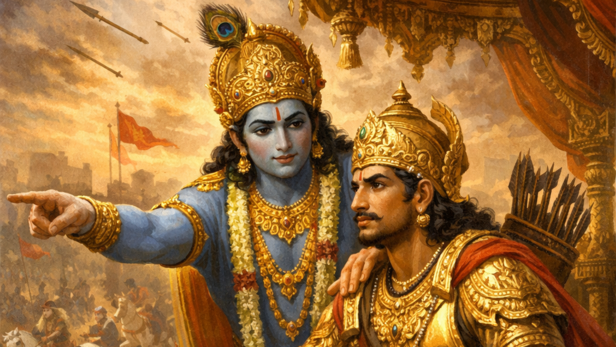
To understand Krishna’s silence, one must understand his purpose. Krishna was not present in the war as a protector of people. He was there as a guide of balance. The Mahabharata is not a story where good and bad are always clear. But one thing remains consistent- Krishna aligns himself with dharma, the force that sustains order and justice.
Karna, despite his virtues, stood on the side of Duryodhana. He supported actions that violated that balance. He was present during Draupadi’s humiliation. He chose to remain with a cause that was built on ego, power and injustice. Krishna did not reject Karna as a person. But he could not support the path Karna had chosen.
Karma Was Unfolding- And Even Krishna Did Not Interrupt It
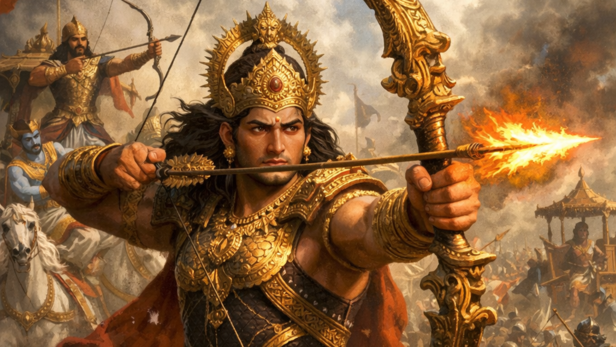
Karna’s life was not just tragic- it was bound by consequences. The curses he carried were not random misfortunes. They were the unfolding of past actions. His guru Parashurama cursed him to forget his knowledge at the moment he needed it most. Another curse ensured that his chariot would fail him in battle. These moments, which seem cruel, were part of a larger law- karma.
Krishna, even as a divine force, does not casually erase karma. He allows it to complete its course when it serves the larger balance. Arjuna, on the other hand, walked a path aligned with discipline, guidance and purpose. Krishna’s support for him was not favouritism- it was alignment. Karna’s fall was not caused by Krishna’s absence. It was the result of everything that had led him there.
Karna Was Given a Choice- And He Accepted the Cost
What makes Karna’s story so powerful is not just his suffering, but his awareness. He was not blind to the truth. When Krishna revealed his identity, Karna knew exactly what he was walking away from. He knew the Pandavas were his brothers. He knew which side represented dharma. He knew what the outcome of the war might be. And yet, he chose to stay.
This is where the real answer becomes clear. Krishna did not save Karna because Karna had already chosen his path- fully, consciously, and without hesitation. In the Mahabharata, free will is sacred. Even Krishna does not override it.
The Final Battle: Why Krishna Did Not Intervene
On the seventeenth day of the war, when Karna’s chariot wheel sank and he asked for time, the moment felt unfair. For many, it still does. But Krishna’s response was not emotional- it was rooted in memory and balance. He reminded Arjuna of Abhimanyu, who had been attacked unfairly by multiple warriors, including Karna, without being given a chance to defend himself.
The war had already crossed the boundaries of ideal conduct. In that moment, sparing Karna would not restore fairness- it would prolong imbalance. Krishna did not remain silent out of indifference. He remained silent because the moment demanded completion.
The Real Truth Behind Krishna’s Silence
The truth is not easy to accept. Krishna did not fail to save Karna. He chose not to. Not because Karna lacked greatness- but because greatness alone does not decide destiny. Karna was brave. Generous. Unbreakably loyal. But he stood on the wrong side of a larger purpose. Krishna stood with dharma. And in that alignment, Arjuna stood with him. Karna stood with loyalty. And in that loyalty, he stood against that balance. That is the quiet, unyielding truth the Mahabharata reveals:
Even the greatest cannot be saved from the consequences of their own choices.
Unlock insightful tips and inspiration on personal growth, productivity, and well-being. Stay motivated and updated with the latest at My Life XP.