The 2026 Eurovision Song Contest final is taking place tonight – but the popular music event remains mired in controversy surrounding the involvement of Israel.
Several countries, including Spain – one of the “Big Five” nations ordinarily guaranteed a spot in the final – have withdrawn from the competition in protest at Israel’s participation.
The European Broadcasting Union (EBU), the organising body behind Eurovision, has faced calls to ban Israel for three years running, but has each time allowed Israel to remain in the competition.
Follow live updates from the Eurovision 2026 final.
Meanwhile, Israel’s broadcaster was issued a warning by Eurovision after competition rules with a video asking fans to vote for the country’s act 10 times.
This year the country is being represented by singer Noam Bettan, who will be competing with his song “Michelle”.

Israel’s actions in Gaza have been described by many – including a UN Commission, Amnesty International, and the International Association of Genocide Scholars – as a genocide. Israel has denied this.
Explaining Spain’s reasons for boycotting the 2026 ceremony, José Pablo López, chair of the Spanish radio and television corporation, said: “As joint organisers of the Eurovision song contest, we share a collective responsibility. While Israel has regularly participated in the competition, the current events and the genocide currently taking place make it impossible for us to look the other way.
“It is not accurate to claim that Eurovision is merely an apolitical music festival. We are all aware that the contest carries significant political implications. The Israeli government is equally aware of this fact and leverages the event on the international stage.”
There has been much speculation over the reason for the EBU’s refusal to ban Israel from the competition.
Historically, the competition has always branded itself as apolitical, but in 2022 set a precedent when it banned Russia from the competition, following the country’s invasion of Ukraine.
Significantly, however, the EBU did not initially seek to ban Russia, and only evicted them from the competition after other participating nations threatened a boycott.
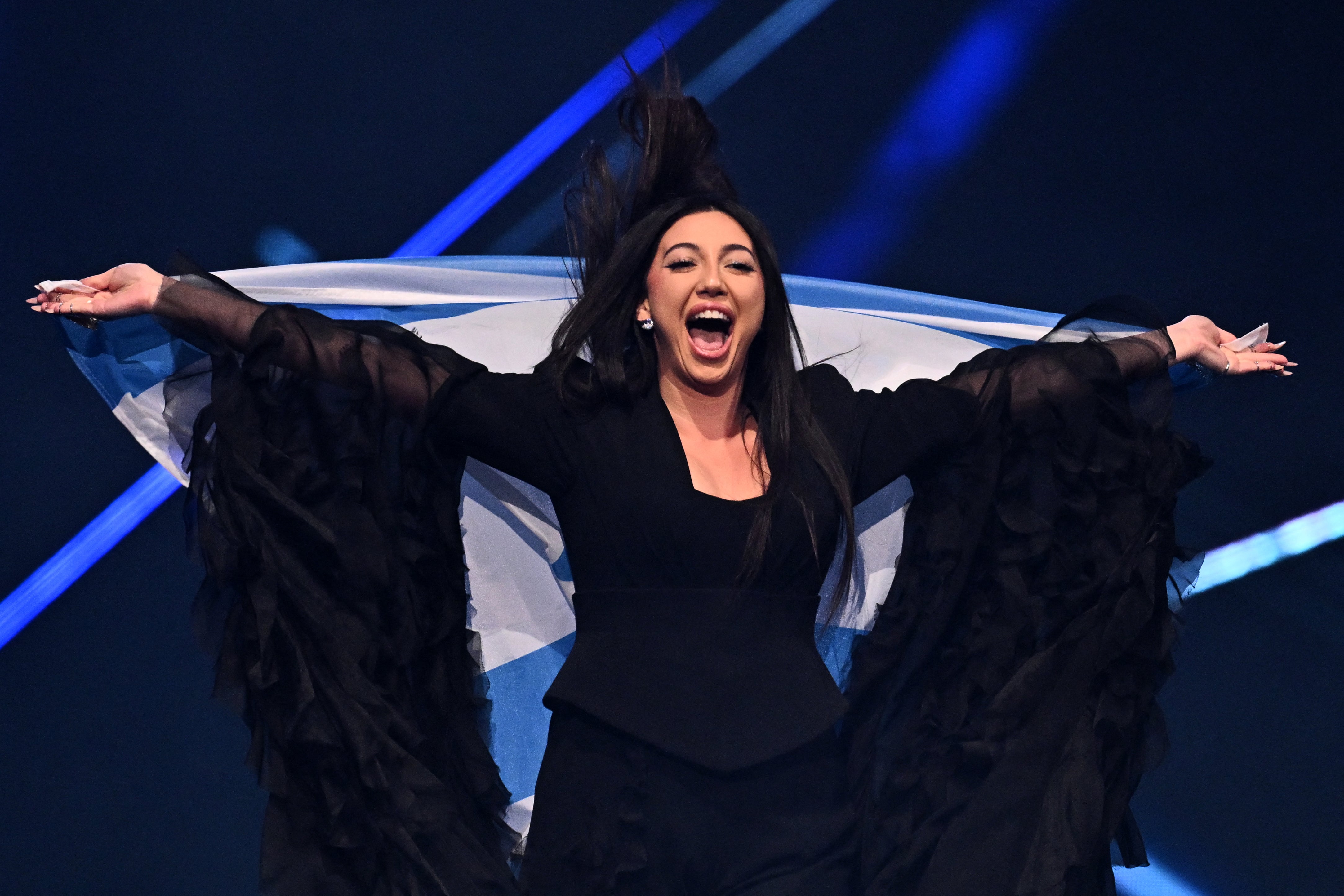
In their original statement explaining their initial decision not to issue a ban, organisers said that Eurovision was a “non-political cultural event that unites nations and celebrates diversity through music”.
When it comes to Israel, some have highlighted the fact that one of Eurovision’s biggest and most prominent sponsors is Israeli beauty products company Moroccanoil.
Another dilemma, however, may involve a counter-boycott from other participating nations: some countries – including, most significantly, Germany – had threatened to withdraw from Eurovision if Israel were banned.
Ahead of the 2026 competition, the EBU did not hold a vote on Israel’s participation, but instead voted to institute new rules on voting manipulation, amid claims that Israel had violated the spirit of the contest in 2025 by encouraging ex-pat citizens to expend 20 allocated votes on their contestant.
In a statement issued after the EBU’s general assembly last December, the organisation said a “large majority” of members had decided against another vote on participation. “The Eurovision Song Contest 2026 should proceed as planned, with the additional safeguards in place,” it said.
It did not hold a vote on Israel’s participation for 2026, instead asking broadcasters to vote on whether to introduce new rules designed to prevent governments and third parties from disproportionately promoting songs to influence voters.
On Saturday (9 May), Eurovision issued a formal warning to Israel’s national broadcaster after it called for viewers to “vote 10 times” – which was deemed to be in breach of the competition’s rules designed to limit third-party campaigns.
In clips shared by the broadcaster Kan, entry Noam Bettan told his fans to use all 10 of their votes to support him ahead of the first semi-final on Tuesday (12 May).
Eurovision Song Contest director Martin Green said in a statement on Saturday: “Within 20 minutes, we had contacted the Kan delegation to ask them to immediately stop any distribution of the videos and remove them from any platforms where they had been published. They immediately acted to do this.”
He added that while the call to action was not part of a “large-scale funded third-party” campaign, it was not in line with the “rules nor the spirit of the competition”. Kan responded by saying that the campaign was not financed by any particular group.
After being voted through in the first semi-final, Bettan will be competing in the grand final tonight (Saturday 16 May) in Vienna.
Delta Goodrem eyes historic Eurovision win for Australia - live updates
How to vote in the Eurovision Song Contest 2026 final
How Australia’s Delta Goodrem went from Neighbours to cancer struggle to Eurovision
‘Ya Ya Ya!’ Meet Jonas Lovv, the rock singer representing Norway at Eurovision 2026
Full Eurovision running order for tonight’s grand final
Finland’s Eurovision 2026 entry on the ‘sad’ meaning behind their song