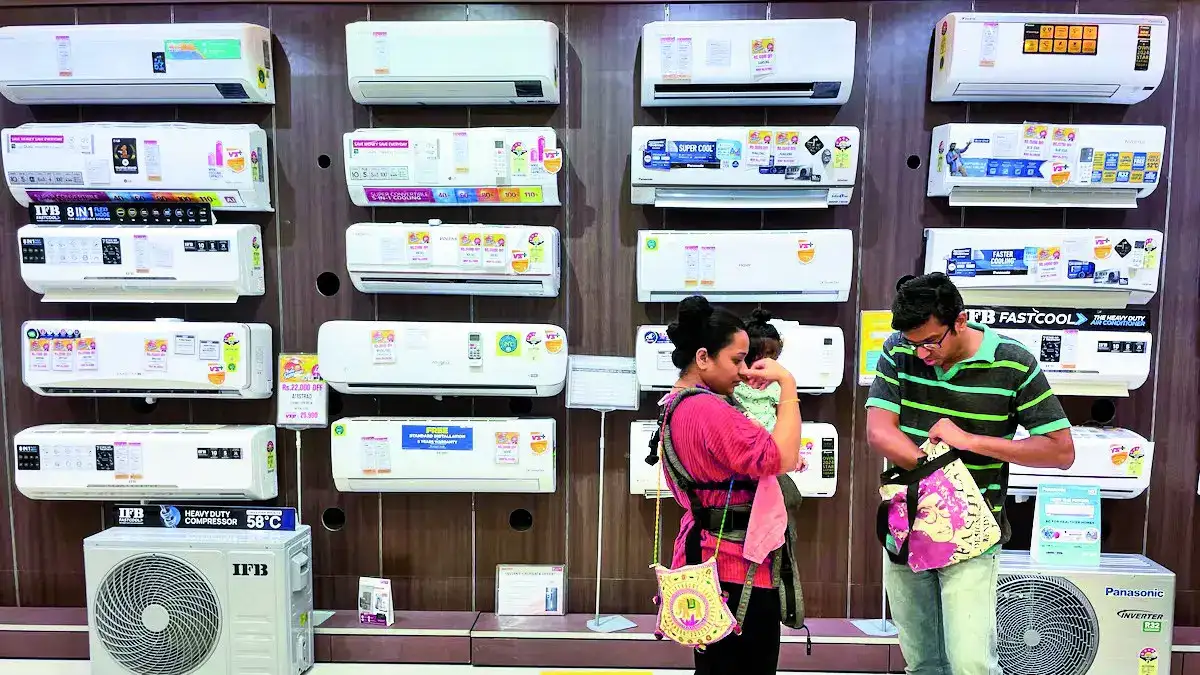
Washington: On Tuesday, India's peak power demand reached a record high 260.5 GW at 3.40 pm, driven by a heatwave and a spike in cooling needs. Energy transition is no longer just a climate story but one of control, stability and economic security. Rapid growth of various forms of distributed RE is changing how electricity is produced and injected into the network.
While such additions can be accommodated through incremental measures in the early stages, their expansion demands grids with real-time visibility, digital coordination and operational flexibility. Incremental upgrades will not solve this. It calls for a fundamental shift in how grids are designed and operated.
Intelligent grids turn electricity networks from passive infra into dynamic, responsive systems. They allow utilities to anticipate demand, integrate renewables at scale, and respond to disruptions in real time. This isn't just about efficiency but about control. The ability to manage power flows intelligently is becoming as important as the ability to generate power itself.
One of the most transformative developments is the use of digital twins - replicas of electricity networks that integrate asset-level data with real-time system performance. Systems that once relied on fragmented data and reactive operations can now function as integrated, data-driven networks.
In Rajasthan, Jaipur Vidyut Vitran Nigam Limited (JVVNL), which serves over 8 mn consumers, is deploying a digital twin as its operational backbone, creating an 'energy brain' for the grid. By integrating data across network assets and renewable sources, the utility can track flows, pinpoint losses and manage variability in real time.
Early assessments suggest this shift can reduce outages by up to 45 hrs per consumer annually, and cut transformer failure rates by 20-30%. It also enables utilities to optimise investments, integrate renewables more efficiently and reduce dependence on subsidies.
This changes how grids are run. With AI layered on top, operations shift from reactive to predictive. Asset stress can be detected before failure. Outages can be anticipated and resolved faster. Demand can be forecast and shaped, allowing consumers to play a more active role in balancing the grid. This is a structural shift from managing electricity as infrastructure to managing it as a real-time, intelligent system.
Modernising grids also opens the door to a more participatory and efficient electricity system. Intelligent grids can enable real-time energy exchanges, allowing consumers to become active participants, prosumers (producer + consumer), easing pressure on utilities and public subsidy budgets.
This has far-reaching implications. It can reduce pressure on utilities, lower subsidy burdens and create new economic opportunities at the local level. It also strengthens system flexibility, making it easier to balance supply and demand in real time. In this model, grids not only deliver power but also enable markets.
Investment in grids must keep pace with that in generation. Digital infra, storage solutions and system flexibility need to be treated as core components of energy planning, not afterthoughts. Utilities must be equipped with tools, incentives and capabilities to operate in a data-driven environment.
Governments, private sector and philanthropy must work together to derisk investments, scale innovation and accelerate deployment, particularly in emerging markets where capital constraints remain significant. In India, initiatives like India Energy Stack, an emerging DPI for the power sector, is enabling better planning, coordination and investment across the value chain.
Initiatives like India Grids of the Future Accelerator (IGFA) demonstrate how such collaboration can translate ambition into implementation, combining tech, finance and local capacity building.
In India, more than 16% of electricity is still lost in transmission and distribution. RE offers a pathway away from volatile fuel import, but only if systems can deliver power reliably. Generation is not security. Without intelligent grids, clean energy cannot be used when and where it's needed. In the decade ahead, countries that invest in smart grids won't power their economies, they will secure them.