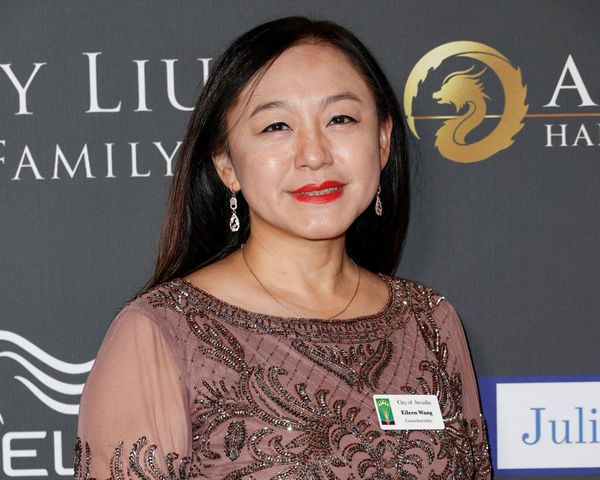
Arcadia mayor Eileen Wang resigned on Monday in Southern California after the US Department of Justice announced that she had agreed to plead guilty to acting in the United States as an illegal agent of the People's Republic of China, a felony that carries a maximum sentence of 10 years in federal prison.
Wang, 58, stepped down hours after the plea agreement was unsealed, turning what had been a rotating local mayoralty in a city of about 53,000 into a case with national security overtones and an unmistakably local sting.
Why Arcadia Mayor Eileen Wang Walked Away From Office
Eileen Wang's resignation as Arcadia mayor came just hours after a 19‑page plea agreement was unsealed in federal court. She had been elected to the five‑member city council in November 2022 and, under the council's rotating system, took on the largely ceremonial mayoral role in February.
City officials moved swiftly to distance the administration from the scandal. In a statement posted on Arcadia's website, city manager Dominic Lazzaretto called the allegations that 'a foreign government sought to exert influence over a local elected official' deeply troubling, but insisted the conduct under investigation pre‑dated Wang's time at city hall.
'We want to be clear: this investigation concerns individual conduct, and the charges are for conduct that ceased after Ms Wang was sworn into office in December 2022,' Lazzaretto said.
He added that an internal review had found 'no City finances, staff, or decision‑making processes were involved', and confirmed that the remaining councillors will choose a new mayor and mayor pro tem at their next meeting.
Federal prosecutors have taken a harder line. Assistant US attorney Bill Essayli said people in the United States who 'covertly do the bidding of foreign governments undermine our democracy', describing Wang's plea as part of a wider push 'to defend the homeland against China's efforts to corrupt our institutions.'
What Prosecutors Say Eileen Wang Did For Beijing
According to the plea agreement, Eileen Wang and Yaoning 'Mike' Sun, a long‑time associate, used US News Center, which billed itself as a local news outlet for the Chinese American community, as a vehicle for pro‑PRC messaging that was curated and approved by Chinese officials.
The US Department of Justice says Wang and Sun 'received and executed directives' from government figures in Beijing to post content that aligned with official talking points, particularly on sensitive issues such as the treatment of Uyghur Muslims in Xinjiang.
The site ran material disputing reports of persecution, forced labour and abuse, including articles asserting there was 'no genocide in Xinjiang' and dismissing allegations of forced labour as rumours designed to 'defame China' and 'suppress China's development.'
In one example cited in court filings, a Chinese official allegedly contacted Wang and others in an encrypted WeChat group in June 2021 with pre‑written articles, including a letter published in the Los Angeles Times by the PRC's consul general that denied abuses in Xinjiang.
Within minutes, Wang posted the piece on US News Center and sent the official a link. 'So fast, thank you everyone,' the official replied, according to the documents.
Powerful Contacts And A Fiancé: How Eileen Wang's China Links Reached Deep Into Politics
Prosecutors say Wang also communicated with John Chen, a high‑level Chinese Communist Party figure who has already pleaded guilty to being an illegal agent of China and to conspiracy to bribe a public official.
The Justice Department alleges Chen had a direct line to Chinese president Xi Jinping. In November 2021, Wang is said to have asked Chen to share an article from her website, writing: 'This is what the Ministry of Foreign Affairs wants to send.'
Sun, now 68 and once publicly described by Wang as her fiancé, pleaded guilty in October 2025 to the same foreign‑agent offence and is serving a four‑year federal sentence.
He was listed in campaign filings as treasurer for Wang's 2022 council run.
National Security Officials Alarmed By Eileen Wang Case
Senior US justice officials have framed the Eileen Wang case as part of a broader pattern of covert Chinese influence operations aimed well beyond Washington.
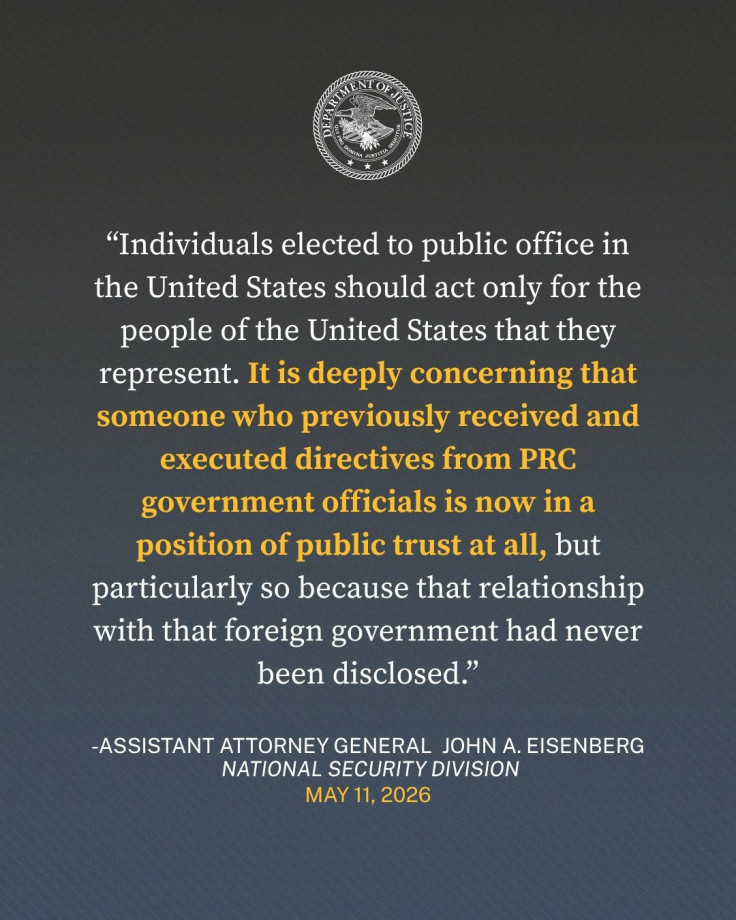
John A Eisenberg, assistant attorney general for national security, said it was 'deeply concerning that someone who previously received and executed directives from PRC government officials is now in a position of public trust at all', especially given that her alleged relationship with those officials 'had never been disclosed.'
The Justice Department has in recent years pursued several similar prosecutions. In 2024, Chen was sentenced to 20 months in prison after admitting to acting as an illegal agent of China and taking part in a bribery conspiracy.
That same year, Chinese American academic Wang Shujun was convicted of sharing sensitive information with Beijing's Ministry of State Security, and a US national of Chinese origin was accused of spying on dissidents after having himself fled China following the 1989 pro‑democracy movement.
In Wang's case, prosecutors stress that nothing has yet been decided on her punishment. A federal magistrate judge has set a bond of $25,000, roughly £20,000, while her lawyers and the court agree a date for a hearing at which she will formally enter her plea.
Her legal team, Jason Liang and Brian Sun, said in a statement that Wang 'recognises the seriousness of the charge and accepts responsibility for past personal mistakes.'
They said she 'apologises and is sorry for the mistakes she has made in her personal life', insisting that 'her love and devotion for the Arcadia community have not changed and did not waver.'
The US Department of Justice said Wang was charged in April with a single felony count of acting in the United States as an illegal agent of a foreign government, a crime that carries a maximum sentence of 10 years in federal prison.
The case centres on her role running a Chinese-language website, US News Center, alongside long‑time associate Yaoning 'Mike' Sun, through which they allegedly pushed pro‑Beijing content at the direction of officials from the People's Republic of China between late 2020 and 2022.