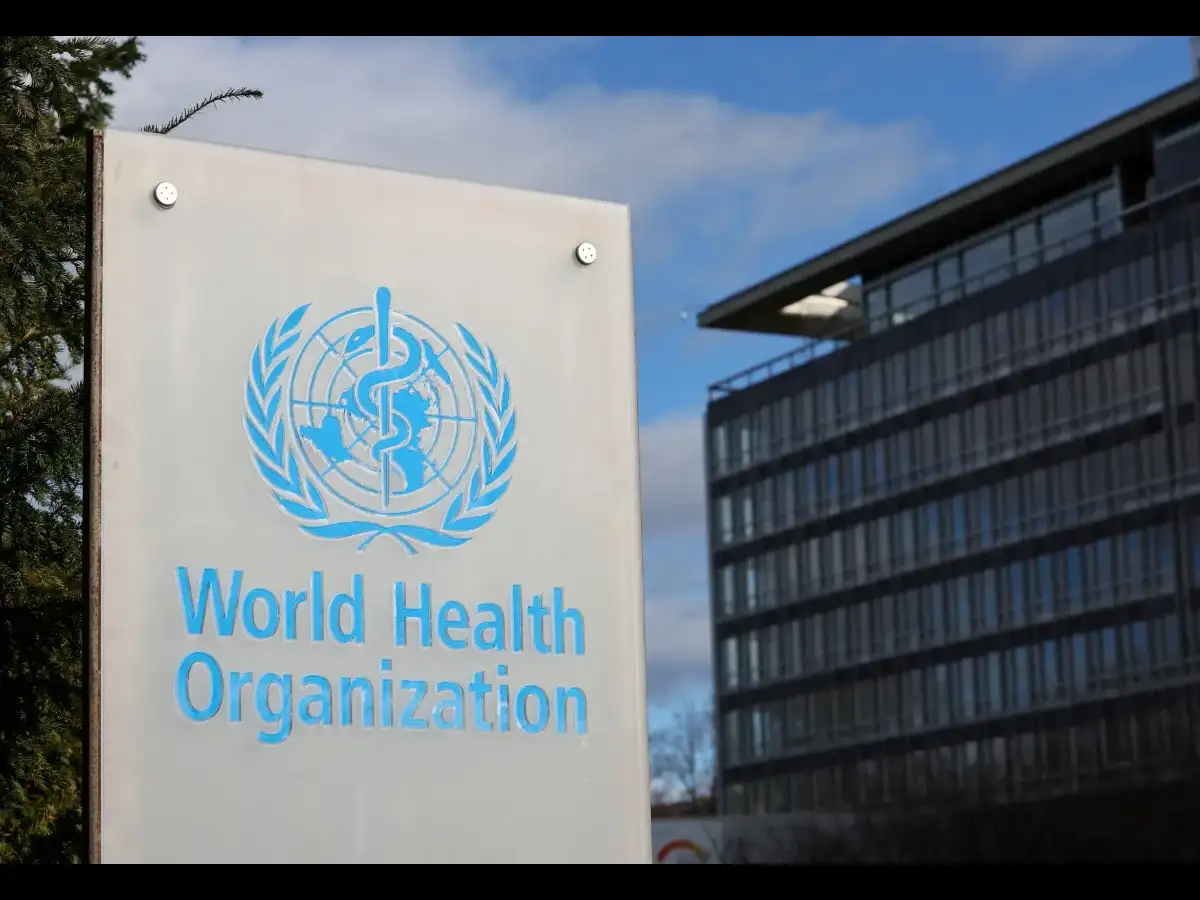
WHO member states have agreed to extend negotiations on a key element of their pandemic agreement for up to a year, the organisation said Tuesday.
The decision was taken during the World Health Organization's annual high-level assembly, currently under way in Geneva.
"The commitment of member states to continue negotiations is a clear signal that far from giving up, they're forging ahead," said WHO chief Tedros Adhanom Ghebreyesus.
"I have every confidence that they will succeed."
Last May, WHO member states adopted a landmark pandemic agreement on tackling future health crises, after more than three years of negotiations sparked by the shock of Covid-19.
It aims to prevent in future pandemics the disjointed international response that characterised the approach to the coronavirus crisis.
But a key element was left out to get the treaty talks across the line: determining how the so-called Pathogen Access and Benefit-Sharing (PABS) system -- would work in practice.
That annex deals with sharing access to dangerous pathogens with pandemic potential, and then sharing the benefits derived from them: vaccines, tests and treatments.
Benefit-sharing
The plan had been to complete that final piece in time for this year's World Health Assembly, but as the final deadline approached it became clear that deep disagreement persisted between wealthy and developing countries.
Several countries, especially in Africa, want assurances that once they share pathogen data, they will have access to anything developed using that information.
During a debate at the assembly on Monday, South Africa's representative insisted any agreement needed to ensure "equity", warning that "a hollow annex is worse than no annex. It locks in failure".
European countries, especially those with big pharmaceutical industries, have meanwhile warned that compulsory benefit-sharing risks stifling research and development.
"A number of issues require significant further discussions," the Cypriot representative said, speaking on behalf of European Union countries.
Given the lingering divisions, countries opted Tuesday morning to grant themselves another extension.
Negotiations will continue with the aim of presenting results at the next assembly, scheduled to take place in May 2027, "or, as may be necessary, earlier by a special session of the World Health Assembly in 2026", the adopted text said.
In an interview with AFP, Helen Clark, a former New Zealand premier and the co-chair of the Independent Panel for Pandemic Preparedness and Response, lamented that the process was dragging on.
She highlighted that even once the PABS annex is completed, allowing countries to begin signing and ratifying the treaty, 60 ratifications will be needed before it can enter into force.
"So we could be looking at two to three years away before we have the new leading instrument," Clark said, pointing out that it had already been more than six years since the WHO declared Covid a pandemic.
"This is not a lightning pace," she said, urging countries to "focus on getting this done".
"The longer it drags on, the harder it gets."