Mascots have long been a central part of the FIFA World Cup’s identity and marketing, helping give each tournament its own unique personality and cultural flavor.
Ever since the debut of World Cup Willie—a lion dressed in a Union Jack kit—at the 1966 tournament in England, mascots have become iconic symbols of their host nations. From France’s cartoon cockerel Footix in 1998 to South Africa’s energetic leopard Zakumi in 2010, each mascot has been designed to reflect the culture, character, wildlife or spirit of the country staging the tournament, while also appealing to younger fans around the world.
The 2026 World Cup is no different, although this time the tournament features three mascots—one representing each host nation: the United States, Canada and Mexico.
But who exactly are this year’s mascots? Here, Sports Illustrated takes a closer look.
2026 World Cup Mascots: Maple, Zayu & Clutch
First day of school with Maple, Zayu and Clutch ⭐ #WeAre26 | #FIFAWorldCup
— FIFA World Cup (@FIFAWorldCup) September 29, 2025
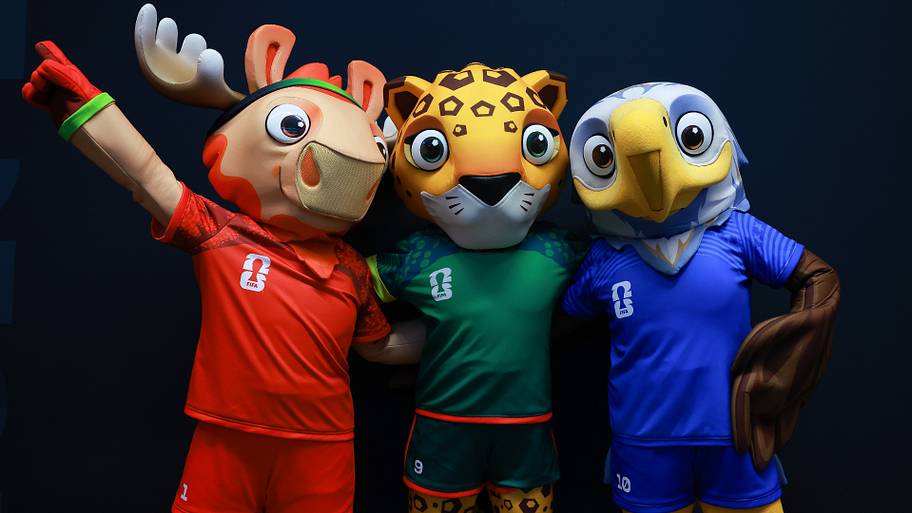
The three mascots for the 2026 World Cup are Maple the Moose (Canada), Zayu the Jaguar (Mexico) and Clutch the Bald Eagle (United States).
Representing the tournament’s three host nations, the soccer-playing trio each come with their own personalities and stories inspired by the cultures of their respective countries.
According to FIFA, Maple the Moose is a “street style-loving artist” and dedicated goalkeeper who has traveled across Canada embracing the nation’s diverse culture while combining “legendary saves” with creativity and leadership.
Zayu the Jaguar, meanwhile, comes from the jungles of southern Mexico and represents the country’s “rich heritage and vibrant spirit.” The agile striker is said to embody “unity, strength and joy,” while celebrating Mexican dance, food and tradition.
Finally, Clutch the Bald Eagle symbolizes the United States with what FIFA describes as an “unquenchable thirst for adventure.” A passionate midfielder and natural leader, Clutch is portrayed as someone who “unites people wherever they go” through sport, energy and optimism.
Full List of Official World Cup Mascots
| World Cup | Mascot(s) | Description |
|---|---|---|
| 1966 England | World Cup Willie | A lion wearing a Union Jack shirt, becoming the first-ever World Cup mascot and one of the most iconic. |
| 1970 Mexico | Juanito | A smiling young boy in a Mexico kit and sombrero, representing the host nation’s culture. |
| 1974 West Germany | Tip and Tap | Twin cartoon boys wearing “WM” and “74” shirts, symbolizing friendship and unity. |
| 1978 Argentina | Gauchito | A young Argentine boy dressed as a traditional gaucho, complete with hat and scarf. |
| 1982 Spain | Naranjito | An orange with a soccer kit and ball, inspired by one of Spain’s most famous exports. |
| 1986 Mexico | Pique | A jalapeño pepper with a sombrero and mustache, reflecting Mexican cuisine and culture. |
| 1990 Italy | Ciao | A stick-figure player in the colors of the Italian flag with a soccer ball head. |
| 1994 United States | Striker | A cartoon dog dressed in a USA soccer uniform, designed to appeal to younger fans. |
| 1998 France | Footix | A cartoon rooster inspired by France’s national symbol, wearing a blue jersey. |
| 2002 South Korea & Japan | Ato, Kaz and Nik | Futuristic orange, purple and blue creatures from a fictional world called “Atmoball.” |
| 2006 Germany | Goleo VI | A lion wearing a Germany shirt accompanied by a talking soccer ball named Pille. |
| 2010 South Africa | Zakumi | A green-haired leopard whose name combined “ZA” for South Africa and “kumi,” meaning 10 in various African languages. |
| 2014 Brazil | Fuleco | A Brazilian three-banded armadillo, chosen to promote environmental awareness. |
| 2018 Russia | Zabivaka | A wolf wearing sports goggles whose name roughly translates to “the one who scores.” |
| 2022 Qatar | La’eeb | A floating, keffiyeh-inspired character described by FIFA as coming from the “mascot-verse.” |
| 2026 United States, Canada & Mexico | Maple the Moose, Zayu the Jaguar & Clutch the Bald Eagle | A trio representing the three host nations, each inspired by national culture, wildlife and identity. |