The House and Senate could be headed toward a showdown over competing bills that would usher in major changes to college sports, but President Donald Trump has yet to make clear just what he would sign.
The Senate Commerce Committee on Wednesday morning is slated to hear from expert witnesses as both chambers push differing versions of legislation to shake up college athletics’ “name, image and likeness” policies, as well as its controversial transfer portal.
As Congress worked on the bills in recent months, Trump has largely limited his public comments to criticism of court decisions that paved the way for the NIL era and references to New York Yankees President Randy Levine, who is on Trump’s hand-picked college sports commission, as “working to straighten out college sports now.”
One lobbyist who represents several collegiate conferences, granted anonymity to speak candidly, said stakeholders have been monitoring that commission, as it has successfully been “drumming up interest” and “having meetings on and off the Hill.”
“I think the White House knows it’s going to take legislation at this point. An executive order wouldn’t have as much impact,” the lobbyist said.
A White House official on Tuesday said Trump had not made a decision about supporting the Senate bill, but the president wants lawmakers to “advance legislation that delivers meaningful, permanent reforms.”
“The White House is reviewing the proposed bipartisan legislation but it appears that the legislation is moving the conversation on these important issues forward,” the official said in an email.
The lobbyist noted Trump’s position “isn’t unique,” adding that most of the conferences and universities “are taking similar stances right now — there’s still a lot to learn about how this all would work.”
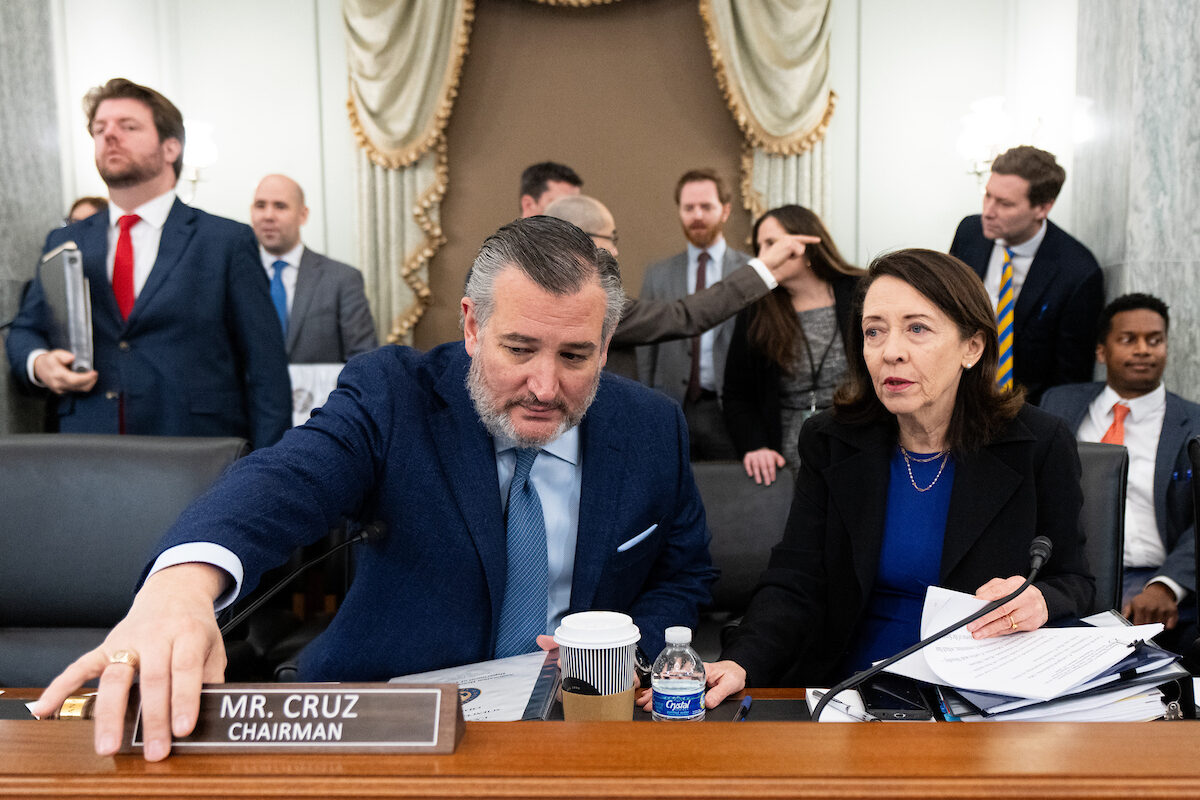
The Commerce Committee is expected to mark up this month a version introduced by Sens. Ted Cruz, R-Texas, and Maria Cantwell, D-Wash.
“This is the closest Congress has gotten to real momentum toward real reform. The hearing should tell us a lot about the possible amendments to come, and I’d expect to hear concerns from some of the witnesses that haven’t been expressed publicly so far,” the lobbyist said.
A major difference between the chambers’ measures is that the Senate version, dubbed the “Protect College Sports Act,” would enact more-specific NIL rules than the House version, which would give the NCAA more power to craft new guidelines.
The Senate language also would not address whether student-athletes should be considered employees of colleges and universities. The House bill would prohibit them from being considered employees. That provision in part led the AFL-CIO to call it a “union-busting bill” that would diminish the voices and job protections of college athletes.
Another difference is the Senate’s proposal to create a revenue-sharing pool from media rights deals that would be shared among institutions — but only if 75 percent of Football Bowl Subdivision (FBS) schools, or 102 of 138, decide to participate.
The Senate bill would revise the Sports Broadcasting Act to allow conferences to pool media dollars, which would generate billions for participants. The House version would create revenue-sharing among the top 70 biggest revenue-generating universities.
The presidents and chancellors of the powerful and media-wealthy Southeastern Conference have voiced opposition to the ideas of revenue sharing and handing decisions over media deals to the NCAA or another national entity.
“The conference must retain the ability to act in the best interests of its membership,” the presidents and chancellors said in a May 28 statement issued at the SEC’s annual spring meetings. “As such, the SEC does not support assigning its media rights to a third party and remains firmly committed to independently conducting its media negotiations.”
Trump commentary
Trump has criticized lawsuits that paved the way to the current era. The most recent was NCAA vs. Alston, in which the Supreme Court in June 2021 supported a lower court’s decision that the NCAA was not exempt from antitrust regulations.
“They destroyed college sports, the court system destroyed [it]. So hard to put that one back, ‘Humpty Dumpty,’ so hard to put that one back together,” Trump told CNBC on April 21. “You know, we had 150 years of rulings and everything else and they had such a great system, it was a scholarship system.”
The Foster Swift Collins & Smith law firm, in a fact sheet, said that ruling “opened the floodgates for additional academic-related compensation and led to the NCAA’s ultimate decision to quickly adopt an Interim NIL Policy that allowed, for the first time, student-athletes to benefit financially from their name, image, and likeness without fear of NCAA penalty.”
Trump told to CNBC that the NIL era had created a financial structure that is “all football.”
“And the football is bringing down colleges because they’re losing [money],” he said. “And thank goodness we have people like Randy Levine and others that — Coach Saban, who’s so great.”
That was a reference to Nick Saban, the former University of Alabama and Louisiana State University head football coach who won seven national titles and now is an analyst for ESPN’s “College GameDay” pregame show. Guests often join his cohosts on the seasonal Saturday morning show in floating Saban as a possible first-ever college football commissioner. Trump put Saban on his commission, and he will be among the witnesses before the Commerce Committee on Wednesday.
Some commission members already have flexed their collective muscles in a March 25 letter to Cruz and Cantwell. “The overwhelming majority of the President’s Roundtable on Fixing College Sports is pleased to express its strong support to you to complete the bipartisan college sports reform legislation,” the group wrote.
Among the signers were Levine; Saban; former Secretary of State Condoleezza Rice; Cody Campbell, board chair of the Texas Tech University System and a former student-athlete; media banker Gerry Cardinale of RedBird Capital, who was instrumental in helping Paramount Skydance nab Warner Bros. Discovery; and others.
The letter also urged the House to also pass college sports legislation — but it did not endorse nor name the chamber’s SCORE Act.
A revised SCORE measure was pulled from the Rules Committee docket late last month after the Congressional Black Caucus announced its 58 House members and 4 Senate members would oppose the revamped measure. They argued it would be a financial and judicial disaster for players, while making institutions much richer.
Campbell, the Texas Tech board chair and Trump panel member, said in a Monday post on X that the Cruz-Cantwell bill is “the most comprehensive, well constructed, and well written piece of legislation that has been brought forward in the 7 years that the ‘college sports powers that be’ have been lobbying Congress.”
He had a stern message for its detractors.
“Back-room arm twisting, shadowy lobbying, obstructionism, and obfuscation of facts (all motivated by selfish agendas) is counter productive, and is the very reason that we have found ourselves in the mess that we college spots have become,” he wrote. “Put all of the cards on the table, and let’s make a deal!”