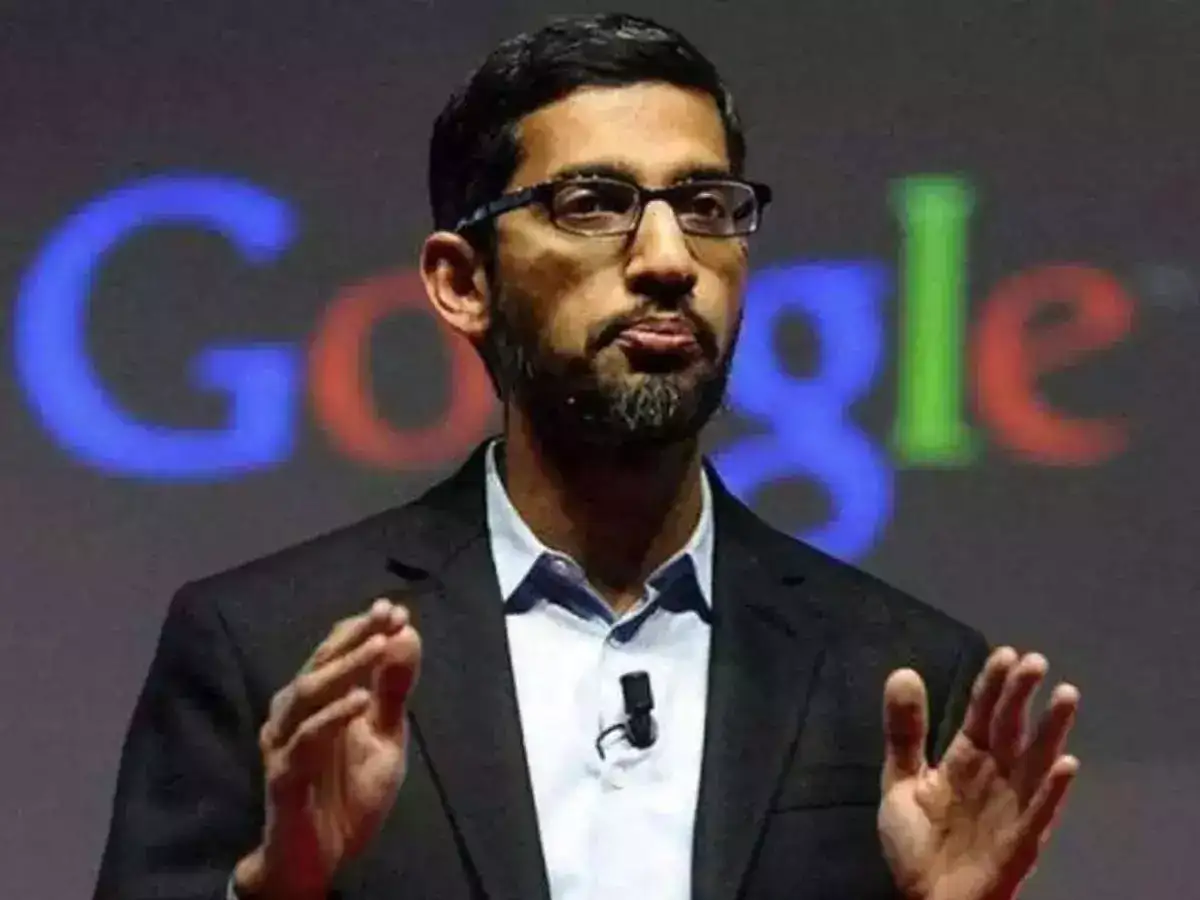
Google CEO Sundar Pichai was asked what his "boo strategy" will be when he gives the commencement speech at Stanford University next month. Speaking on the “Hard Fork” podcast ahead of his speech, the Indian-origin tech billionaire addressed questions about whether graduates could react negatively to the AI-related comments.
Responding to it, Pichai said that the next generation will “rise to the challenge”. The Google CEO further said that technological progress has historically driven global growth, adding that today’s graduates will both help shape the development of AI and live with its impact.
"I've always been extraordinarily optimistic about the next generation," he told the hosts. AI, he said, doesn't change that. "My goal would be to share my experiences, and that's what I'm looking to do." “I think the next generation rises to the challenge and builds a better world,” he said.
ALSO READ: How China built world’s largest high-speed railway station on a mountain in just 38 months
"These graduates are actually both going to be a big part of driving that progress and also dealing with the impact," he added, referring to AI.
For Sundar Pichai, the challenge is real: he leads one of the companies driving the AI boom at a time when many graduates fear the technology could erase the very jobs they are preparing for.
Students have already shown rising anxiety around AI’s impact on careers. Former Google CEO Eric Schmidt faced boos at the University of Arizona during a campus appearance, while Big Machine Records CEO Scott Borchetta drew backlash at Middle Tennessee State University after speaking about AI’s influence on music and media.
Sundar Pichai: “People are rightfully worried about AI”
AI-related job concerns have risen sharply this year, with several major companies pointing to AI-driven efficiency as a factor in layoffs. Business Insider reported that unemployment among recent graduates reached a four-year high at the start of 2026.
Sundar Pichai acknowledged the growing anxiety around rapid technological change, saying people are “rightfully” worried about what AI could mean for the future.
“Humans aren't evolved to process that much change,” he said.
During a podcast conversation, the host referred to a New York Times poll which “found that only about 16% of people say that AI is mostly good, about 35% say it's mostly bad”.
“What do you make of the AI backlash that we're seeing right now, and how much leverage do you think Google has to change that perception?,” the interviewer asked.
Responding to the question, Pichai said:
“AI is always viewed as the most profound technology humanity will ever work on. It's progressing at an extraordinary pace. Humans aren't evolved to process that much change. And there are people rightfully anxious about what is the future that this technology will bring”.
“We've had far simpler technology shifts where there has been anxiety around those shifts. This is of a scale unlike anything we've seen before. I think the we as an industry have to do a lot more to continue driving and showing the benefits that's possible with technology,” he stated, adding “We have more work to do to make sure when we are scaling up the infrastructure investments, etc...what are the things we can do to make some of that work better”.