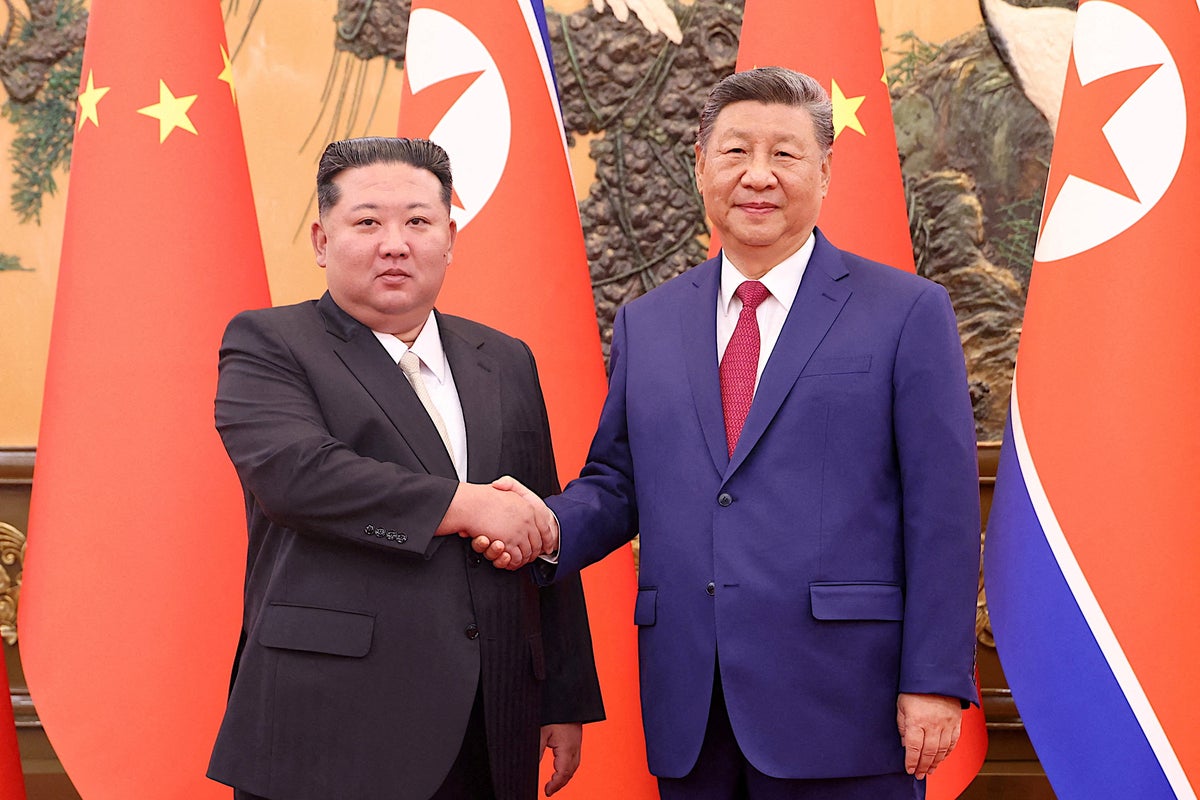
Chinese president Xi Jinping is set to embark on his first visit to North Korea in nearly seven years, a significant diplomatic engagement that offers leader Kim Jong Un a crucial platform to project an increasingly assertive foreign policy.
The trip underscores Pyongyang’s strategy of forging closer ties with its traditional Cold War allies, while Beijing, North Korea’s vital economic lifeline, is expected to reassert its influence over a government that has recently gravitated towards Russia.
The three-day visit, which begins on Monday, marks the first direct encounter between the two leaders since Kim’s trip to Beijing for a World War II event in September 2025. The high-stakes discussions are expected to address a range of geopolitical and economic objectives for both nations.
What Kim Jong Un stands to gain
After a period of prioritising Russia, which has seen North Korea dispatching thousands of troops and munitions to support Moscow’s invasion of Ukraine, Kim is now seeking to strengthen ties with China. This move is aimed at further breaking out of international isolation, embracing the concept of a "new Cold War," and positioning Pyongyang as part of a united front against the US.
Historically, North Korea has maintained an "equidistance" policy between Beijing and Moscow, a strategy employed by previous leaders to maximise gains from its two primary benefactors. While he is receiving crucial support from Russia for backing its war effort, likely including military technologies and aid, experts suggest Kim cannot fulfil his promise to elevate the living standards of his populace without substantial economic assistance from China.
Koh Yu-hwan, a former president of Seoul’s Institute of National Unification, explained: "North Korea vows to maintain a self-reliant economic system and focus on advancing its nuclear capabilities, but in reality it’s nearly impossible to raise living standards by mobilising internal resources alone."
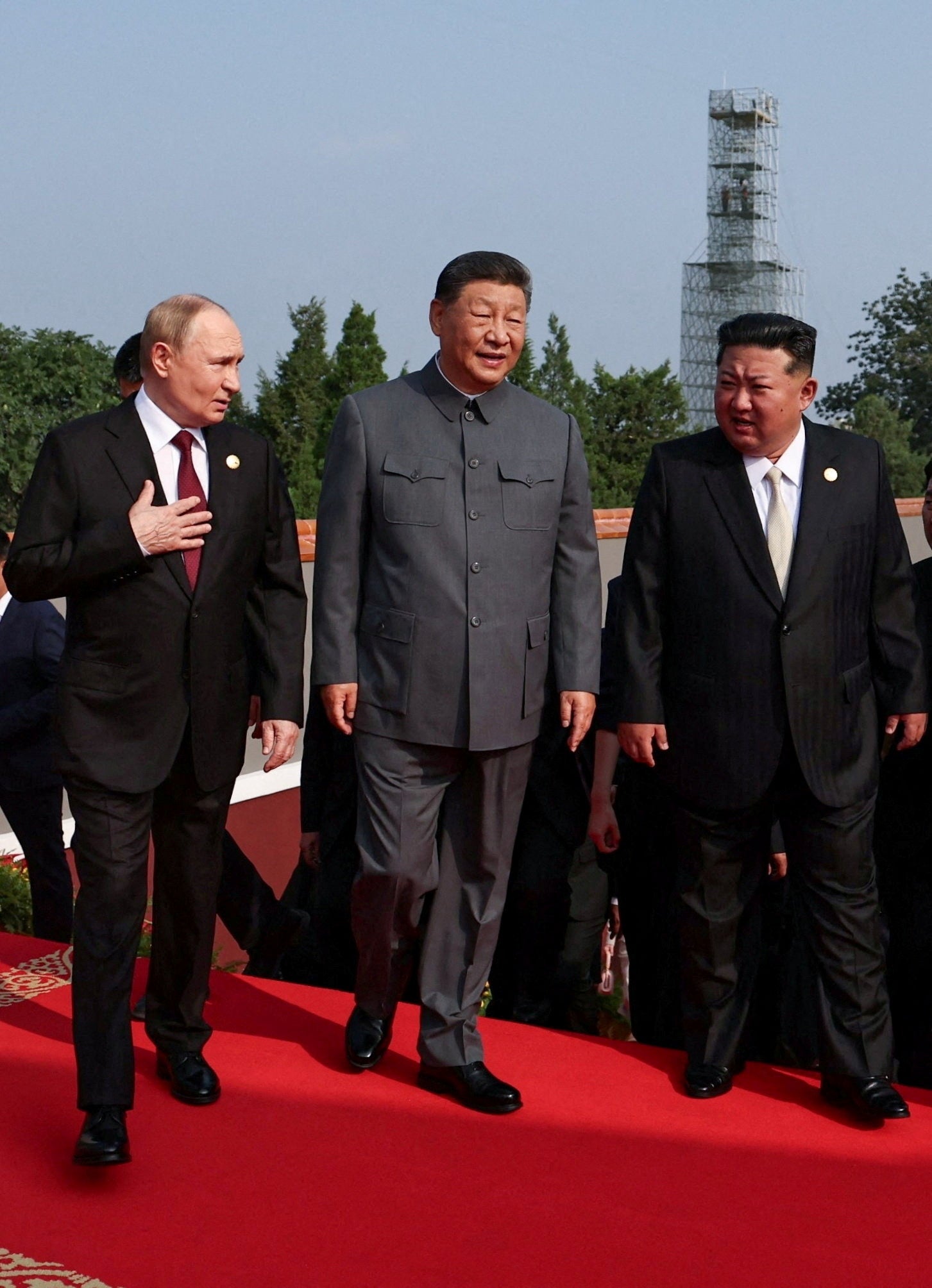
Potential discussions during the Kim-Xi meeting could include the resumption of Chinese tourism to North Korea and the opening of a bridge over the Yalu River, which has remained unused for years since its completion. The leaders may also explore joint economic development projects in the border regions shared by North Korea, China, and Russia.
The visit also raises questions about whether Kim will leverage his enhanced diplomatic standing to re-engage with Washington. His previous talks with US president Donald Trump collapsed in 2019 over disagreements regarding sanctions on North Korea.
Pyongyang has since rebuffed offers from Trump to resume negotiations after the American president entered his second term, insisting that Washington first abandon its demand for North Korea’s denuclearisation as a precondition. Kim met Xi before his summits with Donald Trump in Singapore and Vietnam in 2018 and 2019, moves widely interpreted as efforts to bolster his bargaining position. Park Won Gon, a professor at Seoul’s Ewha University, noted: "From North Korea’s perspective, there’s belief that having China’s backing provides a sense of security and confidence when seeking to improve relations with the United States."
Xi Jinping’s objectives
For China, the visit presents an opportunity to draw a traditional ally closer into its sphere of influence, potentially through offers of economic incentives and food aid – traditional forms of assistance Beijing has provided to North Korea.
Mike Chinoy, a former CNN journalist and author, suggested: "I think the Chinese are privately a little uneasy at the embrace of Kim Jong Un and Vladimir Putin, that the North Koreans have really gravitated very heavily towards the Russians. Part of Xi Jinping’s goal is to correct the balance."
Xi’s trip is his first overseas engagement in 2026 – he has become increasingly selective about state visits since the pandemic. Following separate engagements with both Trump and Putin, the timing of this visit is seen as strategic. Seong-Hyon Lee, a senior fellow at the George H W Bush Foundation for US-China Relations, commented: "The trip ensures no one can reshape the peninsula’s security architecture without his concurrence."
Beijing also appears to be adopting a more pragmatic approach to Kim’s clear nuclear ambitions. During Chinese foreign minister Wang Yi’s visit to Pyongyang in April, observers noted the conspicuous absence of the word "denuclearisation" from the official statement – a departure from China’s usual stance advocating for the denuclearisation of the Korean Peninsula. Lee elaborated: "The most telling sign of the visit may be a silence: if China’s official readout omits the word ‘denuclearisation,’ Beijing has effectively accepted North Korea as a nuclear state, folding the issue into its broader buffer strategy against the US."
In return, China may seek greater access to the estuary of the Tumen River, which forms part of the border between the two nations, and navigational rights in waters off the Korean Peninsula’s east coast.
Ultimately, while Kim is expected to extend a grand and lavish welcome to Xi, experts suggest China may find it challenging to extract significant concessions from an increasingly confident North Korean leader. Chinoy said: "He’s going to give Xi Jinping a welcome befitting of the head of state of their giant neighbour, but he’s not going to play the pliant ‘little brother.’"