Russia’s Oreshnik missile has returned to the spotlight after Moscow confirmed using the nuclear-capable weapon in overnight strikes on Ukraine, sparking fierce criticism from French President Emmanuel Macron and EU officials.
The Oreshnik missile is an intermediate-range ballistic missile that Moscow says can strike targets across Europe and evade modern air defence systems.
Its first known use came in a strike on the Ukrainian city of Dnipro in 2024. The weapon has since become one of the Kremlin’s most closely watched weapons systems.
Russian President Vladimir Putin has described Oreshnik as a “state-of-the-art” weapon capable of carrying multiple warheads and travelling at hypersonic speeds.
How far can the Oreshnik travel?
Russia classifies the Oreshnik, whose name comes from the Russian word for “hazel tree,” as an intermediate-range ballistic missile, meaning it can hit targets between 3,000 and 5,500 kilometres away. Russian military officials say it would be capable of striking targets across much of Europe.
Belarusian leader Alexander Lukashenko has said the missile has also been deployed in Russian ally Belarus.
Can it carry nuclear warheads?
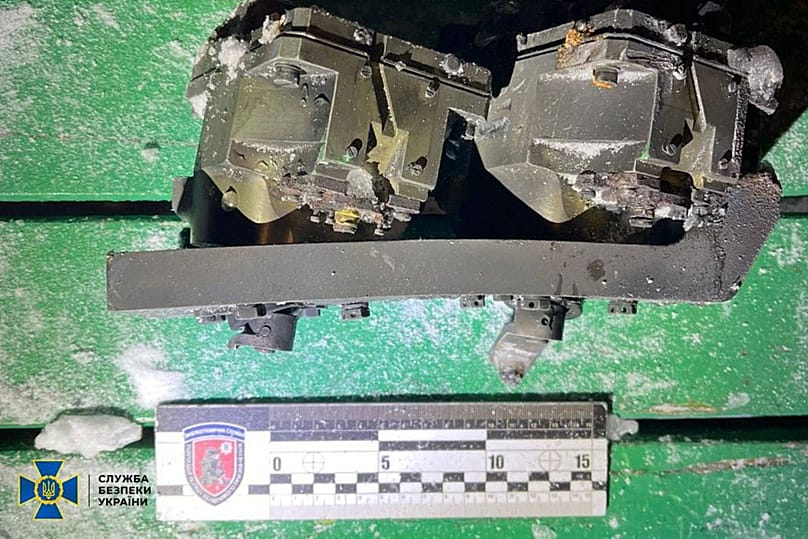
Russian officials say the missile is nuclear-capable, although the first known strike in Ukraine appeared to use non-nuclear or dummy warheads. Military analysts believe Oreshnik could eventually be equipped with nuclear payloads.
Putin has claimed the missile’s impact generates extreme heat and can destroy deeply protected targets, though the first strike in Dnipro caused relatively limited visible damage, Ukrainian authorities said.
Why is the missile difficult to intercept?
According to the Kremlin, Oreshnik travels at around Mach 10, or roughly 10 times the speed of sound. Russian officials claim this makes it almost impossible for current air defence systems to intercept.
The Center for Strategic and International Studies' Missile Threat project says it is "not uncommon" for ballistic missiles or their reentry vehicles to reach hypersonic speeds.
Where did the missile come from?
The US Department of Defense has described Oreshnik as an experimental system based on Russia’s RS-26 Rubezh, a road-mobile intercontinental ballistic missile. Putin has insisted it is not simply a Soviet-era upgrade, but an entirely modern weapon developed after an order issued in 2023.