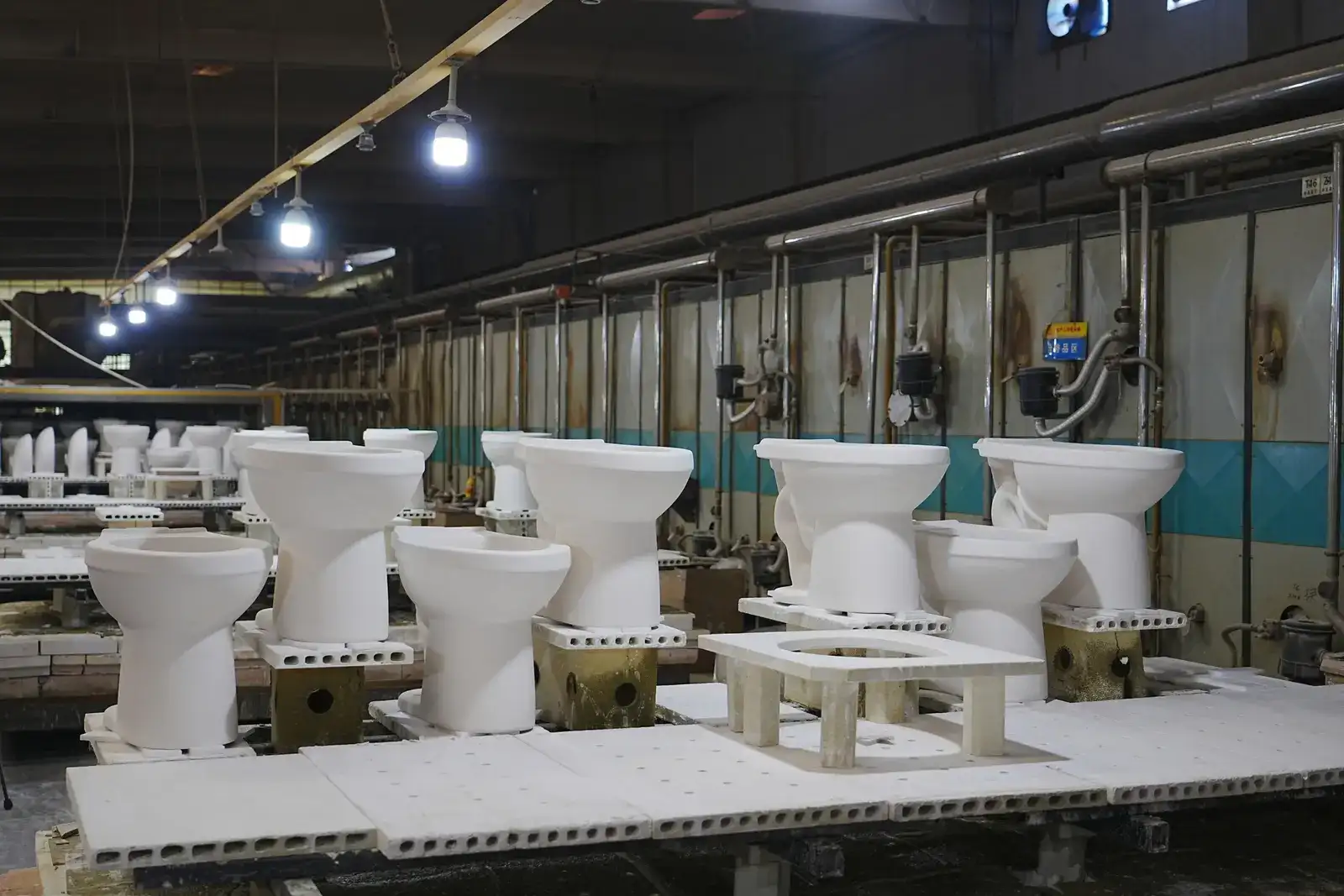
The war in West Asia has posed major challenges for the Morbi and Thangadh clusters in Gujarat, the world’s second-largest ceramics hub, which produces 90% of the world’s ceramics. While Morbi is known as the ceramic capital of India, Thangadh exports ceramic sanitary ware and tiles to a host of developing countries.
However, the current situation in both these clusters remains grim. Since the beginning of the West Asia war, involving the US, Israel and Iran, on February 28, the situation has been dire for these clusters, which are struggling to make ends meet, while clinging to hope for the future.
The war has shaken up the global trade and energy markets. Shipping has faced severe disruptions; oil prices have spiked; there are labour unrest and price surges, all stemming from the conflict and its impact on the Strait of Hormuz.
While a ceasefire has been in place for two weeks, uncertainty continues to loom. This disruption has directly impacted domestic industries that depend on a steady gas supply.
The ceramic industry in Morbi relies on propane or natural gas for its operations, which has not been available, says Ajay Marvania, President, Sanitarywares Division, Morbi Ceramic Manufacturers Association.
India depends on imports through the Strait of Hormuz to meet its gas and energy requirements. Due to the war, shipments through the Strait are nearly halted.
“We had to shut down the factories for one month because the rate was too high and our industry could not absorb it. Only a few units were open,” says Marvania.
Offering a snapshot of the industry, Marvania notes that the total ceramics market size in Morbi is Rs 60,000 crore and exports account for over 25% valued at Rs 16,000 crore. “Within exports, around Rs 5,000 crore is via Middle Eastern geographies, such as Saudi Arabia and Kuwait, which is totally at a standstill now. The freight costs have increased so much that no customer is willing to buy the goods at present,” he says.
On an average, Morbi, as a cluster, was able to achieve a monthly total business of Rs 6,000-7,000 crore earlier, which is down to Rs 1,000 crore now. We are in wait-and-watch mode,” he adds, ruefully.
The industrial city of Thangadh, which is well known for producing wall tiles, sanitaryware and pottery, faces a similar challenge. Out of approximately 250 factory units, only 10% are currently operational due to a shortage of gas.
Rajendra Raithatha, Director of sanitary unit Luxur Ceramics in Thangadh, says that the price of gas has increased 1.5 times, which is a big blow for the industry. “The price of gas was Rs 41/kg earlier. At present, it is around Rs 70/kg. This makes it difficult for the industry to sustain,” he explains.
A direct fallout of the gas price impact has been on the labour force, which is currently unemployed. “More than 40,000 workers are sitting at home right now in Thangadh because the units are shut. We are supporting them in this period, but if the situation continues indefinitely, it will get difficult for us. We urgently seek government intervention to support our industry,” Raithatha says.
The affordable sanitaryware manufacturing sector directly generates employment for these workers, which include skilled ceramic craftspeople, semi-skilled workers in moulding, kiln operation, and finishing, unskilled labourers in material handling, packaging, and logistics and support staff in quality control, maintenance, and administrative functions. In clusters such as Thangadh and Morbi, sanitaryware production is an avenue of critical livelihood support to worker communities with limited alternative employment opportunities.
Incidentally, the Panchal Ceramic Association Vikas Trust, an association of ceramic units in Thangadh, in a letter to Finance Minister Nirmala Sitharaman in January, had earlier urged for a reduction in goods and services tax (GST) from 18% to 5% on affordable sanitary ware (sale price below Rs 500). Now the association has again reached out to the government to help their industry as well as the labour which is dependent on it. “Every week we are writing to the government so that some help can come from a price standpoint. It is a 1,200-crore turnover industry in Thangadh, all of which is impacted right now due to shuttered units and price escalations. We have a human approach in this area of Thangadh where we support the labour that has been with us for so long. But the question is, till when?” he says.
The cluster exports low-cost sanitary ware to African countries and Sri Lanka.
While manufacturers, exporters, and workers in Morbi and Thangadh are hopeful that orders will pick up once the war situation eases, it is only uncertainty for now that is looming large. “There is no clarity right now on when operations can resume. We are just waiting,” says Raithatha.