
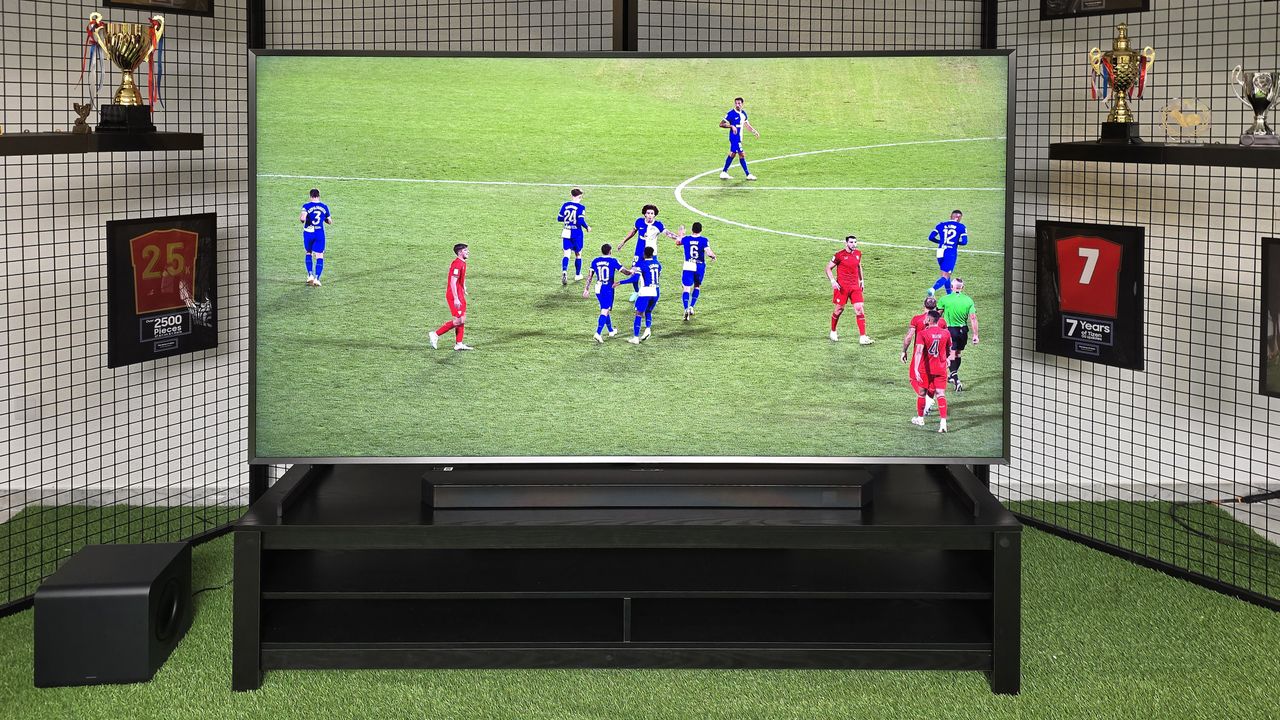
The FIFA World Cup is expected to draw an audience of 5 billion viewers across the globe as the biggest stars in the beautiful game pull on national colours to battle it out.
Will England face Spain in the final? Will it be France or Argentina? The best part of the World Cup isn't the final, it's all those games that make up this huge competition – and the hours of watching glorious football.
It's also a great time to buy a new TV, so you know you're getting the best picture you can. I've been a TV reviewer for more than 15 years – and in 2026, shoppers are spoilt for choice. Large screens are cheaper than ever, OLED TVs are seeing competition from Mini-LED, and there are some cracking deals on some of the best TVs.
For watching football, you want a bright TV, you want a big TV, and the latest tech like Freely in the UK gives you more flexibility too. These are the TVs that I would buy to enjoy the beautiful game at its very best – with different budgets considered.
T3's Top 3
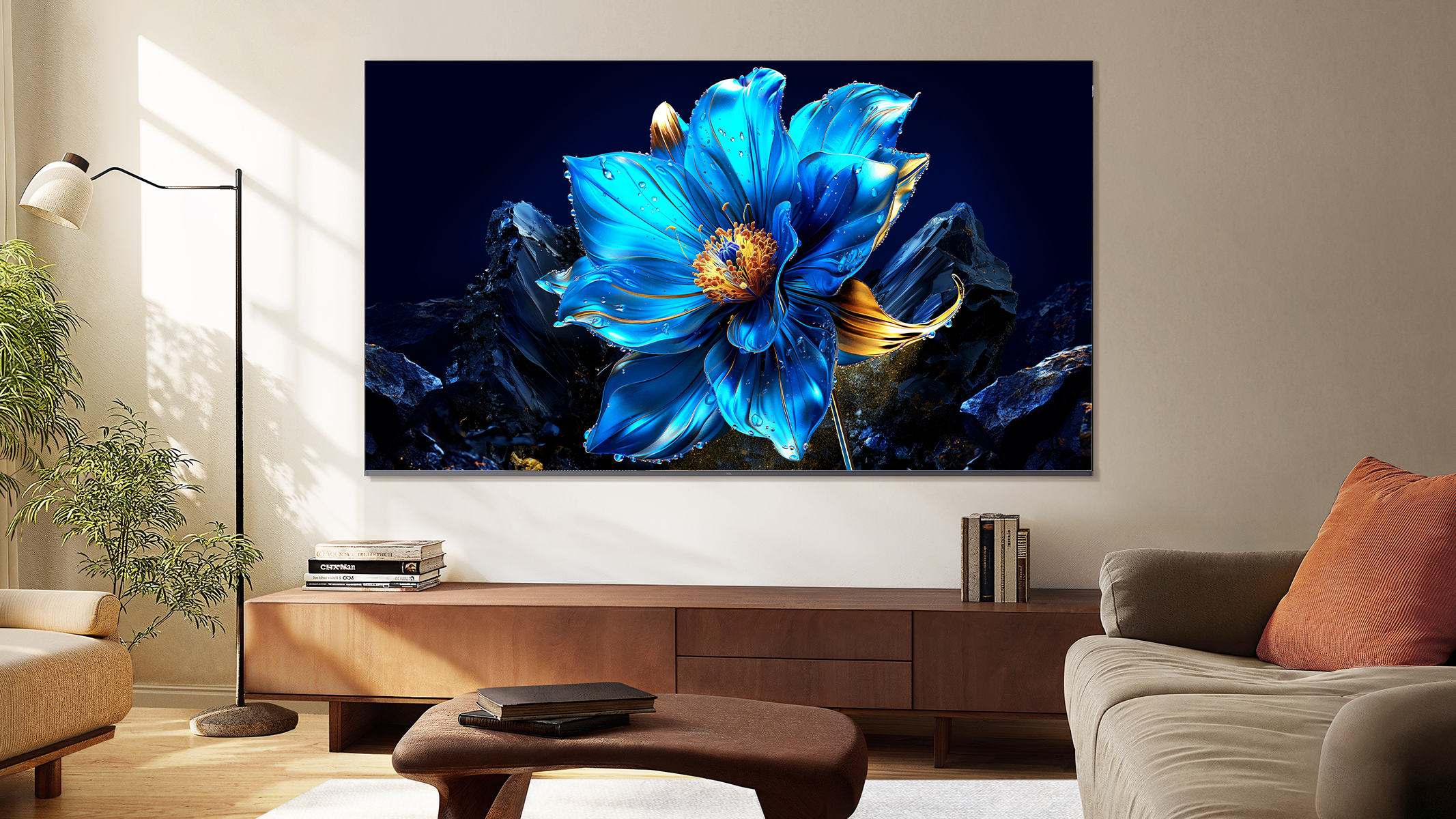
Best value TCL C7K
TCL has been challenging incumbent TV brands over the past few years combining a high level of specification with great value for money. The TCL C7K sits just below the company's flagship TV (the C8K), offering a capable Mini-LED screen and great specification elsewhere. You get a lot for your money – and while some tweaks are recommended to get the best results, it offers more than you get from bigger brands at this price. Ultimately, wide support for HDR formats, plenty of brightness and great colours make this TV sing for sports.
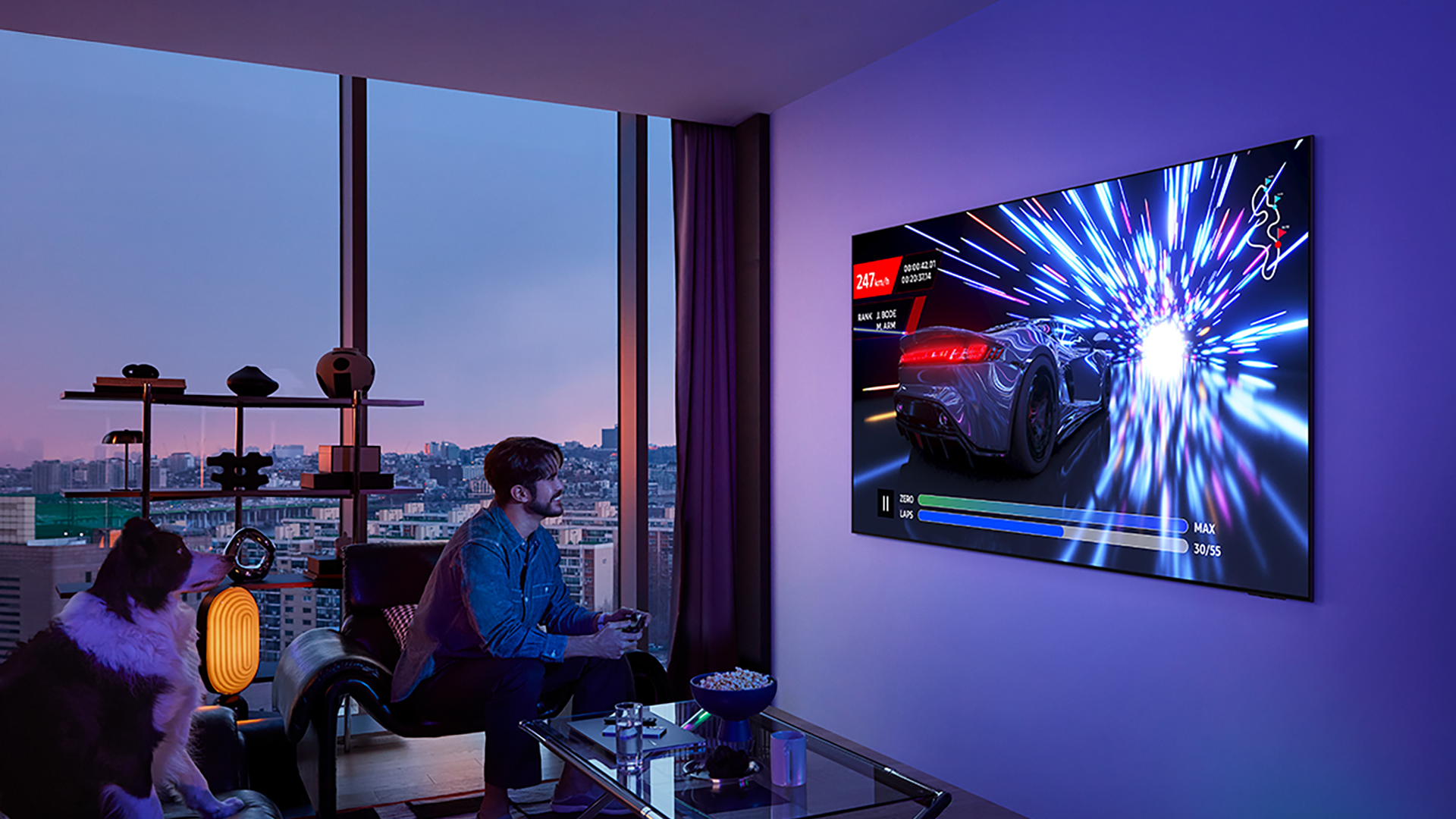
Best for quality Samsung S95F
The Samsung S95F was our top TV of 2025 and continues to be a solid choice. While Samsung's 2026 TVs are now available, the reduced price of the S95F adds to its appeal. This QD-OLED panel packs in really high brightness, real vibrancy, and it tops it off with a matte screen. This kills reflections in their tracks, making it a great choice for brighter rooms. There's premium design, pretty good sound, and there are four HDMI 2.1 ports so it's great for gamers – even if there's no Dolby Atmos support. It's every inch a premium TV experience.
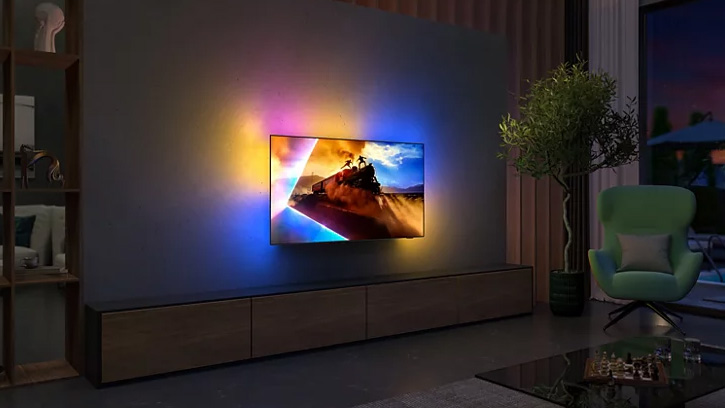
Best for immersion Philips OLED 760
Philips offers something that no one else does on its TVs – Ambilight. The OLED 760 is one of Philips' lower-spec OLED models, but we see that as an advantage: you're getting one of the most affordable OLED TVs available with stunning picture quality and the amazing contrast that OLED is known for. But Ambilight adds immersion with a light show that really draws you in – and it's great when watching sport, bringing the stadium into your front room. The screen isn't as bright as some, but Ambilight has unique appeal.
TCL vs Samsung vs Philips: Pricing
Pricing will often be key when it comes to making a buying decision on a new television. As we're talking about watching football here, I've picked 65-inch models, but each of these is also available as a 55-inch if that better suits your living space – with the advantage of being cheaper too.
The TCL C7K comes in at around £849, while in the US it's known as the TCL QM7K and costs around $800. It's the cheapest screen in the selection, but it offers excellent performance at that price.
The Samsung S95F is £1,999 / $2,199 and in each case that's a considerable saving over the original launch price: indeed, the S95H is £3,199 / $3,299, making that 2025 model look a lot more enticing. It's also a dream for movies and gaming.
The Philips OLED 760 is £1,455 for the 65-inch model, sitting between the two other screen selections nicely in terms of price. It's not available in the US, however, as no Philips models are.
TCL vs Samsung vs Philips: Unique features
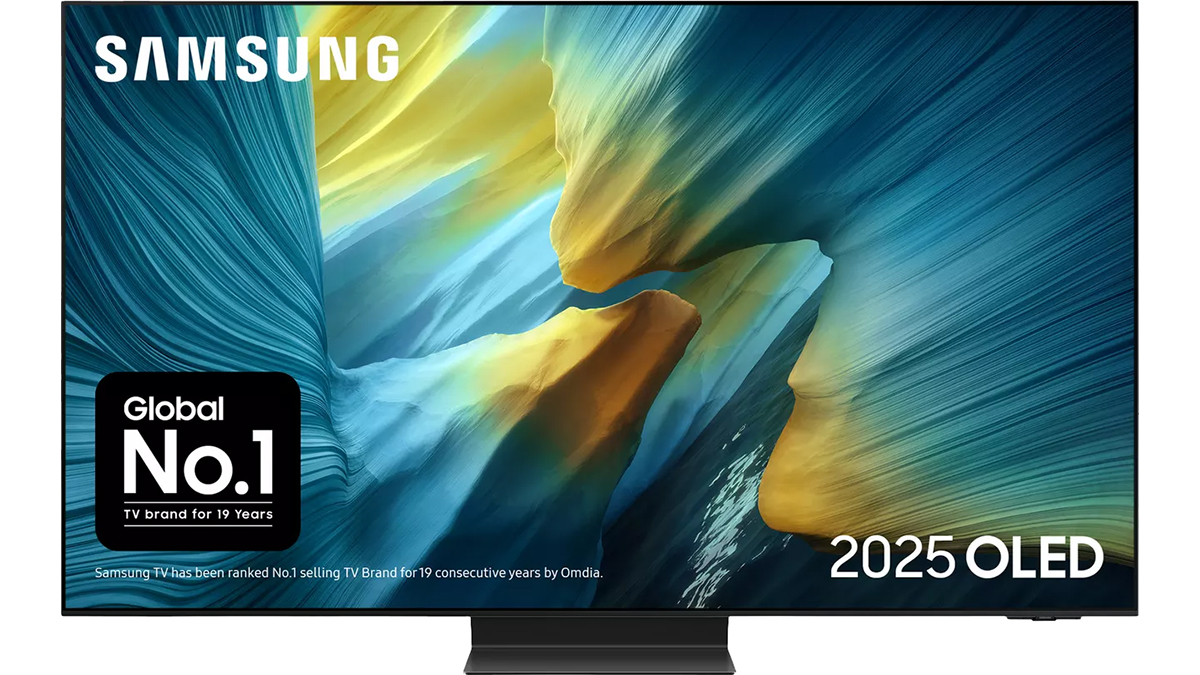
Samsung
While other displays are treated to be "anti glare", nothing destroys reflections as well as the Samsung S95F. For daytime viewing it's a no-brainer, especially as Samsung backs it up with high brightness to punch those colours through.
The downside, however, is that in direct sunlight the screen looks grey – and some will say that the normal glossy finish of an OLED gives for greater contrast and more depth to the image.
Samsung is using a QD-OLED panel, with high brightness, while it also supports 165Hz refresh rates and has four HDMI 2.1 ports – so it's a great choice for gamers. Samsung leans into HDR10+ because it refuses to support Dolby Vision.
Finally – and this might go some way to justify the expense – the S95F uses Samsung's OneConnect box. That means the connections are separate from the screen, making adding and removing devices really easy. It also means fewer cables across the wall if you choose to wall-mount it.
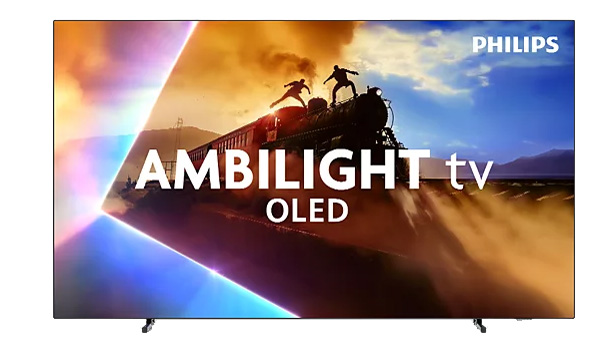
Philips
Unlike Samsung, the Philips OLED 760 has a glossy finish. While it's also an OLED screen, it's Ambilight that's unique to Philips as a brand. This uses LEDs on the rear of the TV to project light into the room that matches the action on screen.
It adds immersion and some (including myself) love the effect that it adds. When watching football, this paints the room in green from the pitch – it's a great effect and never fails to impress visiting friends and family.
This Philips model sits on Titan OS and one of the things it supports is Freely. That's the service that allows streaming of terrestrial broadcasts in the UK, so you don't need an aerial. That means you can put this TV anywhere, connect to Wi-Fi and stream the World Cup on BBC and ITV.
Philips also supports a full run of HDR standards, so unlike Samsung, you'll get Dolby Vision and HDR10+, although it's not as bright as Samsung's rival TV.
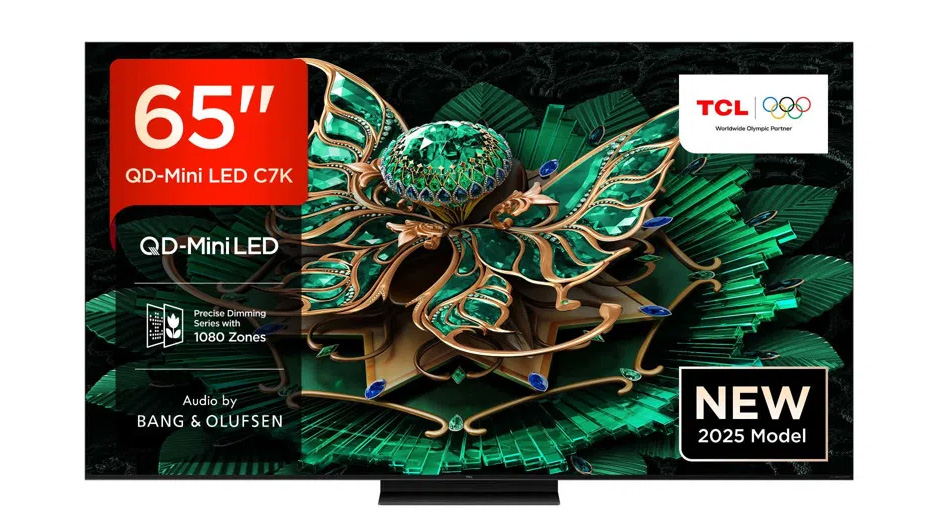
TCL
TCL uses a Mini-LED panel which means you get high brightness to really punch out images. This is paired with plentiful dimming zones to control the image and reduce instances of light bleed. For the price you pay, it's really impressive.
TCL doubles down on support for HDR formats, so again you'll be able to play both Dolby Vision and HDR10+, but it only offers two full-format HDMI 2.1 – so you have fewer options for connecting gaming devices at full refresh-rate capacity.
There's also an impressive Bang & OIufsen sound system on the TCL C7K with a 60W 2.1 channel output. This actually sounds okay straight out of the box – which many TVs at this price don't – although adding a soundbar will be even more immersive.
TCL vs Samsung vs Philips: Which has the best picture?
To say that you get what you pay for might be unfair on TCL, as it really does outperform its price, but generally, in this instance, that old adage remains true. If I was to rank these screens by picture quality the lowest-to-highest order would be TCL, Philips, Samsung. But it's more complicated than that.
TCL's strength lies in what you get for the money. There's a lot of brightness in its image and that means that content looks great. Sometimes it's too bright and some of the colours might look slightly forced, so tweaking the settings to your preference is definitely worth it. TCL can also be a bit funny with processing motion in some situations, so if you notice ghosting on screen, turn off the motion processing.
Philips offers a W-OLED panel, so it's not as advanced as the QD-OLED of the Samsung and it's not as bright. However, it's still a great performer in many situations giving that OLED contrast, colour pop and expert handling of dark scenes. The slightly restrained brightness compared to Samsung brings it in a step down, but if you wanted more, the Philips OLED 910 would be an obvious choice (and a pricier one).
We're really impressed with the performance of the Samsung S95F, which is why it won our Best TV 2025 Award. Set this TV down in a bright room and it will titillate with its performance. It looks sensational streaming high-quality content, with wonderful on-screen visuals. The only downside, is that some people don't like the matte finish and will prefer a traditional OLED look – especially if in a shaded or light-controlled room.
TCL vs Samsung vs Philips: Which is the best overall?
There is enough of a difference between these TVs for each to claim its place. The TCL C7K is far cheaper than rival models so you're getting real value for money. It's a great looking TV, loaded with specs and supporting all formats – I don't hesitate to recommend it.
Samsung S95F is a high-end choice, but in a bright room you really notice the difference to a traditional glossy finish. It will be visible when other TVs aren't. It might lack Dolby Vision support, but it still delivers HDR with aplomb.
Philips' OLED 760 is good value for an OLED model, but Ambilight is the icing on the cake. It brings a light show that's more immersive, setting the ambience in a room like no other TV can.
Honourable Mention
While all these TVs make for a great choice for World Cup viewing, it would be remiss not to mention one of the best TVs on the market – the LG OLED C5. Yes, LG has replaced the OLED C5 with a new model for 2026 called the OLED C6 which is better – but the OLED C5 is discounted so impressively that I wouldn't blame you for choosing it.
Time and again, the LG OLED C Series is recommended as the best OLED for many people, offering performance and value. It doesn't support HDR10+ and costs more than TCL; it costs a little more than Philips, but it's a bit brighter for more impactful images (but no Ambilight); it's cheaper than the Samsung S95F with a more traditional OLED delivery.