The deadly shooting of cop-killer Dezi Freeman has exposed that specialist police continue to work without body-worn cameras, eight years after a state force began to roll out the technology.
None of the officers who gunned down Freeman in March at a remote property in Thologolong near the Victoria-NSW border were wearing body-worn cameras.
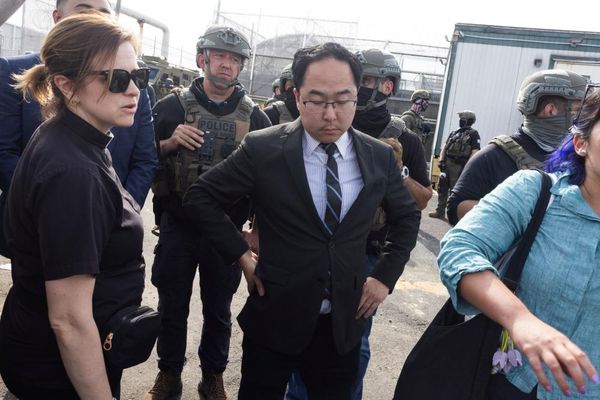
The officers were members of Victoria Police's special operations group, who conducted covert surveillance on the fugitive's location for a week before moving in and attempting to negotiate with him over several hours.
Victoria Police confirmed to AAP on Tuesday body-worn cameras currently in use were not compatible with the officers' specialist operational equipment, although a trial was nearing completion.
"Findings from this evaluation will inform any future decisions regarding broader implementation across the unit," a force spokesperson said.
Freeman was wanted over the double murder of Senior Constable Vadim de Waart-Hottart and Detective Leading Senior Constable Neal Thompson at his Porepunkah property, 310km northwest of Melbourne, in August 2025.
The officers were executing a warrant after disclosure of Freeman allegedly sexually assaulting a child, as well as attempting to involve a child in the production of child abuse material.
Seven months later, officers tracked the 56-year-old fugitive to a shipping container in Victoria's remote northeast.
Counsel assisting the state coroner, Lindsay Spence, on Monday said Freeman was later seen wrapped in a doona or blanket and emerged from the container with a green bag over his hands before dropping it and revealing a firearm.
He shot at police and eight members returned fire, fatally wounding him, Mr Spence told a pre-inquest directions hearing.
As specialist police were not equipped with body-worn cameras, the inquest into Freeman's death will rely on officers' testimony and footage captured from a police helicopter.
Body-worn cameras were trialled by Victoria Police in 2017 before they were rolled out to all frontline officers from mid-2018 to November 2019.
Camera data analysed from March 2021 by the state's auditor-general found officers activated their devices in 83.6 per cent of required instances.
A NSW police watchdog in 2025 recommended officers activate their body-worn cameras for any incident where they were likely to use their powers.
Police in that state are advised - but not required - to record as much of an incident as possible.
Victorian Greens leader Ellen Sandell said body-worn cameras were crucial for accountability and safety, and questioned why the state Labor government hadn't addressed the gap.
"It's quite extraordinary that eight years after Victoria Police started rolling them out, specialist police still weren't routinely wearing them," she said.
Premier Jacinta Allan would not say whether the situation was acceptable.
"I'm not going to comment every single day on evidence or material that is presented before that inquiry, because that would not just be inappropriate," she told reporters.
"We need to let that independent process do its work and provide further recommendations."
Freeman activated the voice memos function on his mobile phone, capturing 23 minutes of audio from inside the shipping container.
The shooting deaths of the two officers were captured on body-worn camera footage, Mr Spence confirmed.
State Coroner Liberty Sanger will hold separate inquests looking at the deaths of the two police officers and the final shootout involving Freeman.
There are no set dates for either, although both could take place next year.