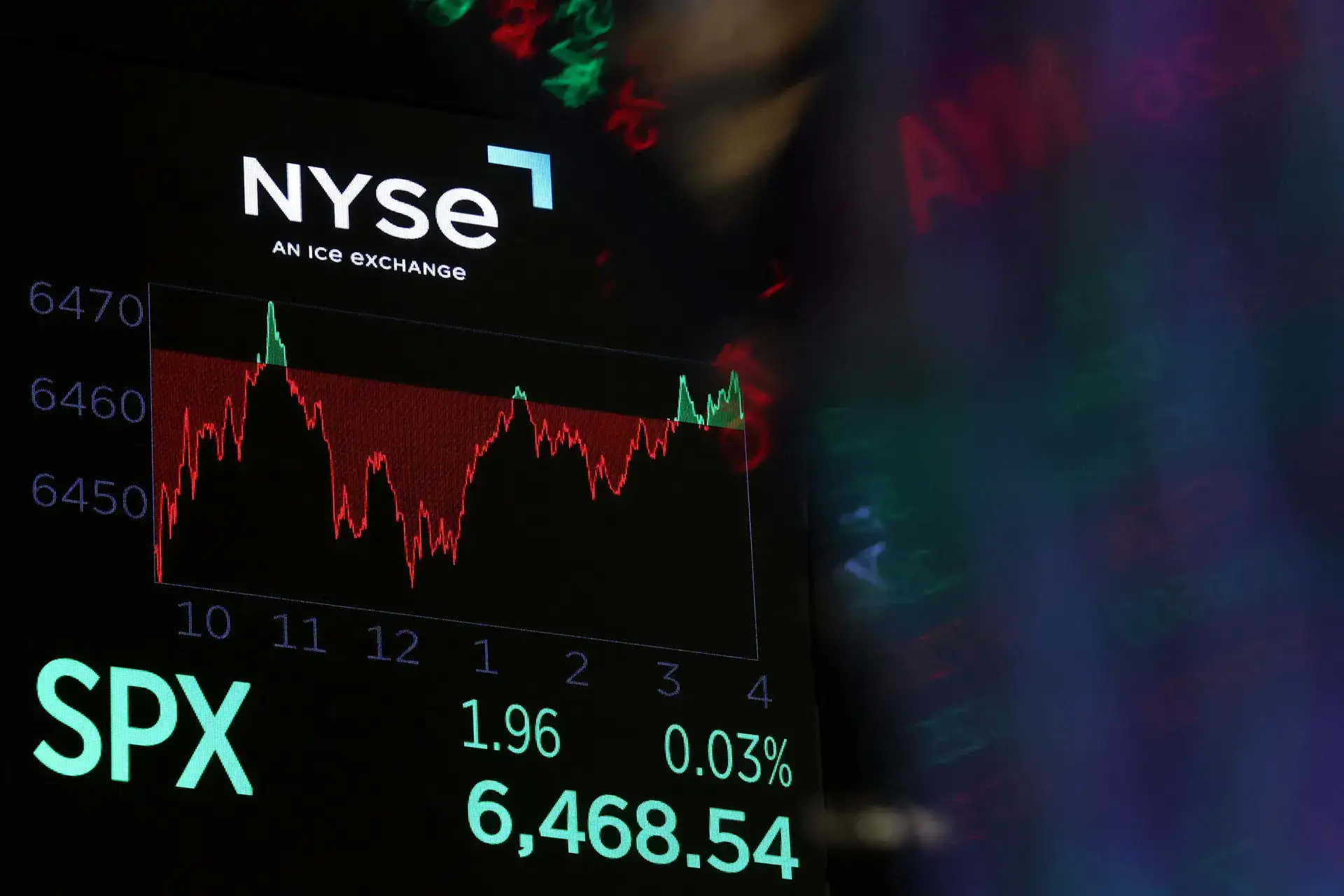
U.S. Stock Market is all set for a volatile trading on Friday as Wall Street futures fell in red after major indexes climbed to hit fresh records. S&P futures fell 0.66 per cent, Dow futures down 0.40 per cent, and Nasdaq futures slipped 0.98 per cent, and Russell 2000 futures tanked 0.79 per cent.
On Thursday, Wall Street shares gained with the benchmark S&P 500 rising 0.8 per cent to 7,501.24 and hitting an all-time high for a second consecutive day. Dow Jones Industrial Average was up more than 0.7 per cent at 50,063.46, the first time it closed at above the 50,000 level since the Iran war. The technology-heavy Nasdaq composite climbed 0.9 per cent to 26,635.22.
Nvidia, Cisco Stocks
Shares of technology giant Cisco Systems jumped 13.4 per cent following better-than-reported results and after said it was cutting fewer than 4,000 jobs, while Nvidia rose 4.4 per cent as investors' hopes grew over updates on sales of its advanced H200 chips to Chinese firms as CEO Jensen Huang visited Beijing with President Donald Trump.
Oil Prices Today
Oil prices climbed early on Friday, as US-Iran talks on permanently ending the Iran war stalled, and after a ship anchored off the United Arab Emirates was seized and another cargo ship near Oman was attacked.
Brent crude, the international standard, was 1.3 per cent higher at USD 107.06 per barrel. It was trading at around USD 70 a barrel before the war in Iran started in late February.
Benchmark US crude was up 1.4 per cent to USD 102.56 per barrel.
US Dollar
US dollar rose to 158.50 Japanese yen from 158.37 yen. The euro was trading at USD 1.1651, down from USD 1.1669. The greenback's strength pushed the yen to the weaker side of 158 per dollar and kept traders on alert for further intervention from Tokyo.
The dollar was set for a 1.3% weekly gain - the most in two months - supported by the lack of progress in the Gulf. Solid U.S. retail sales data also had markets pricing in a 45% probability that the Federal Reserve will have to raise rates this year, even under the new leadership of Kevin Warsh.
US Treasury
Rising inflation risks driven by the surge in oil prices are weighing on investor appetite for U.S. Treasuries, with a run of soft auctions this week — spanning three-year notes, 10-year notes and 30-year bonds — underscoring the market's fragility.
The latest 30-year bond sale ended at 5.046%, the highest yield for that maturity since August 2007. The higher yield attracted some buyers on Thursday but 30-year Treasury yields were on the march again on Friday, up 5 basis points to 5.067%, the highest since July 2025.
While the long end of the Treasury curve grabbed headlines, borrowing costs are also spiking at the short end. The yield on U.S. two-year notes rose 7 basis points on Friday to 4.065%, the highest since March 2025, while the 10-year yield also climbed 7 bps to 4.528%.
US-China-Iran-Strait of Hormuz
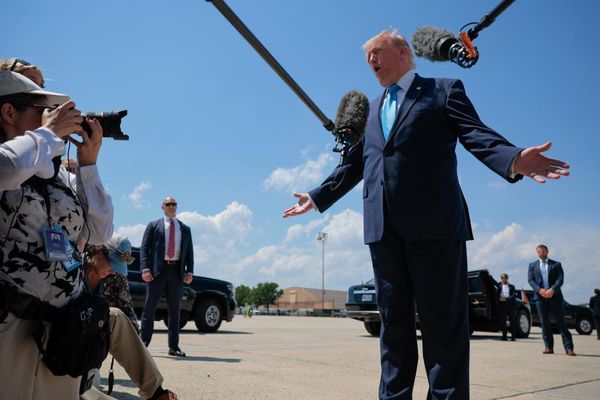
Trump is wrapping up his China visit on Friday after a series of meetings with Xi that touched on issues including US-China trade, further economic cooperation and Taiwan. Investors are monitoring trade deal updates on areas such as American soybeans, beef and airplanes.
While there is optimism over US-China relations, some analysts are suggesting any deals should be looked at with a sense of caution. “Headline deals should be looked at with a healthy degree of scepticism,” wrote Leahy Fahy and Julian Evans-Pritchard, China economists at Capital Economics, in a Friday note.
A number of the promised projects and investments that came out of US-China deals from Trump's last China visit in 2017 did not end up materialising, they said, as tensions between Washington and Beijing elevated rapidly during the few years after that.
Trump also said in an interview that China could buy US oil, more than a year after China effectively stopped buying crude oil from the United States following Trump's imposition of hefty trade tariffs last year.
Global energy flow has remained constrained with the Strait of Hormuz, crucial for global oil and gas transit, still largely closed and as the US imposed a sea blockade on Iranian ports since last month.
The White House said on Thursday after a bilateral meeting between Trump and Xi that both sides agreed the Strait of Hormuz must remain open.