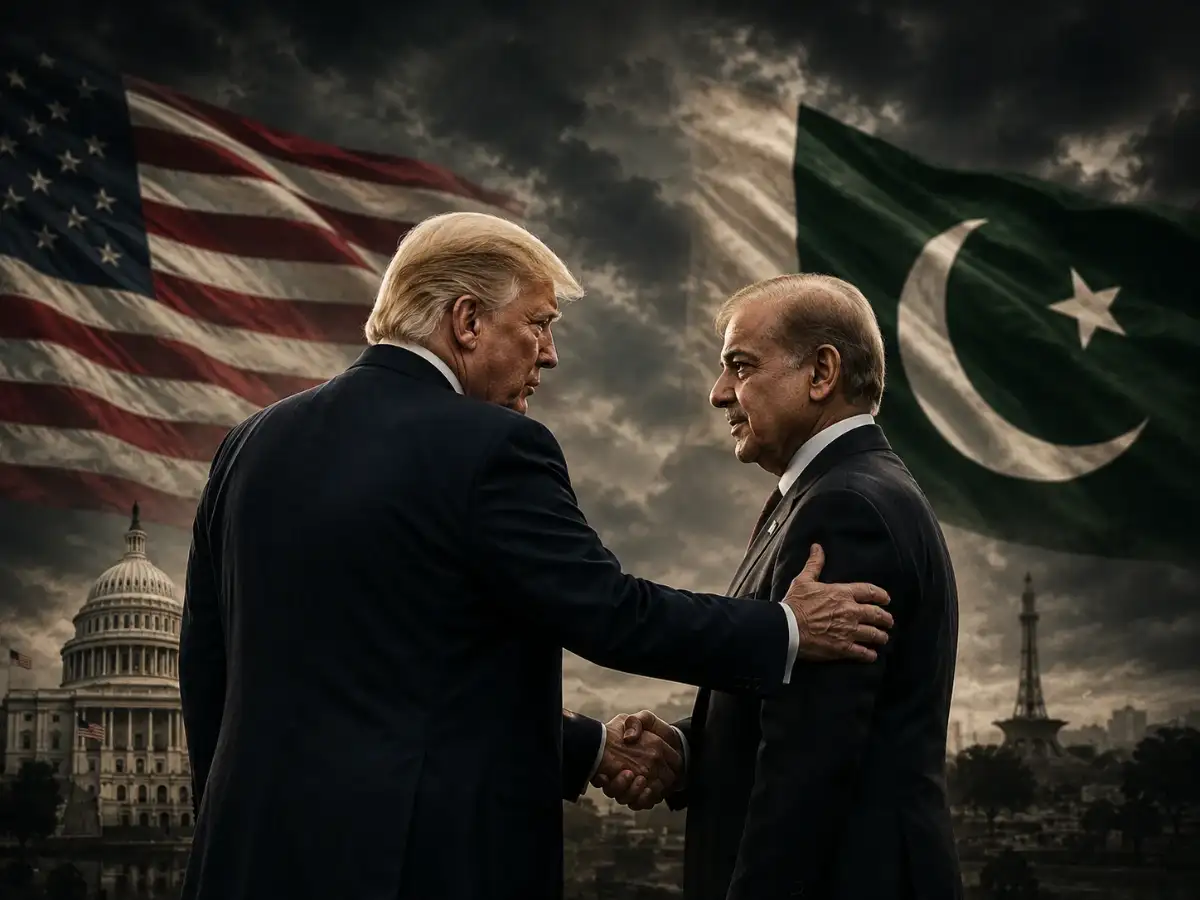
US President Donald Trump has once again turned the spotlight on the Abraham Accords, urging more countries to come on board and calling the deal a clear economic and social success. But his push could put Pakistan in a difficult spot — especially at a time when Islamabad has been trying to position itself as a mediator between Iran and the United States amid rising tensions.
In a long post on Truth Social, Trump said his recent conversations with leaders from Saudi Arabia, the UAE, Qatar, Pakistan, Türkiye, Egypt, Jordan and Bahrain left him convinced that joining the accords “should be mandatory” for many of them. He further described the agreements as a “financial, economic, and social boom” and said it could bring lasting peace and strength to the Middle East.
The timing is significant. Tensions between Washington and Tehran continue to rattle global markets, and several countries in the region are eager for stability. A major factor is the Strait of Hormuz, through which 20 per cent of the world’s oil and gas passes.
Also Read | Trump says Iran talks ‘proceeding nicely’, pushes for expanded Abraham Accords
Trump even hinted that Iran could, at some point, be part of the framework. “It would be an honor to have them also be part of this unparalleled world coalition,” he wrote.
Strategic ties vs domestic sensitivities
For Pakistan, though, the situation isn’t so straightforward. Islamabad has consistently held off on recognising Israel, saying it would only consider such a move after the creation of a Palestinian state based on pre-1967 borders, with East Jerusalem as its capital. At the same time, it has deep financial and strategic ties with Gulf countries—many of which are steadily warming up to Israel.
That leaves Pakistan walking a tightrope. On one hand, it can’t ignore pressure from key allies and the US. On the other, any shift towards Israel could trigger strong backlash at home, where support for the Palestinian cause runs deep.
So far, Pakistan has stayed out of the Abraham Accords, wary of both political and public reaction. But as regional dynamics shift and pressure builds, that balancing act is only getting harder—with fewer easy choices left.
Also Read | Trump says any Iran deal will involve 'no cash', differ from Obama-era agreement
What you need to know about the Abraham Accords
The Abraham Accords is named after the shared heritage of Judaism, Islam and Christianity. Brokered by the US in 2020, it aims to normalise relations between Israel and several Arab nations.
The first agreements were signed in September 2020 between Israel, the UAE and Bahrain. Since then, Morocco and Sudan have joined, expanding the framework.
These deals marked one of the biggest diplomatic shifts in the region in decades.