A transgender pool player banned from competing in women’s English eight-ball tournaments is taking her fight to overturn the decision back to court in the name of “integrity and fairness”.
Harriet Haynes lost a discrimination claim against the English Blackball Pool Federation (EBPF) at Canterbury County Court last August after a judge ruled that the exclusion of those not assigned female at birth was the only way to ensure “fair competition”.
Now, she has been allowed to appeal that ruling in a case that is likely to be the first to test the impact of last April’s milestone Supreme Court ruling, which ruled the definition of a woman under equality law is someone who is biologically female, on women’s sport.
Ms Haynes said: “The appeal grant in itself has gone as well as we could have ever expected…We are so close, yet so far. If we win on any one of the points, we’ll be in a really good spot. It’s all about integrity and fairness, that’s the whole point of our case.”
Speaking about how her life has been changed by the Supreme Court ruling, Ms Haynes said: “I’m not scared of any repercussions, but just going into a female toilet in a workplace now is almost forbidden. How are they going to regulate that? And how does that align with my Section 8 of the Human Rights Act, because that to me doesn’t align.
“My passport says female, my birth certificate says female, I don’t have to tell them that I’m trans... and I’m very private about it.”
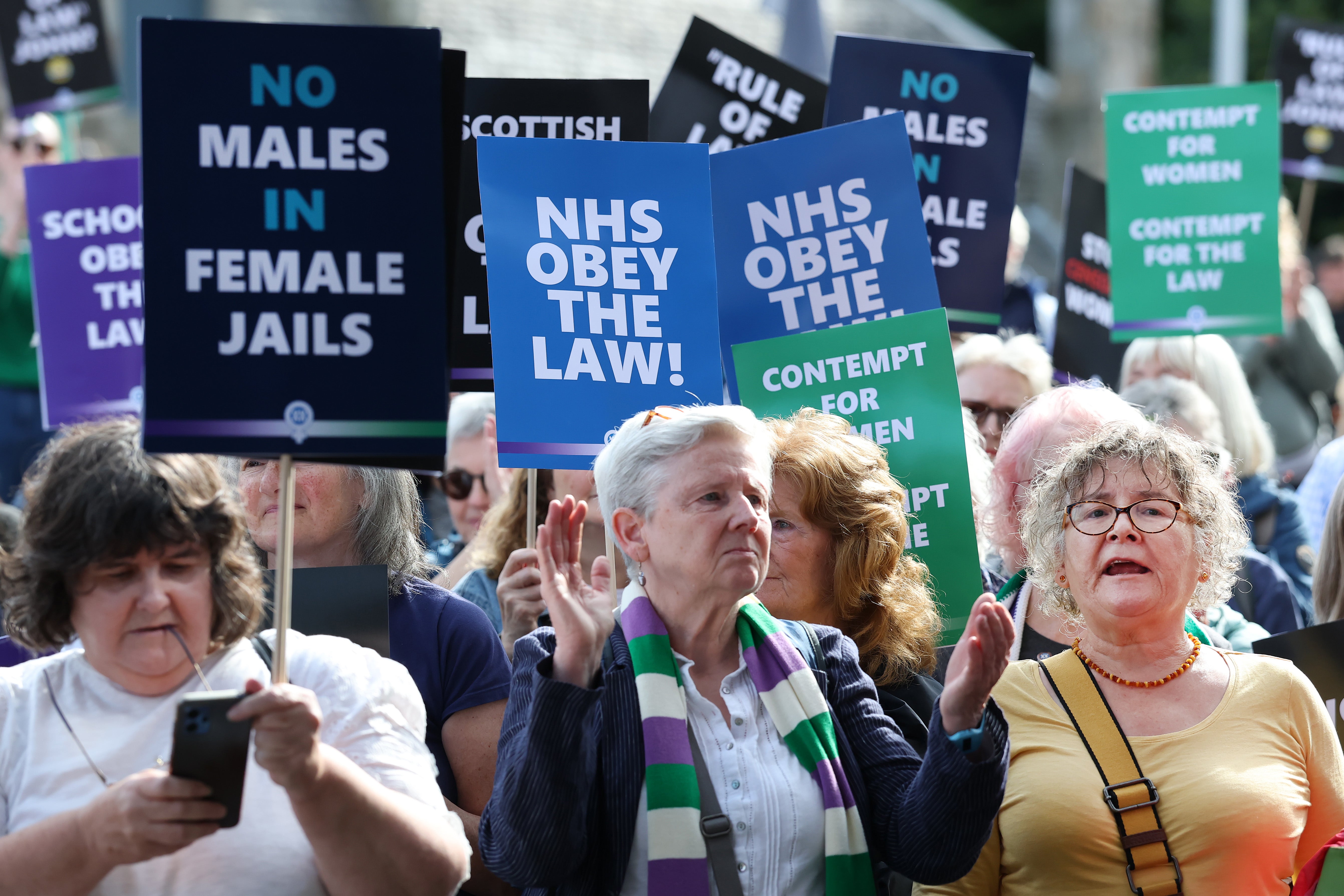
The decision in the Supreme Court case, brought by campaign group For Women Scotland (FWS), has already had wide-ranging implications for transgender inclusion in sport and other spaces. Since the ruling, transgender girls have been told they will be banned from Girl Guides groups in the UK by September, The National Federation of Women’s Institutes has restricted membership to those registered female at birth, and trans women are now barred from some women’s toilets.
Most recently in sport, the Darts Regulation Authority has banned transgender women from competing in its women’s events with immediate effect. Last week, Noa-Lynn van Leuven, who in 2024 became the first transgender woman to compete in the Professional Darts Corporation (PDC) World Championship, said the decision had “effectively retired her”. She revealed on social media that she was emailed the news, saying: “I just got an email and apparently I just got retired, not by choice but because I am no longer allowed to compete”.
Reacting to the news of the trans ban in darts, Ms Haynes told The Independent that she was “disgusted by their process, or lack of process that they went through”.
The DRA said last week that its decision to ban trans women was taken after a review of its policy, which included a report from Dr Emma Hilton, an academic developmental biologist who has researched the impact of sex on sport.
In a statement, the association added that they had taken extensive legal advice and “took into consideration” the Supreme Court ruling and Ms Haynes' subsequent ban from her sport.
Dr Emma Hilton, who is the interim chair of trustees of sex-based rights campaign group Sex Matters, was a witness in Ms Haynes case against the EBPF.

Ms Haynes said: “It’s tough to put into words how unfair this whole situation is. The fact that they’ve gone out of their way to employ someone who is so one-sided, that’s the biggest gripe for me. If they had created the rules with a person who was neutral, it would have stung a bit less.”
Fiona McAnena, director of campaigns at charity Sex Matters, said: “We welcome further scrutiny in the courts, so that all sports bodies are clear that the Supreme Court ruling in the For Women Scotland case applies to them.
“Anything offered for women can only be for biological females. That is how to ensure women and girls get fair sport.”
Ms Haynes’s appeal in the High Court will challenge the impact of banning transgender women from women’s sport, and test whether it is necessary to secure fair competition. Ms Haynes’ team will also argue that the impact of the Supreme Court ruling does not comply with Article 8 and Article 14 of the ECHR, which protect the right to a private life and prohibit discrimination.
Matt Champ, senior associate at Colman Coyle, who represents Ms Haynes, said: “Someone’s got to go through the process, and it looks like we are going to be the first to grapple with these issues.
“It just seems like trans people are an easy target. Since the decision in FWS, everyone is jumping on the bandwagon and banning trans people whether rightly or wrongly. They don’t care whether they followed a decent process because their immediate response is well, the Supreme Court said I was allowed to do it.
“This case started out quite niche, about pool and trans people competing, but now it could well be the first appellate case to consider how FWS is applied to individuals.”
Dr Hilton has been approached for comment.
Conor McGregor settles whiskey business dispute with ex-sparring partner
Prince Harry rejects ‘offensive’ defamation claim by his former charity Sentebale
Two-thirds of Gen Z adults say money is harming their mental health
Man dies following road crash in north Belfast
Residents says expansion of Princess Kate’s cancer hospital ‘will harm house prices’
Jay Slater’s mum hits out at ‘relentless’ trolls as she pushes for law change