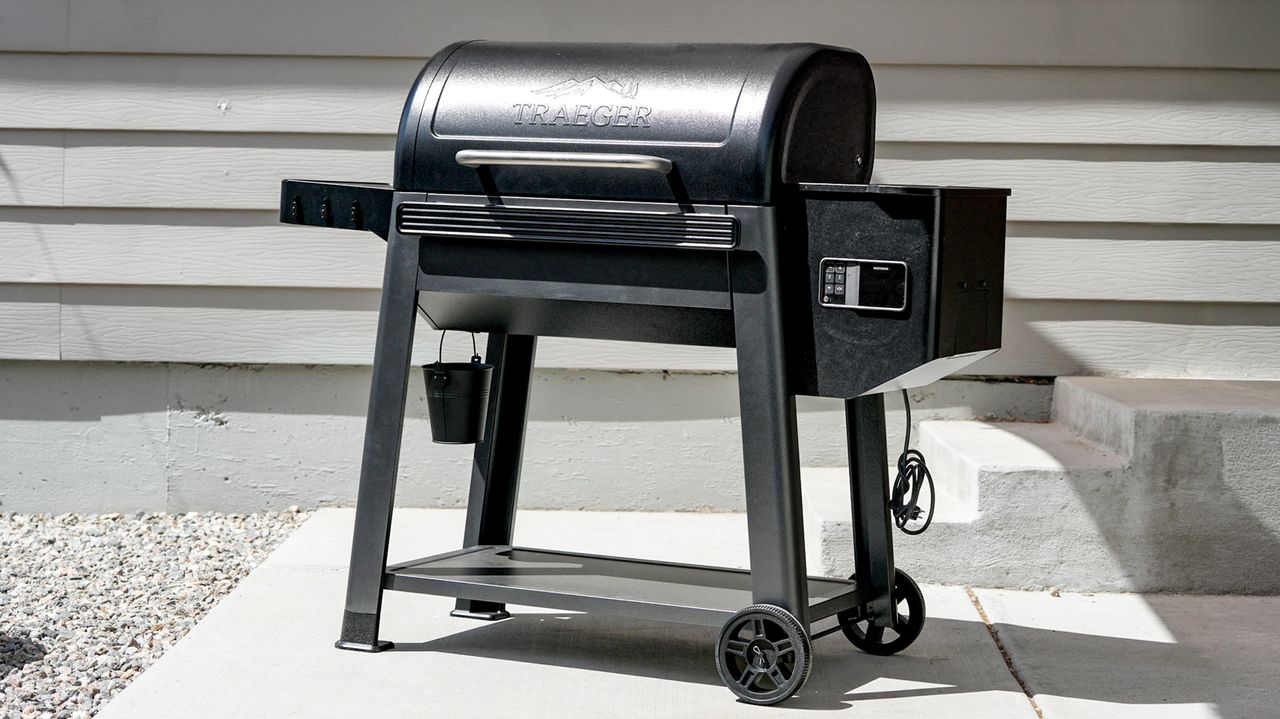
Traeger Westwood XL Grill Review: Specs
Price: $800
Weight: 128 pounds
Dimensions: 46x53x26 inches
Cooking space: 823 square inches
Hopper capacity: 18 pounds
Temp. range: 180-450 degrees F
If you’re a BBQ aficionado, chances are you’ve already tried out a ton of different smokers, from charcoal to wood and pellet smokers. If you haven’t, you might be a bit overwhelmed with the best grill choices.
The Westwood XL from Traeger aims to simplify the process for you by offering a set it and forget it smoking experience, as well as versatility for high-heat grilling. It’s a spacious unit, giving you tons of space to get lots of meats and sides on the grill at once.
And you can definitely cook low and slow as the pros do for great barbecue. The Westwood XL doesn’t get hot enough for real meat searing, but it still works well enough for most grilling if you’re just cooking dinner on a weeknight.
If you’re after an intense smoky flavor however, the Westwood XL isn’t your unit. But if you want some decent smoked meats without the hassle of babysitting a fire all day long, this might be your next backyard cooking mainstay. Here’s what happened when I cooked up a storm.
Traeger Westwood XL Grill review: Price and availability
The Westwood XL costs $800 and is available for purchase now on Traeger’s website. It comes with a 7-year limited warranty, and you can finance the purchase using Affirm at checkout.
It’s also available at other retailers like Ace or Home Depot, though pricing and availability may vary.
Traeger Westwood XL Grill review: Design
Unboxing and building the Westwood XL took me about an hour. The included instructions are super easy to follow, and they’re thorough, so you shouldn’t have much issue building this even if you’re not a particularly handy person. Traeger even includes the screwdriver you’ll need to build the unit.
First, you’ll need to do an initial burn-off to make sure all the oils and debris from manufacturing and shipping get torched off. This basically involves running the Westwood XL for about 30 minutes, though I did it a bit longer: about an hour until the smell of some of the oils dissipated.
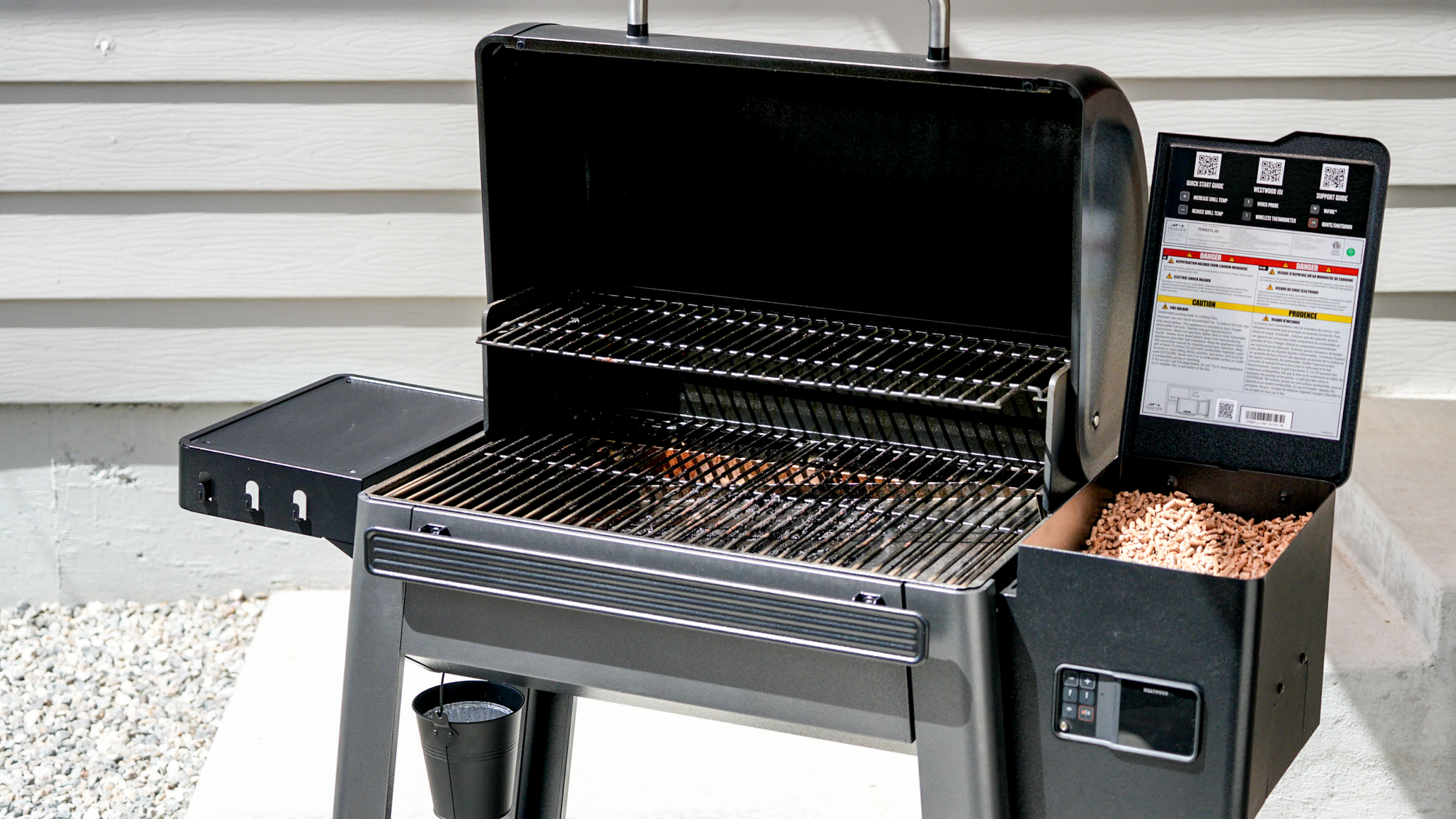
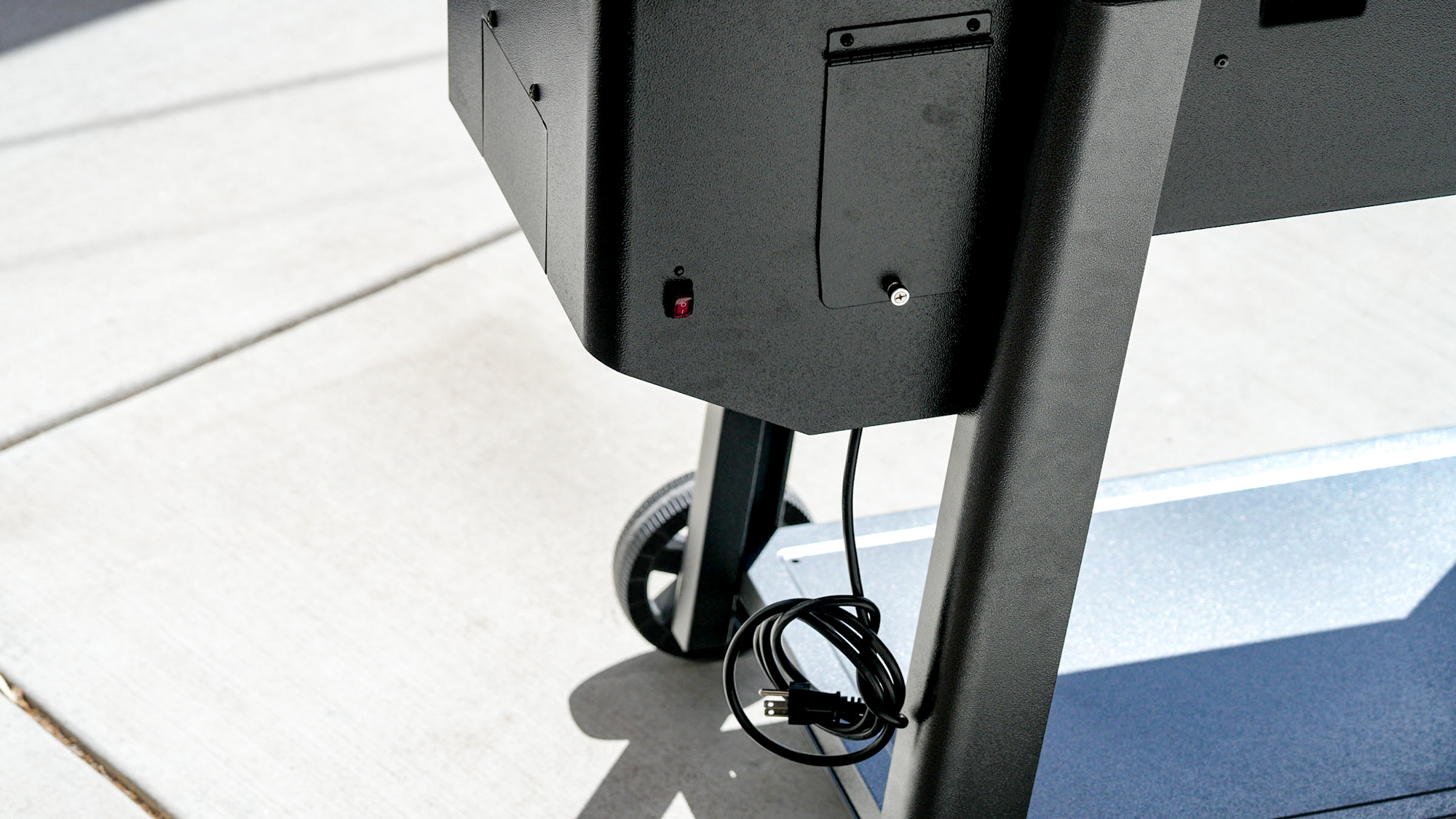
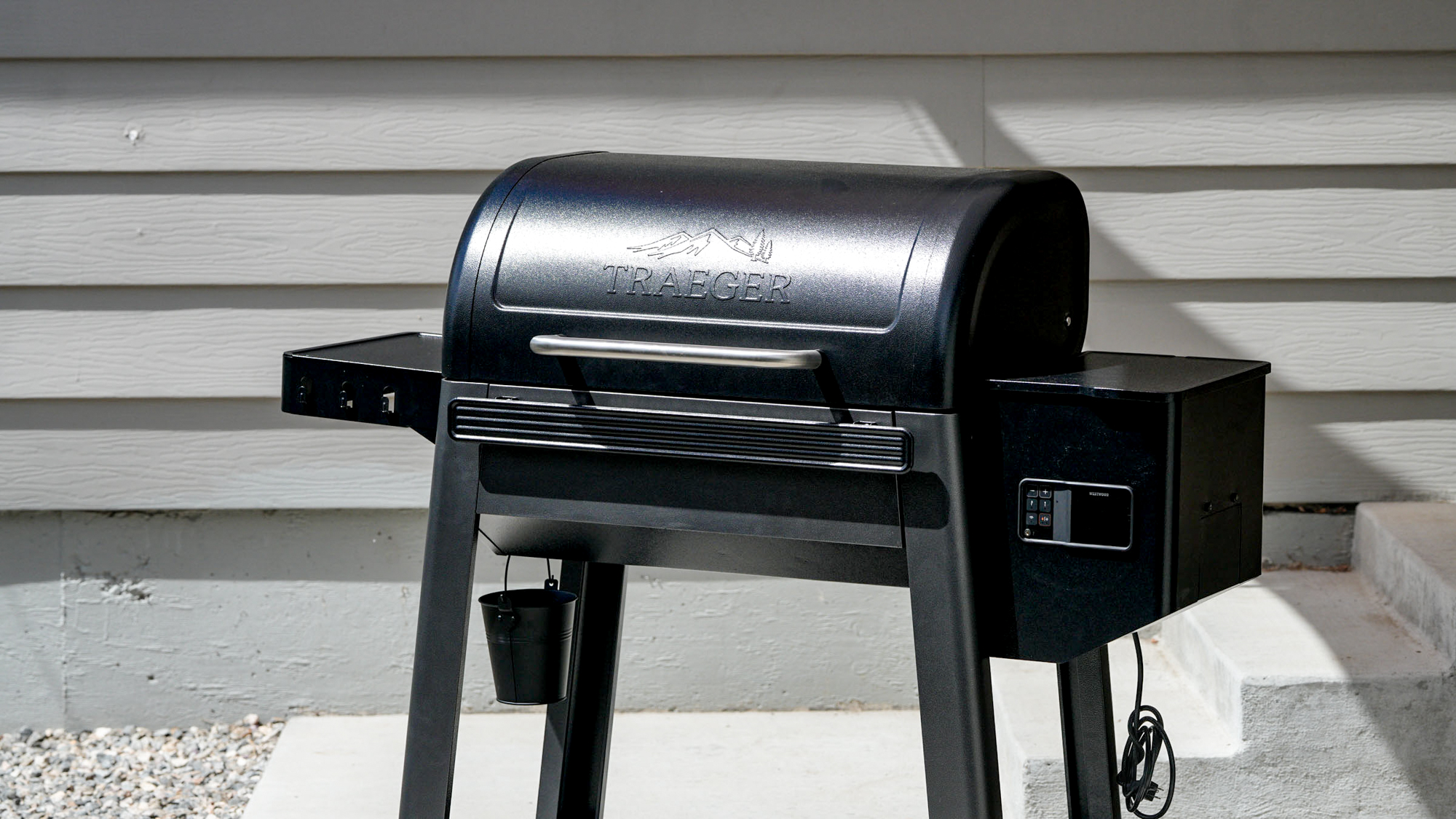
The Westwood XL is a fairly straightforward pellet smoker. The pellet hopper lives on the right side of the main cooking chamber. It’s here you’ll load up on the pellets of your choice, though Traeger recommends Traeger-branded pellets to ensure quality. The control unit is mounted to the front of the hopper, and the power switch is on the back.
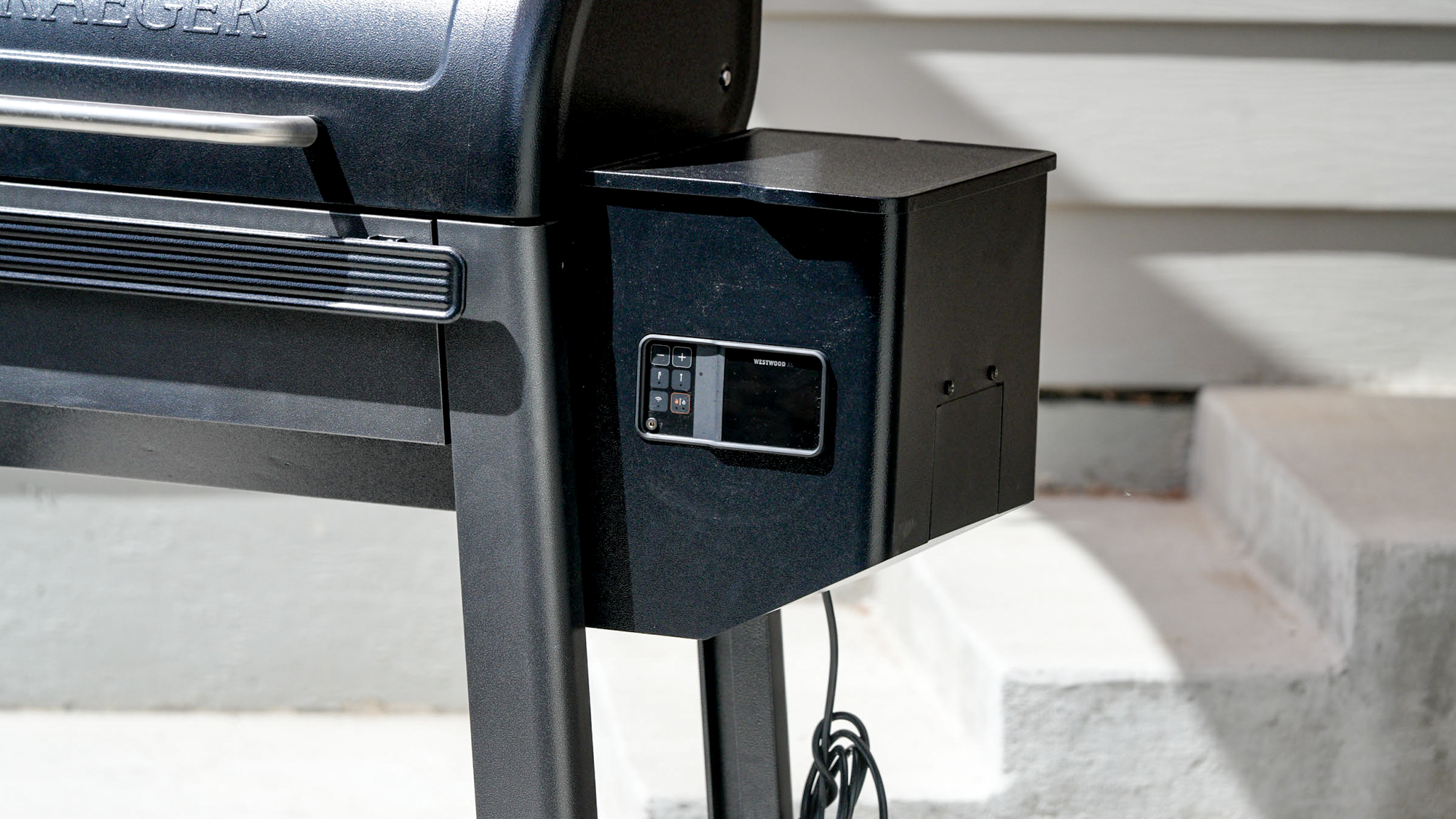
At the bottom of the hopper, an auger transfers pellets in toward the cooking chamber to provide both heat and smoky flavor. The augur runs automatically and feeds pellets based on your chosen temperature and cooking time. The hopper itself can hold up to 18 pounds of pellets at a time.
The main cooking chamber features 823 square inches of cooking space across two levels of cooking grates. Beneath those, a drip tray runs the full length of the cooking area to ensure no grease falls through. That funnels into a removable grease trap that you can empty when needed. It also comes with a removable tin liner if you prefer to simply toss out the liner with the collected grease.
The Westwood XL has a cooking temperature range of 180 to 450 degrees Fahrenheit, making it appropriate both for smoking low/slow and grilling at high heat.
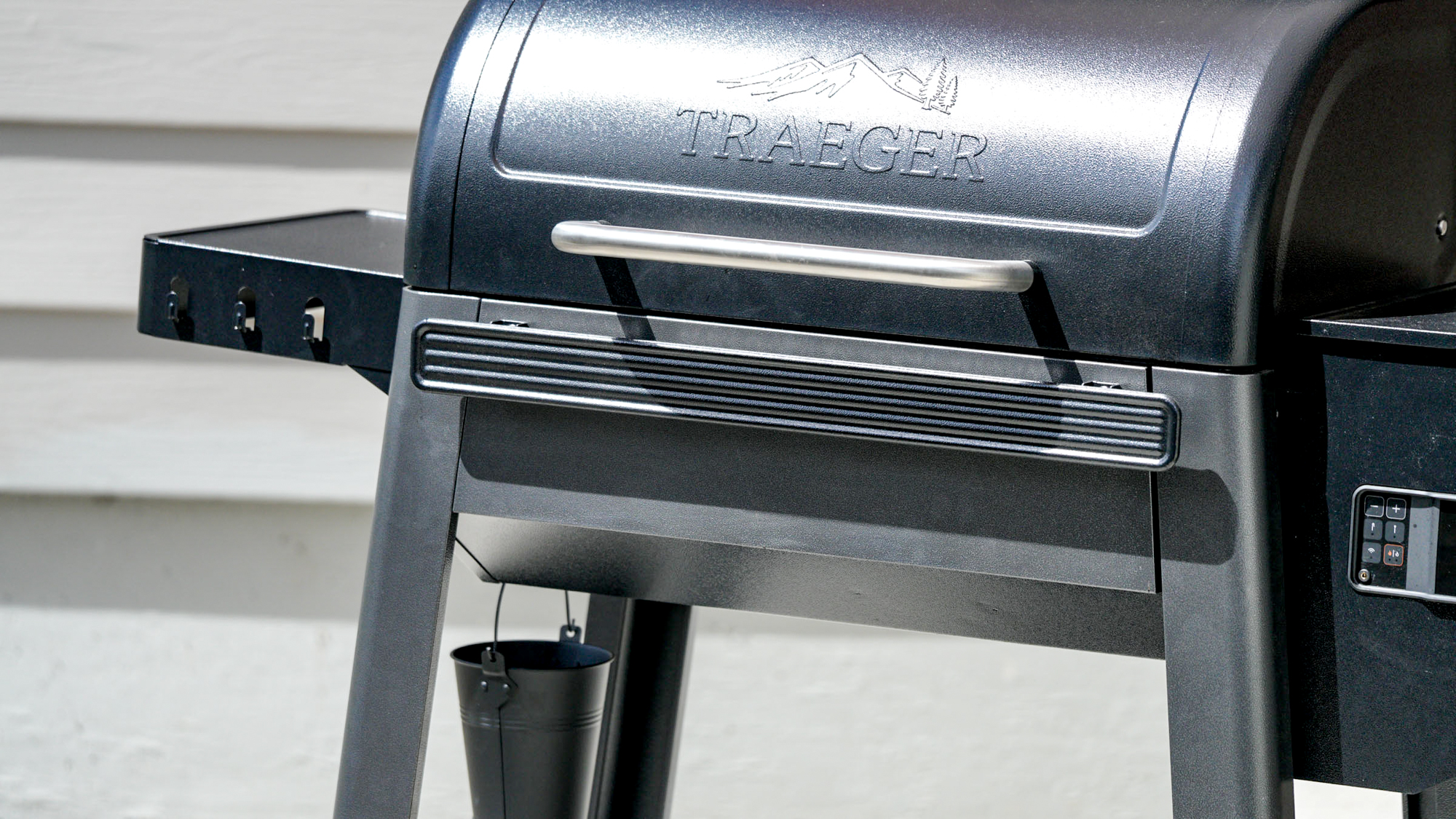
To the left of the cooking chamber, you’ll find a small prep shelf with cooking tool hooks mounted to the front. It’s not a lot of real estate, just enough to put your cutting board full of meat before and after cooking. Fortunately, you can also use the top of the pellet hopper, though if you need to open the hopper to add more pellets, you’ll need to clear off anything sitting on the hopper lid.
You can accessorize your Westwood XL using Traeger’s P.A.L. Pop-And-Lock accessory system. The P.A.L. mount lives on the front of the Westwood XL, and it’s here that you can add compatible accessories, including additional prep space.
There’s also a much larger storage shelf beneath the cooking chamber. This is a good place to store unused pellets, though you’ll want to make sure they’re stored in a heat-resistant container. If you plan on storing the grill outside without any grill cover or other protection, you’ll also want to make sure that the container is weatherproof so the pellets don’t get wet and expand.
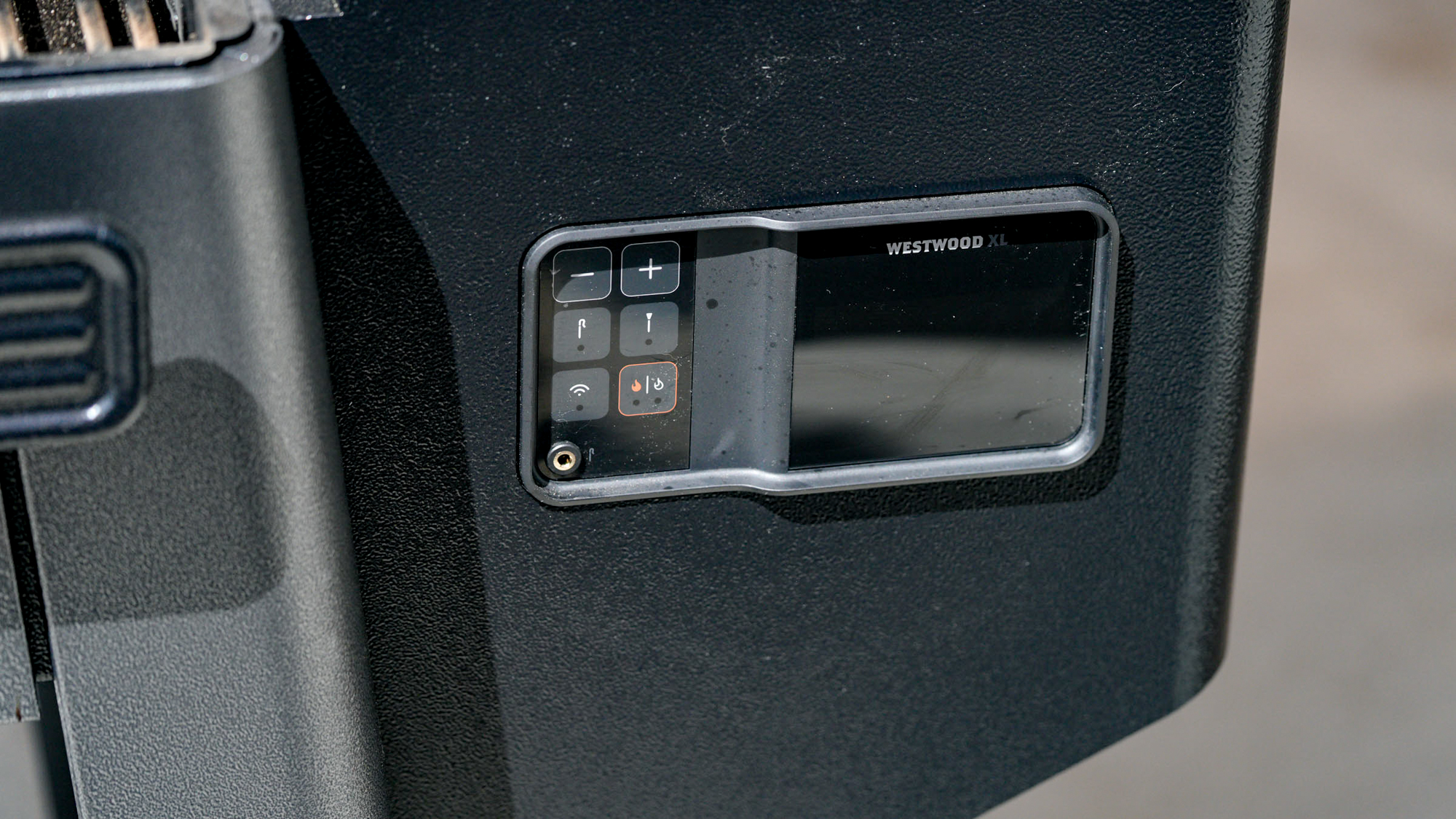
The digital control panel is easy to use. You can adjust your cooking temperature using the dial, then press and hold the start button to fire up the automatic starter. Once the fire starts going, the Westwood XL will reach its target temperature automatically.
The Westwood XL also comes with a single meat probe that plugs directly into the digital control panel. You can set a target temperature here as well. The digital control panel also features a timer with audible alarms.
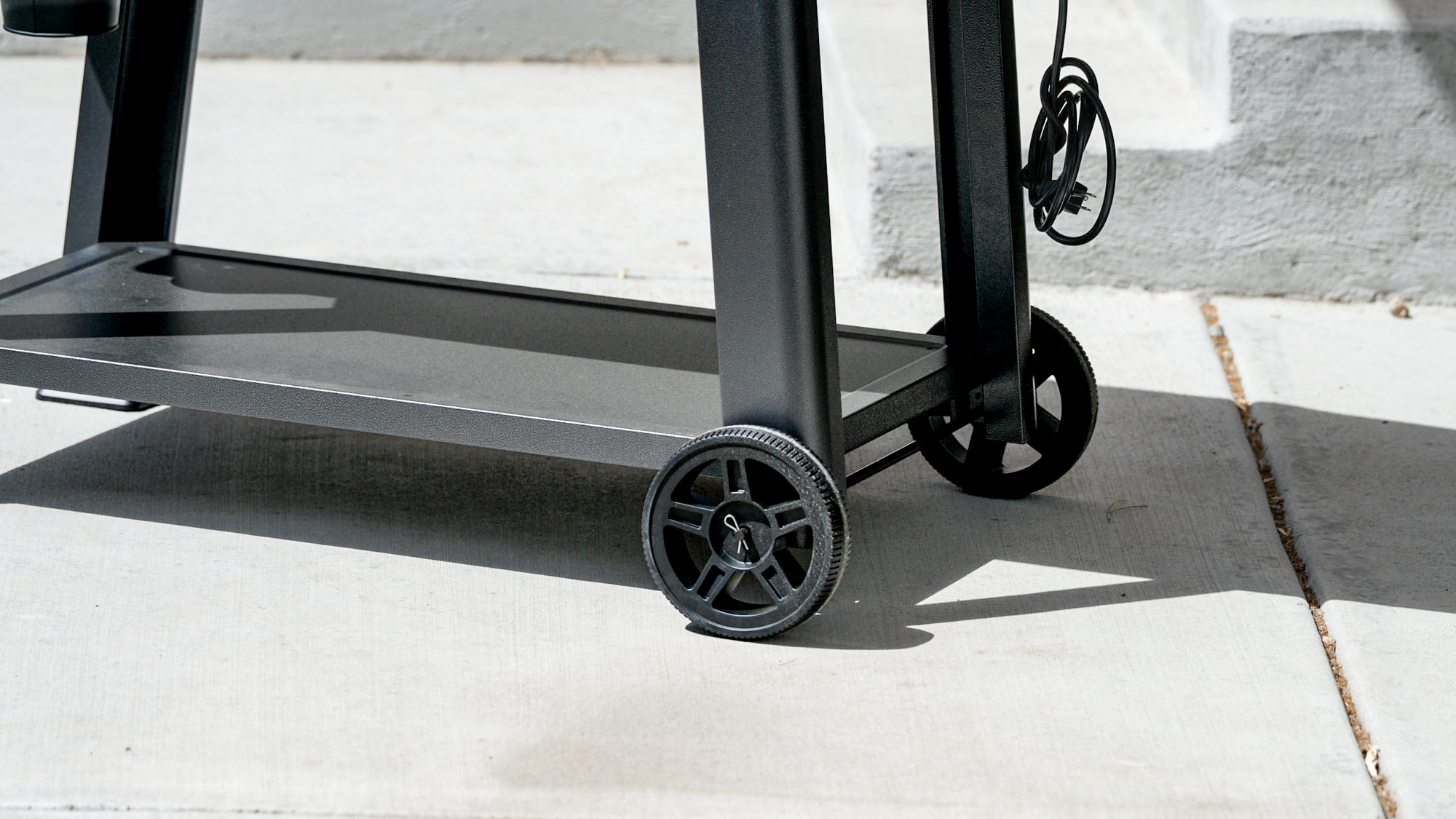
In addition, moving this 128-pound grill is pretty easy thanks to the large wheels mounted on the hopper-side legs. The other two legs don’t feature any wheels, but tiling this side up and rolling the grill along is no problem at all.
While you can control all these settings directly on the digital control panel, you can also control the Westwood XL using Traeger’s WiFIRE app. More on that in a moment.
Traeger Westwood XL Grill review: Grilling performance
After I burnt off all the manufacturing byproducts, I let the grill cool down completely. Then I fired it up again later to cook my first meal.
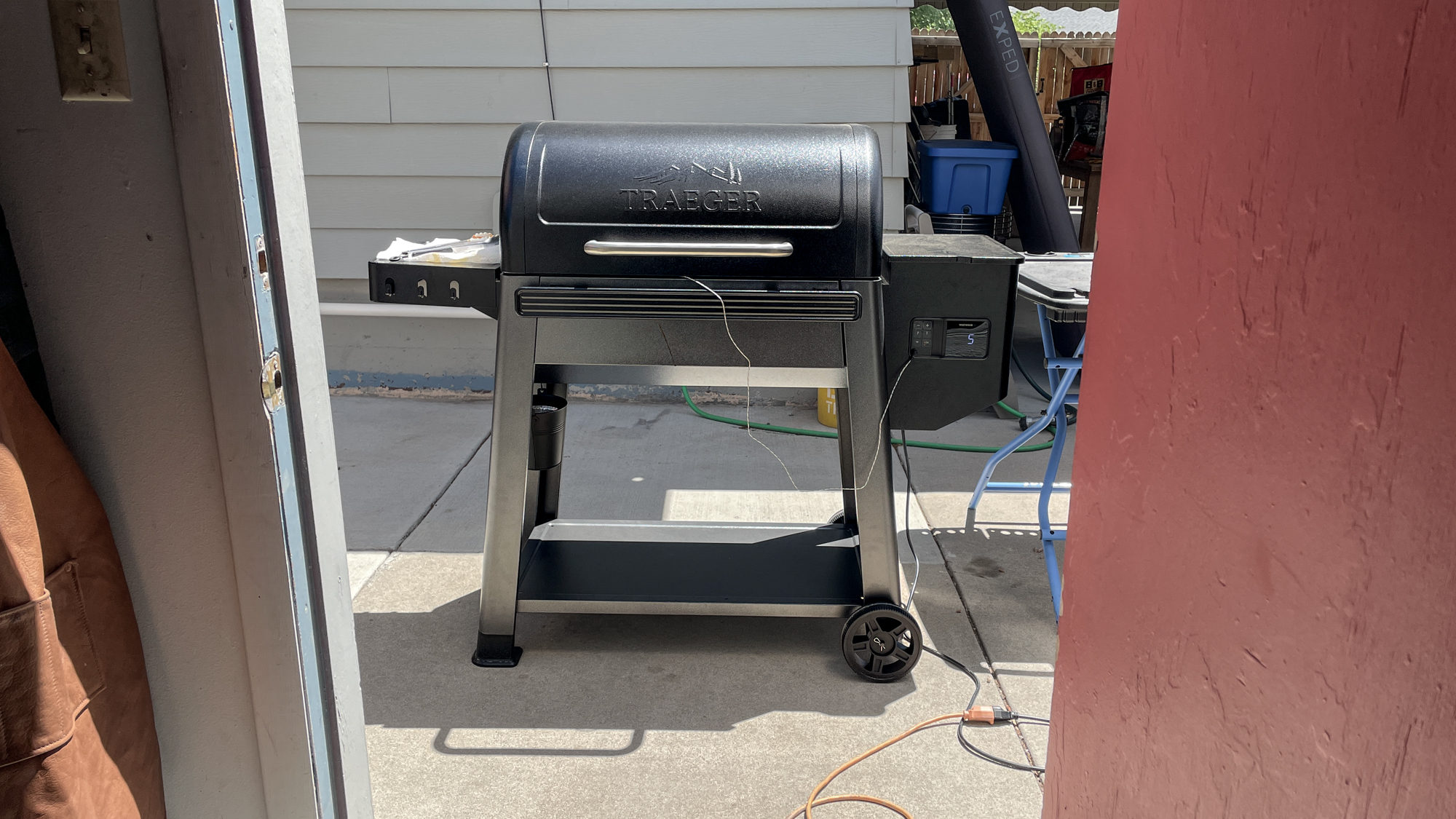
I prepped a 1.3 pound London Broil with the intention of cooking it medium rare. Normally, I would want to get a very high temperature (around 500 degrees) to ensure a good sear — the Westwood XL only gets up to 450 degrees, so I had to adjust.
So I took the app’s recommendations and heated the grill to 450. It took about 20 minutes to heat up to that temperature, which I thought was quite a long wait. In subsequent uses, the heat-up time was cut down to about 15 minutes.
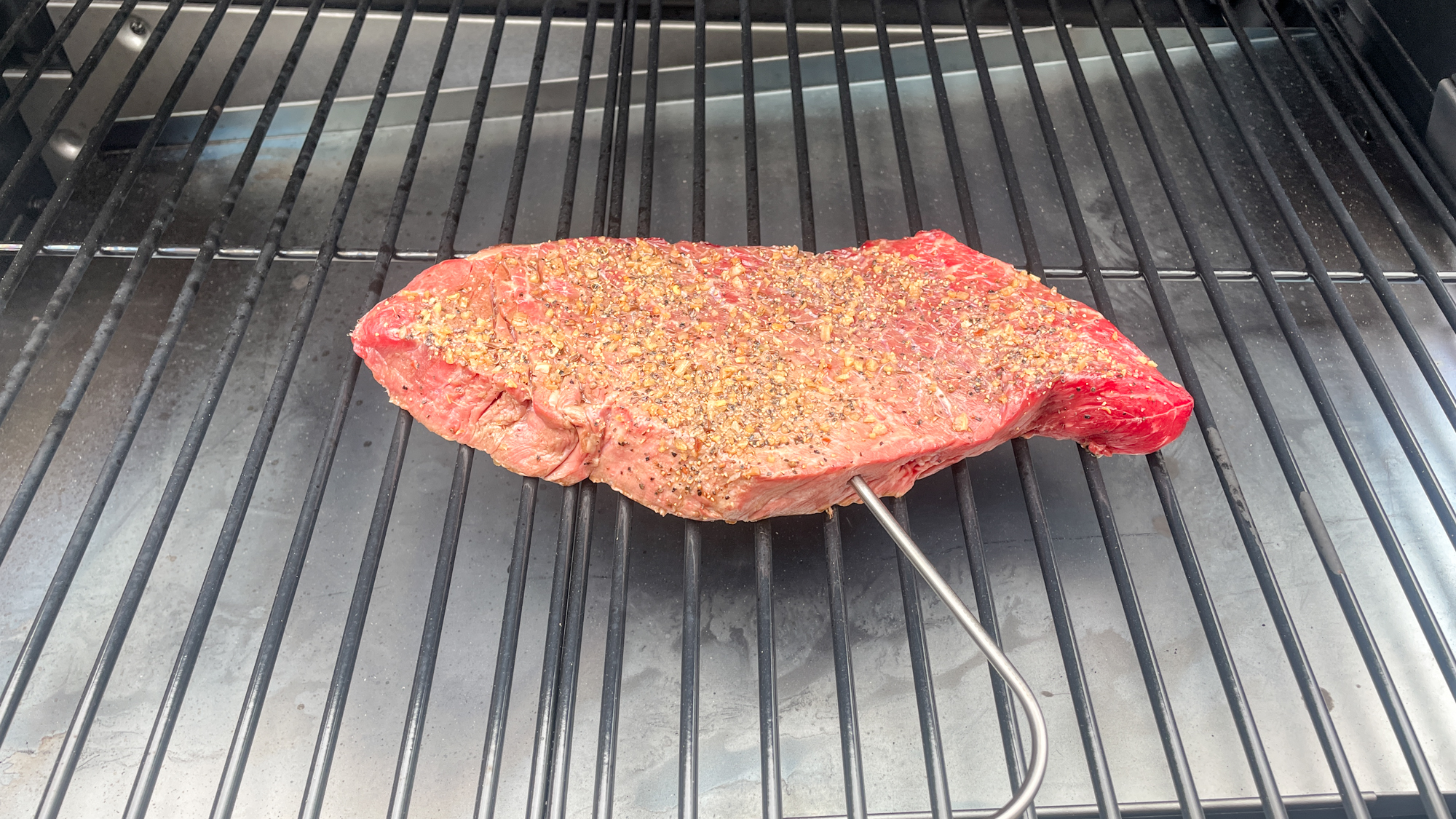
I inserted the included probe and set the app to alert me when the meat was cooked to medium rare. According to the app, that meant an internal temperature of 135 degrees. It also recommended cooking for about 4-5 minutes per side, which seemed spot-on in my experience, though I would probably shoot for a slightly lower internal temperature for medium-rare.
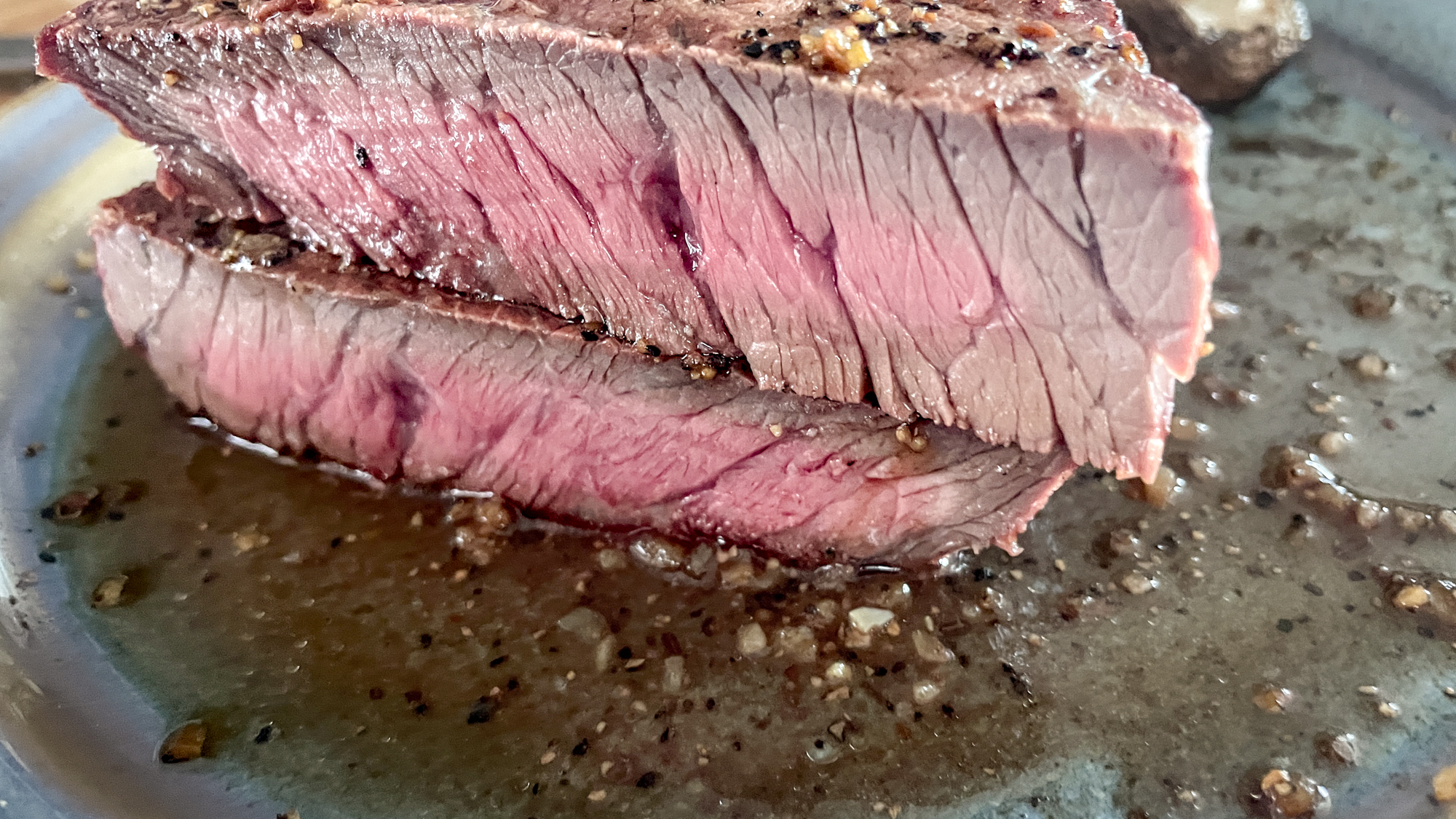
It took about 17 minutes of cooking to reach 135 degrees internally, though. And when I took the steak off the grill and let it rest, the finished cook was more akin to medium or even medium well. I definitely should have trusted my gut and taken the steak off sooner.
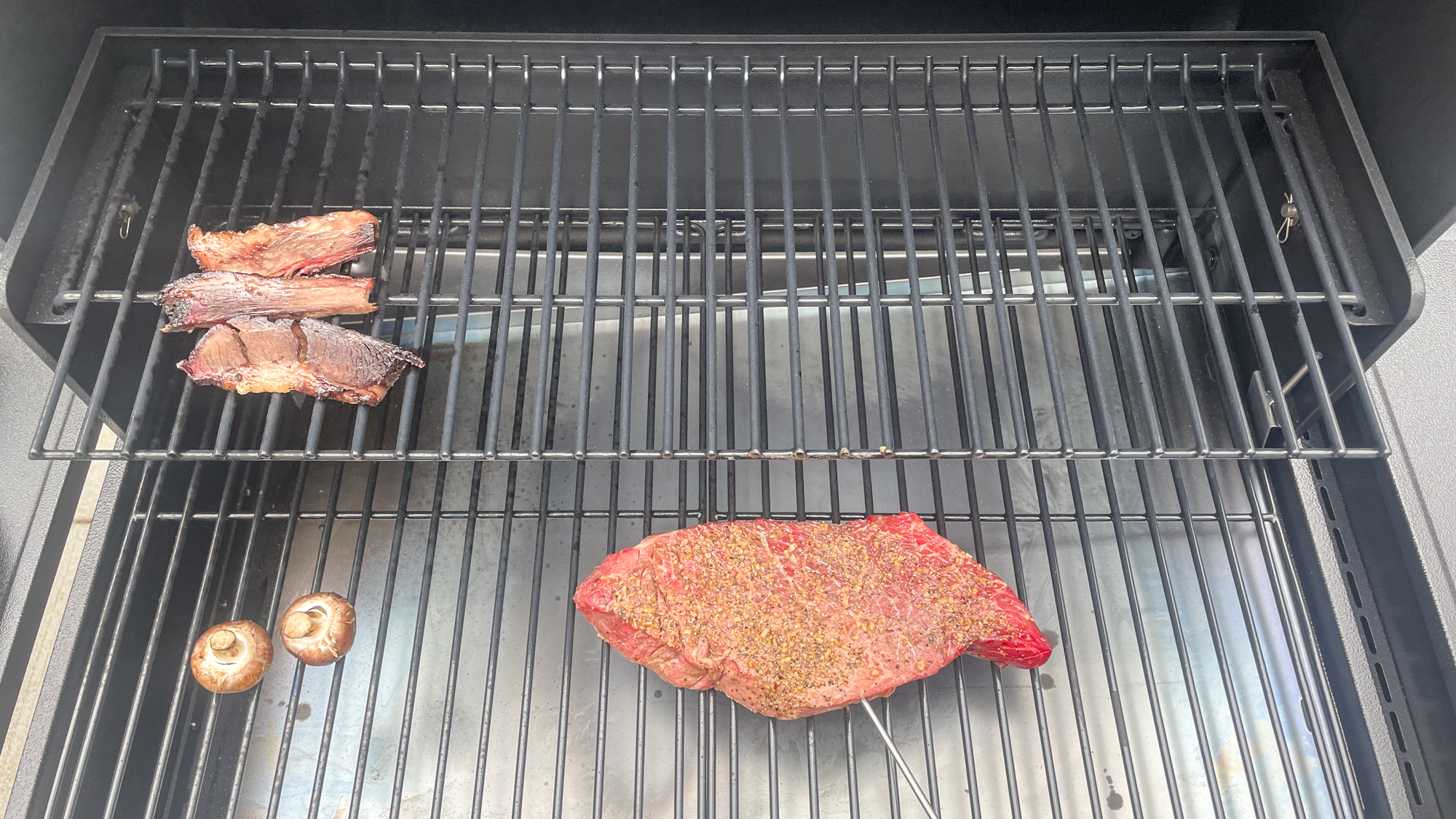
I’ve used a lot of pellet smokers, and none of them have really produced a high-quality sear for steaks. That’s because the heat source is not directly beneath the cooking surface; rather, it’s offset like a true smoker. Such was the case with the Westwood XL. The sear just wasn’t there. I would recommend searing your steak before or after you cook it on the Westwood, in a cast-iron pan on the stove if possible.
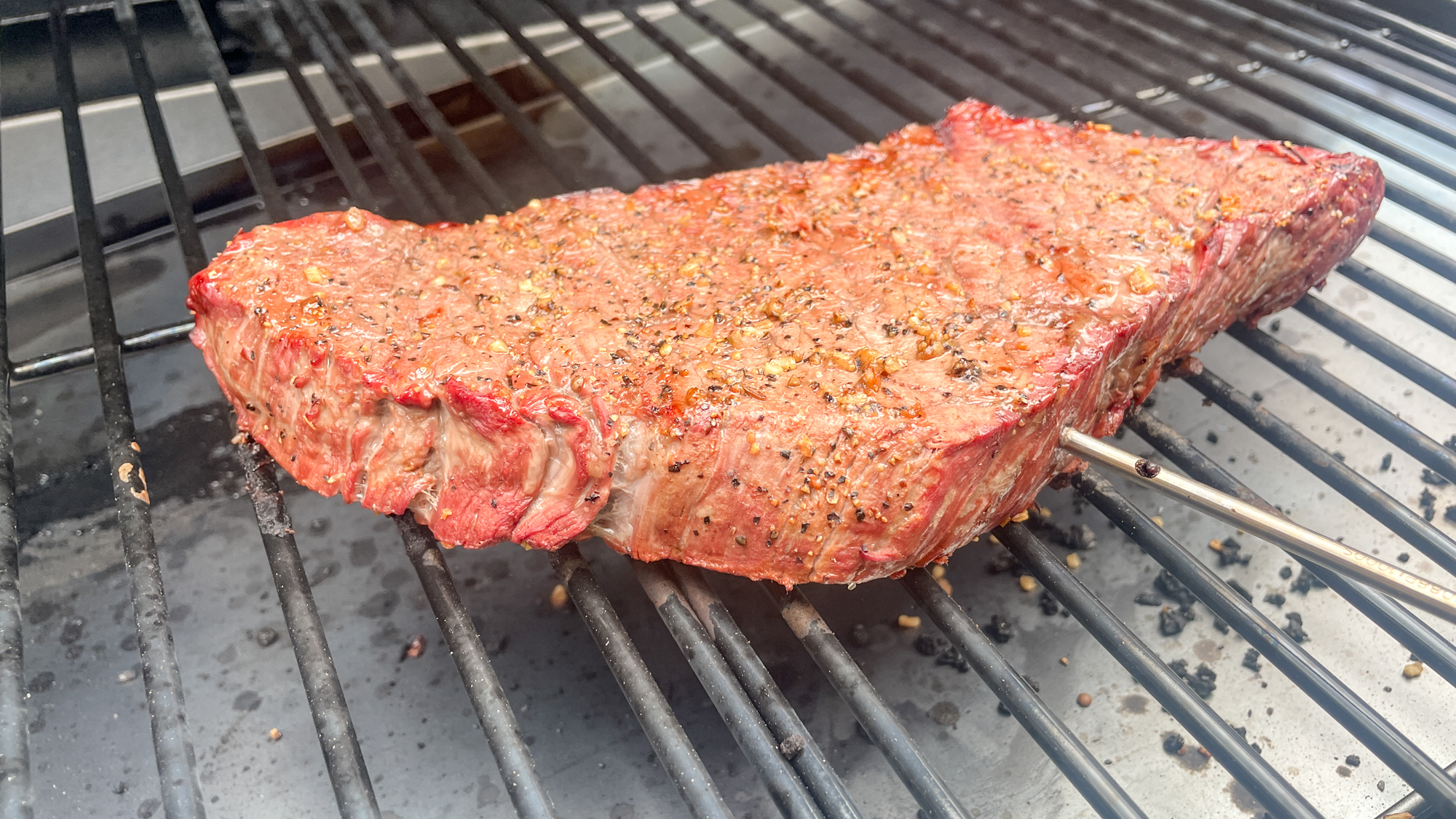
And since the steak wasn’t on the Westwood for very long, I knew I had to temper my expectations for a true smoky flavor. That assumption was confirmed; there’s not much smokiness to the steak, which is forgivable for any pellet smoker, since the smoke really needs a lot of time exposed to any meats to make that smoky flavor come through.
In addition, the Westwood is also somewhat loud. I say this comparatively; my charcoal smoker’s fan only runs when it needs to stoke the fire to adjust temperature, while the Westwood’s auger and fan run more or less constantly. It’s not bother-the-neighbors loud, but it’s certainly noticeable if you’re hanging out in the backyard while the grill runs.
Traeger Westwood XL Grill review: Smoking performance
Next, I prepped some pork ribs for smoking. While I intended to use the 3-2-1 method to smoke these (three hours smoked unwrapped, 2 hours wrapped, and an additional hour unwrapped), I still consulted the app’s recommendations for cooking times and temperatures.
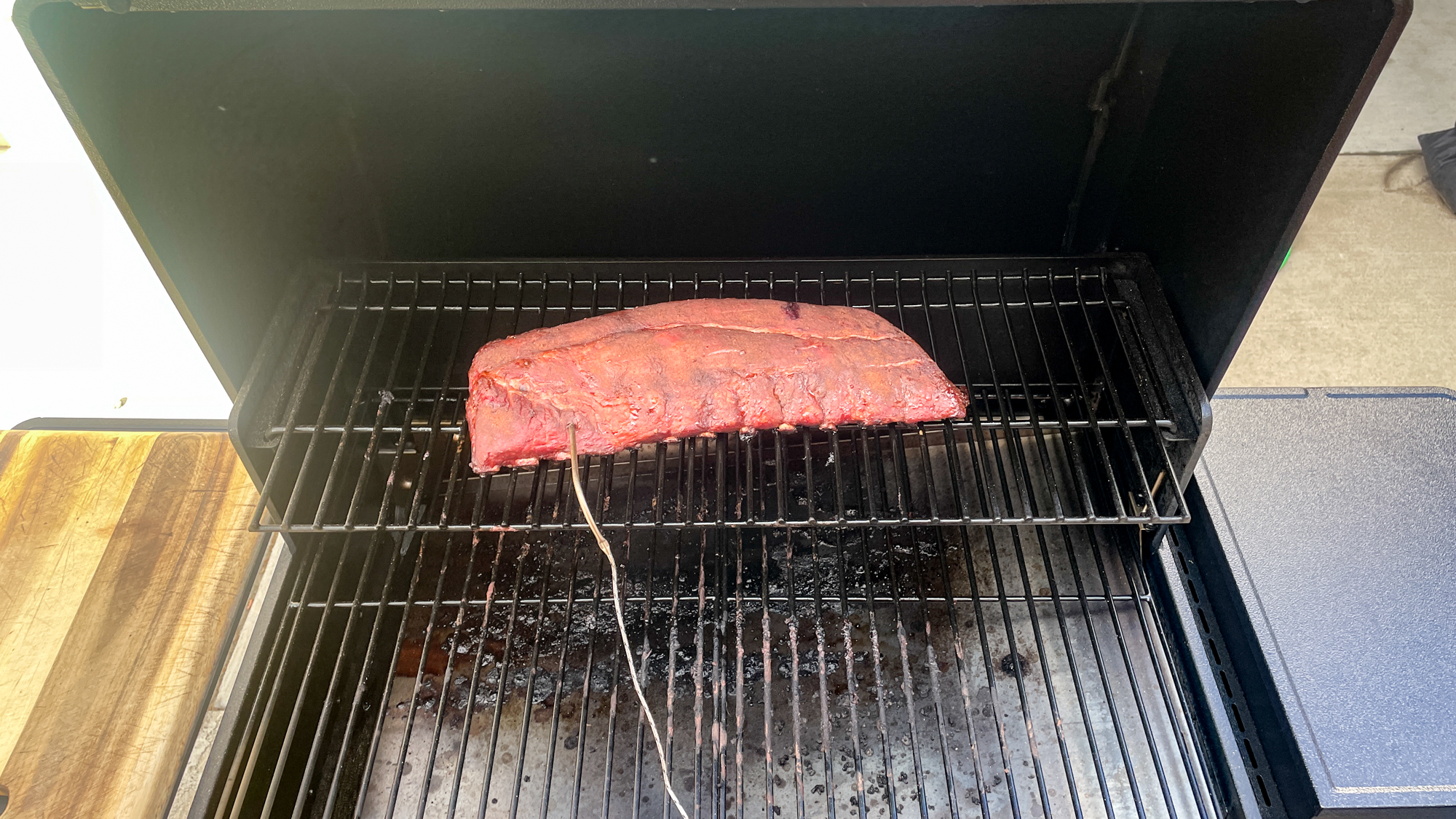
The app recommended an internal temperature of 200 degrees for the ribs when finished. So that’s what I set my alarm for. Then I put the ribs on for the first 3-hour session, opening the lid occasionally to spray some Dr. Pepper on them for moisture and to create a nice, caramelized finish.
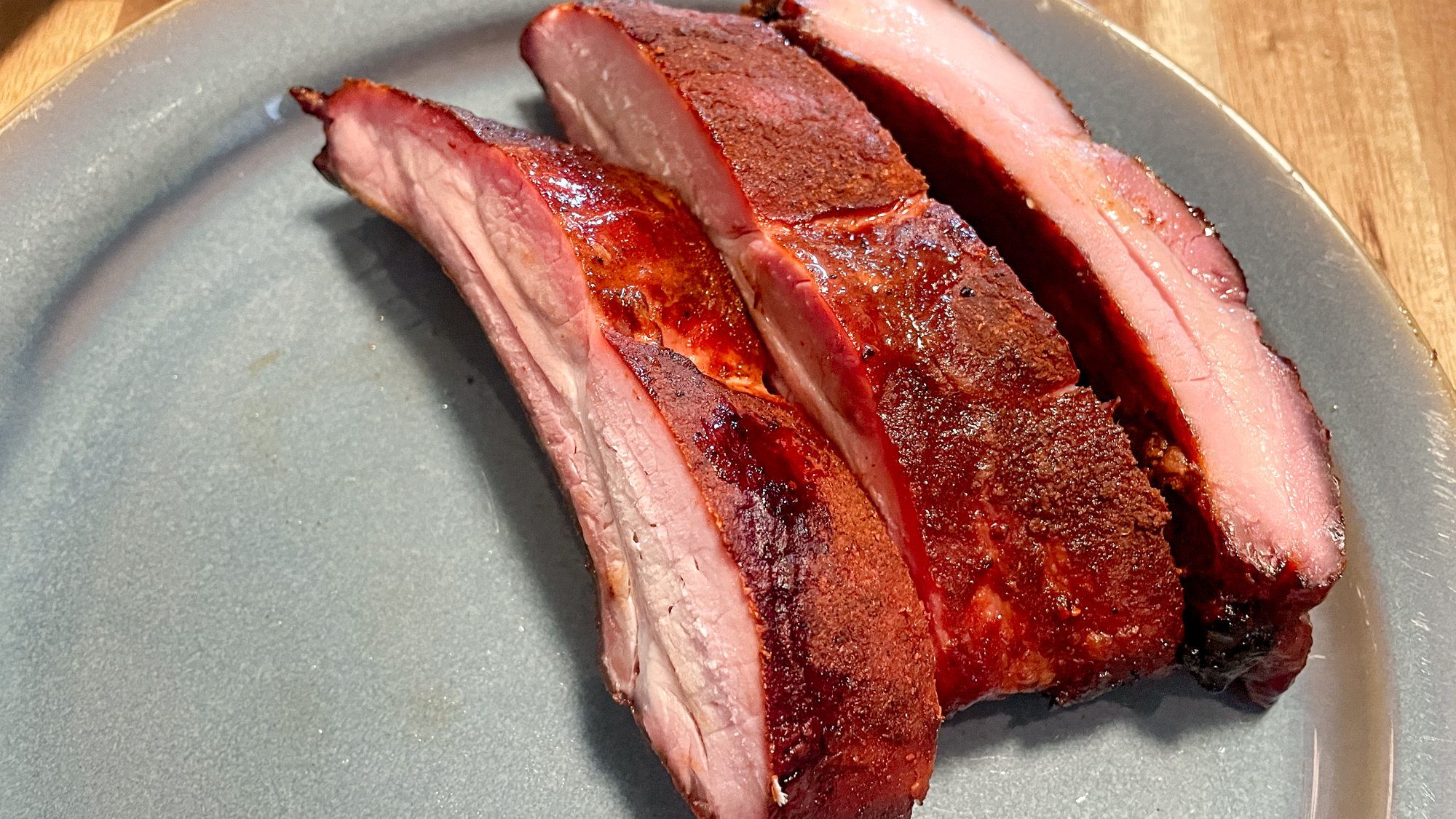
Pellet grills like this one tend to lend less smoky flavor to meat than other types of smokers, like wood and charcoal. So I was curious to see if the Westwood XL could buck that trend. Ultimately, I found the smoky finish to be somewhat slight, which is what I expected. If you really want an immersive smoky flavor, you’ll want to opt for charcoal or wood. That said, if you want a slightly smoky flavor and a super easy, set it and forget it cooking experience, the Westwood XL delivers.
Traeger Westwood XL Grill review: App
The WiFIRE app is easy to pair and set up with the Westwood XL. It’s reliable too, with a strong internet connection. I found myself controlling the Westwood XL more with the app than with the physical controls on the front of the grill.
The app also has recommendations built in for cooking times based on what type of meat you’re cooking and what kind of results you want. As I mentioned earlier, however, consider these recommendations, not absolutes.
If you’re new to smoking and grilling, the app is great for exploring recipes, too. Traeger has done a nice job of making the app a useful resource for all levels of outdoor cooks.
Traeger Westwood XL Grill review: Accessories
My test unit came with a few accessories, including the Westwood XL full-length grill cover ($100), which I would highly recommend if you intend to store your grill where it will be exposed to the elements. Traeger also sent along some barbecue sauces, rubs, and pellets. All of these are available for purchase on the Traeger website.
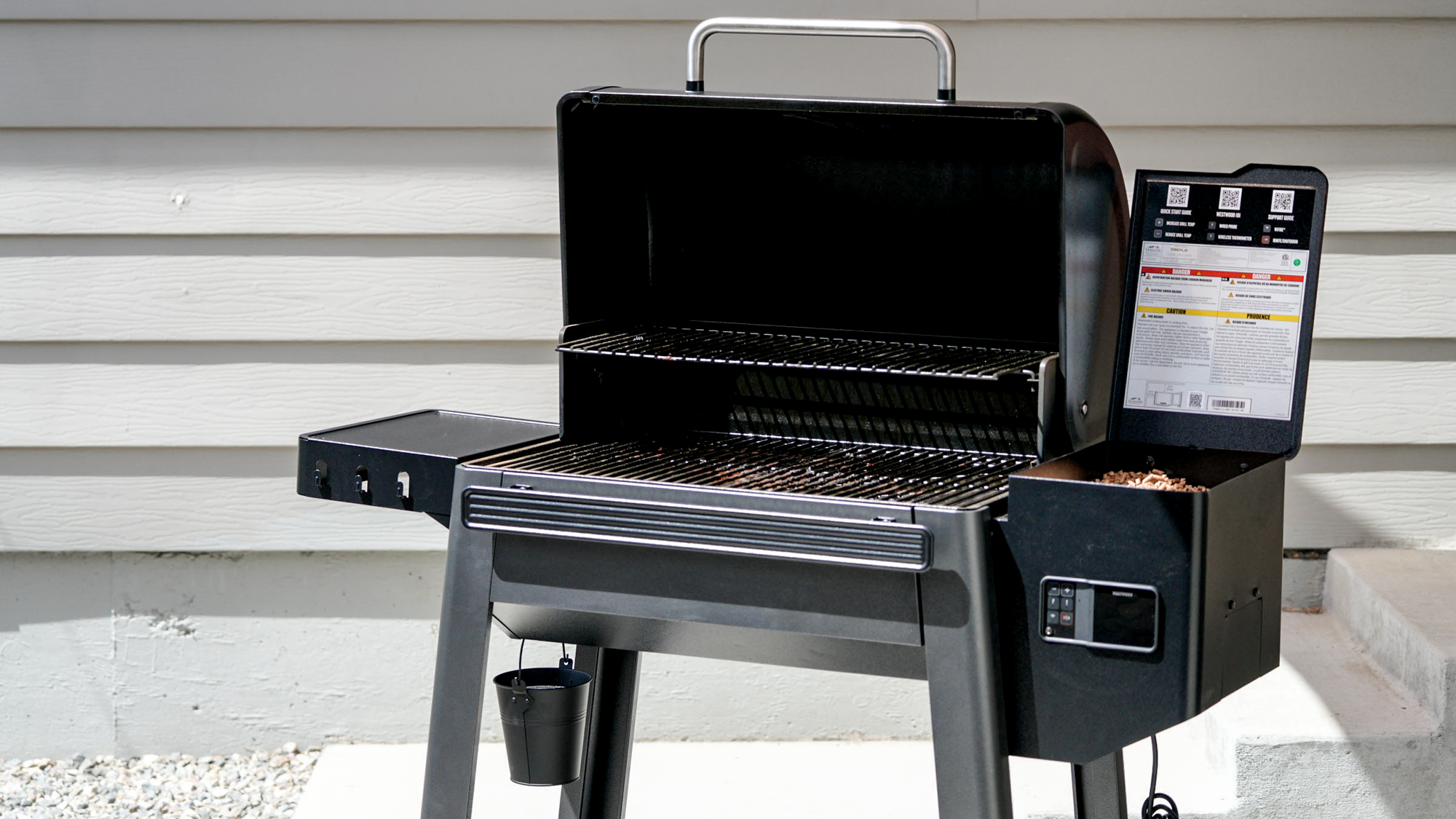
There are tons of other accessories on Traeger’s website, far too many to list here. Suffice it to say, you can outfit all of your cooking needs from the accessories page. I would highly recommend looking into getting a P.A.L. Pop and Lock Front Shelf to give you more prep space on the barebones Westwood XL. These range in price from $90 to $180, depending on what size you get.
Traeger Westwood XL Grill review: Competition
Traeger has made a big name for itself in the pellet smoker space. But it’s hardly the only player. Brands like Weber, Recteq, Yoder, and Pit Boss all offer their own pellet smokers, as do smaller brands you might see at the big box store.
Weber’s Searwood 600 is a close competitor. It costs $200 more than the Westwood XL, but it also reaches a higher temperature at 600 degrees. It also features a smoke boost function, which ups the smoky flavor. It’s overall a better choice than the Traeger Westwood XL, unless you need more cooking space (the Searwood tops out at 648 square inches) and versatility with Traeger’s impressive line of accessories. The Searwood also doesn’t have any prep surfaces other than the lid of the pellet hopper.
Traeger Westwood XL Grill review: Verdict
For a true set-it-and-forget-it cooking experience, the Westwood XL delivers a lot of convenience at a good price. It’s ideal for family dinners in the backyard or for entertaining guests on the weekend. Just don’t expect a ton of smoky flavor here; pellet smokers are generally not as robust in that regard as charcoal or wood smokers.
And you’ll need to adjust the way you grill at high temperatures too. You won’t get a great sear on steaks; you’ll need to do that part on a stovetop or griddle.
I love the ease of use of the Traeger app and the true simplicity of the Westwood XL setup. It’s easy to toss on some meats for smoking for hours and hours, then just walk away. But I wonder if the meat probes are reading correctly, given how overcooked everything was when I was using those probes as my guide.
Aside from that, the Westwood XL is a good pellet smoker that’s easy to use and not intimidating if you’re new to pellet smokers. The app is great, easy to use, and a good resource for new and experienced cooks. Overall, it’s a pleasant cooking experience.