Thought of the Day: Long before modern self-help books and viral social media advice, ancient Greek playwrights were already asking some of life’s biggest questions: What truly makes people happy? What gives life meaning? And why do humans so often chase status while ignoring simple contentment? Few writers explored those emotional contradictions more deeply than Euripides, the celebrated dramatist whose works transformed classical theater with realism, psychological depth and fearless questioning of society. Even centuries after his death, his reflections on human nature continue to feel strikingly modern — especially in a world obsessed with money, appearances and endless ambition.
Thought of the day today
One of Euripides’ most memorable observations about life and human equality remains profoundly relevant today:
“When a man's stomach is full it makes no difference whether he is rich or poor.”
The quote strips away social labels and reminds readers that some of humanity’s most essential needs are universal. Hunger, comfort, survival and peace are experiences shared by everyone, regardless of status or fortune.
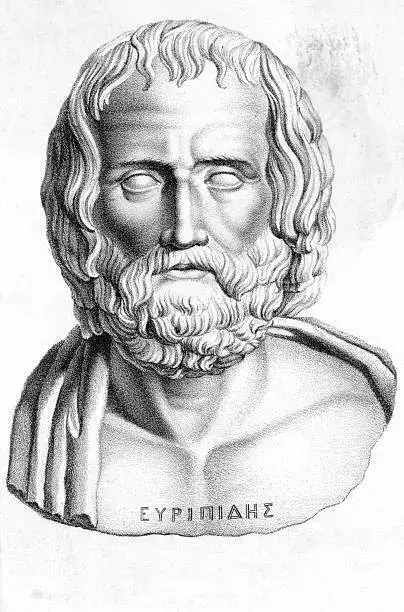
Who was Euripides?
Euripides was born around 484 BC in Athens and became the last of the three great tragedians of classical Greece, following Aeschylus and Sophocles. Though he lived more than 2,000 years ago, many historians consider him one of the most psychologically insightful writers in literary history.
Unlike many dramatists of his era, Euripides focused less on heroic perfection and more on flawed, emotional and deeply human characters. His plays explored jealousy, revenge, grief, injustice, love and moral confusion. Rather than glorifying myths blindly, he often questioned authority, tradition and even the behavior of the gods themselves.
His willingness to challenge accepted ideas made him controversial during his lifetime. Although he competed in dramatic festivals for decades, he won fewer victories than Sophocles. Yet history eventually favored him. Euripides became the most widely read and revived of the Greek tragedians in later centuries because audiences connected with the realism and emotional complexity of his writing.
Among his best-known surviving works are Medea, The Trojan Women, Bacchae and Hippolytus.
Thought of the day meaning
At first glance, Euripides’ quote seems simple. But beneath its simplicity lies a powerful truth about human life.
The playwright suggests that once basic needs are met, wealth loses much of its importance. A full stomach represents survival, satisfaction and comfort — conditions that matter more fundamentally than social rank. Whether someone is wealthy or poor, hunger disappears the same way after eating. In that moment, human beings become equals.
The quote also challenges society’s endless pursuit of excess. Modern culture often encourages people to compare salaries, lifestyles, homes and possessions. Euripides instead points readers toward gratitude and sufficiency. He implies that fulfillment may come not from accumulating endlessly, but from appreciating what is already enough.
There is another layer to the statement as well. Hunger can symbolize more than food. Emotional hunger — the need for peace, connection and dignity, affects everyone regardless of financial status. A rich person struggling with loneliness may feel emptier than someone with modest means but meaningful relationships.
In that sense, Euripides’ words continue to resonate in today’s fast-moving world, where many people chase success while neglecting emotional well-being.
Why the quote still resonates today
The relevance of this quote feels especially strong in modern times. Social media constantly exposes people to curated lifestyles filled with luxury vacations, designer labels and public displays of success. That environment can create the illusion that happiness belongs only to the wealthy.
But studies on happiness repeatedly suggest that beyond financial stability, relationships, health and purpose matter far more to long-term well-being. Euripides recognized that truth centuries ago.
The quote also speaks to growing conversations around mental health and burnout. Many people work relentlessly, believing achievement alone will bring happiness. Yet even after reaching professional milestones, fulfillment often remains elusive if basic emotional needs are ignored.
By reducing life to something as universal as hunger, Euripides cuts through social performance and reminds readers of a shared human condition.
Euripides and his revolutionary storytelling
What made Euripides extraordinary was not only his philosophy but the way he brought it to life through drama. His characters were rarely idealized heroes. Instead, they felt real, impulsive, conflicted and emotionally vulnerable.
In Medea, he portrayed a betrayed woman driven toward horrifying revenge while still evoking sympathy for her suffering. In The Trojan Women, he exposed the devastating human cost of war through the grief of women and children left behind after Troy’s destruction.
His writing often challenged audiences to reconsider morality, justice and power. Rather than offering easy answers, Euripides forced viewers to confront uncomfortable truths about society and themselves.
That emotional honesty helped preserve his legacy long after many of his contemporaries faded from public memory.
A lesson in gratitude and humanity
Euripides’ quote ultimately encourages a simpler and more grounded way of looking at life. It does not argue that money has no value. Financial security undeniably matters. But the playwright warns against treating wealth as the ultimate measure of human worth.
A satisfying meal, emotional peace, meaningful companionship and personal dignity can often matter more than prestige or luxury. The quote invites people to pause and ask whether they are chasing what truly nourishes them, or merely what impresses others.
In a culture driven by comparison and competition, that reminder may be more valuable than ever.
The enduring legacy of Euripides
What makes his writing timeless is its humanity. Euripides understood that beneath politics, status and power, people remain vulnerable creatures searching for meaning, security and connection.
And sometimes, as this quote beautifully suggests, true contentment can begin with something as simple as having enough.