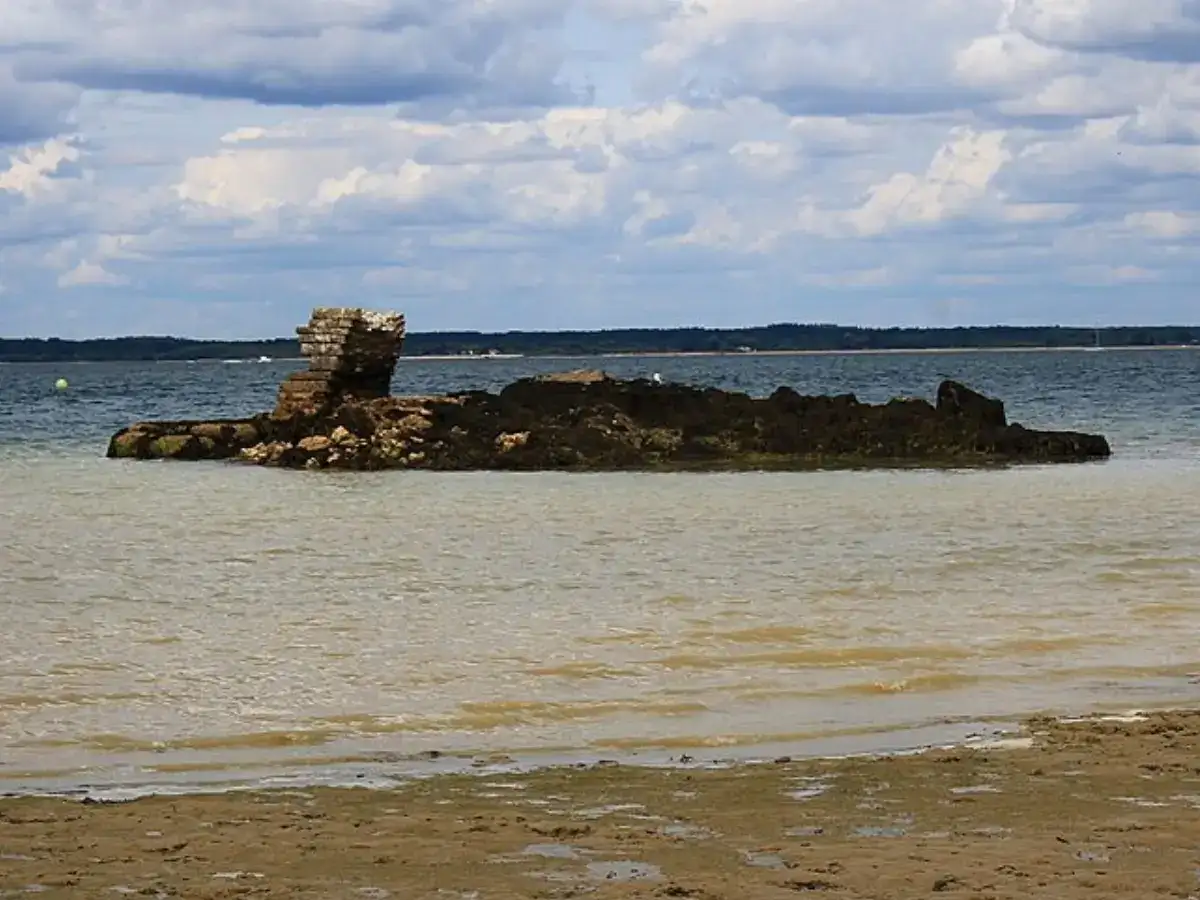
Underneath the surface of the Solent, archeologists found vestiges of a prehistoric landscape, where people used to live and work with wood, move around the coast, many millennia before Britain became an island. Known as Bouldnor Cliff, it is an archaeological site on the Isle of Wight, which represents one of the most important underwater discoveries of prehistory in Europe.
As indicated by the University of York's submerged landscape research project, at this site, wooden materials, hearths, artifacts, and signs of Mesolithic occupation dating back several millennia ago were discovered. The find revolutionized the understanding of Stone Age Britain.
Archaeologists no longer considered people of that era as purely hunter-gatherers but recognized the presence of coastal settlements and their woodworking abilities, and possibly seafaring. According to specialists, the site demonstrates a prehistoric environment buried underneath the waters following the end of the last Ice Age.
Why the Bouldnor Cliff site is so significant
The submerged landscape consists of the preservation of evidence related to the daily life of Mesolithic people underwater. As indicated by the University of York's submerged landscape research project, there were unearthed pieces of worked timber, hearths, and other artifacts. It is clear that this particular place must have been occupied by humans, as opposed to being a bare stretch of shoreline.
Underwater circumstances allowed for the preservation of organic materials not normally present at other archaeological sites, such as wood. This offers great opportunities for studying prehistoric technology and activities.
What makes it important? It is stated that other sites of the Mesolithic era in the British Isles typically only contain stone implements, with few organic materials surviving after many years in the open air. Yet the submerged site provides scientists with exceptionally well-preserved evidence of woodworking.
The submerged site must have been dry land once
The Isle of Wight is separated from mainland England by the Solent Strait. However, it must be remembered that things were quite different in ancient times. Sea level was lower, so the place where today we see water used to be dry land, part of broader prehistoric territories.
Archaeologists assume that people settled in these coastal areas before they were flooded following the Ice Age. As researchers argue, this finding alters the way in which Stone Age Britain is imagined. The coastal areas were not merely boundaries but rather places where life took place connected with mobility, hunting, and communication.
Furthermore, another study published in Nature Ecology & Evolution about ancient British genomes is also consistent with the idea that movement and gene mixing occurred in prehistoric Britain multiple times. This overall perspective is very much in line with indications of a dynamic life in the coastal area of Bouldnor Cliff.