There is an old political adage: only Nixon could go to China. The meaning is that only a leader with unimpeachable hawkish credentials could make a diplomatic opening to a rival without political cost.
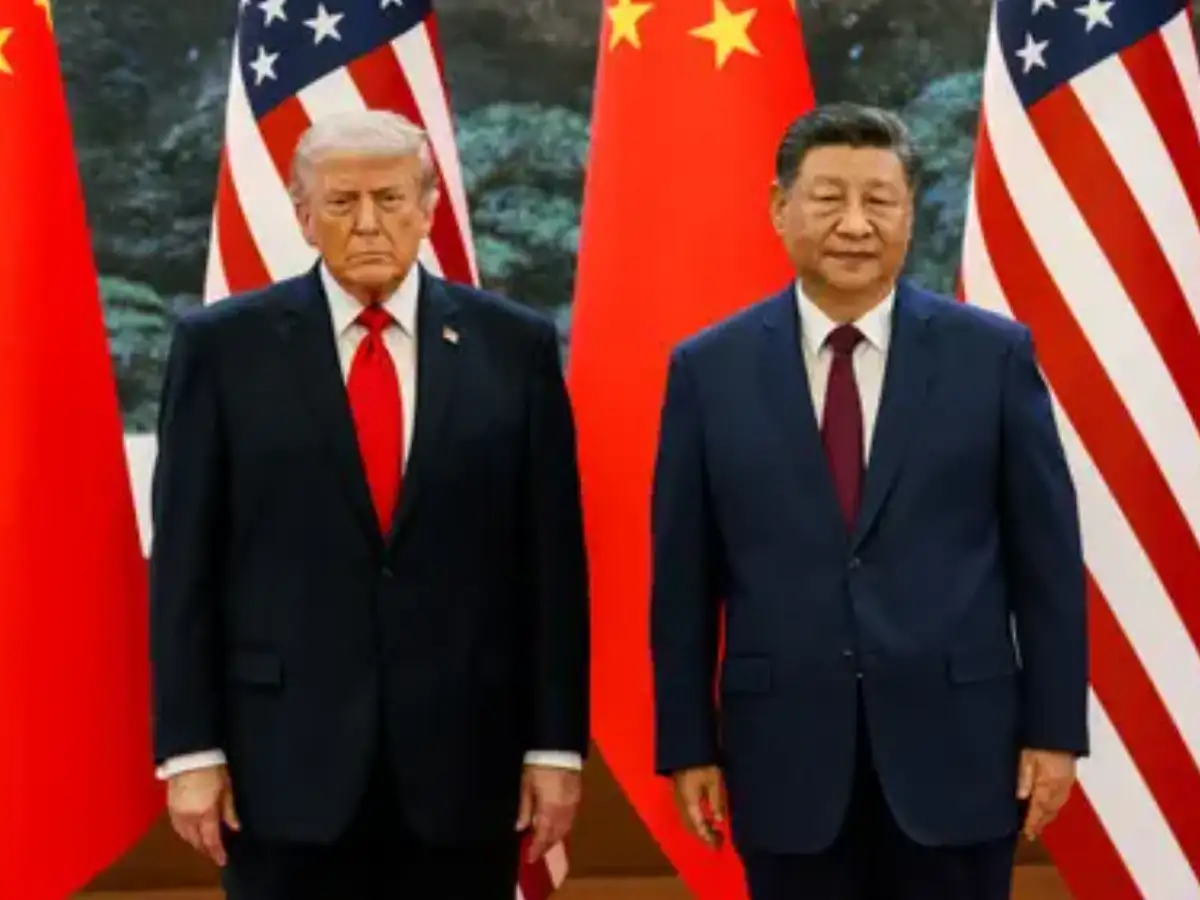
Earlier this month, Donald Trump went to Beijing. Like Nixon, he went with considerable fanfare. Unlike Nixon, he may have come back with considerably less than he hoped.
Strip away the ceremony, the pageantry, and the superlatives, and the summit produced two structural outcomes and one unambiguous warning.
The structural outcomes: a Board of Trade and a Board of Investment, mechanisms to manage communication between the world's two largest economies. And a commitment that the two leaders will meet at least twice a year.
After years of the Biden era, during which Chinese officials delayed meetings, used abusive language, and ran out the clock, this restoration of direct dialogue is genuinely valuable. Do not dismiss it. But do not mistake communication for resolution.
This contest will not be settled in one summit, or ten. It may take a decade or more. Presidents will change. Conditions will change. The contest will not.
The deals announced: 200 Boeing aircraft and approximately $27 billion in agricultural purchases. These are welcome. They are also, in the context of a $1.2 trillion Chinese trade surplus, a drop in the ocean.
Trump’s core goal was to reduce the trade deficit with China. That goal has not been achieved and will not be achieved through these purchases. When Chinese exports routed through Vietnam and Mexico are factored in, the overall US trade deficit is heading upward, not down.
The 90 Percent Model, the strategy of building capacity to meet 90 percent of global demand in a targeted sector, flooding markets below cost, and destroying competitors, remains fully intact. Ten American industries have already been severely damaged. Ten more are currently under attack. The summit changed none of that.
The warning that matters most was not a trade deal. It was what Xi said about Taiwan. His exact words, as reported by Chinese state media Xinhua: if Taiwan is handled improperly, the two nations could come into conflict.
He called Taiwan the most important issue in China-US relations. This is not diplomatic language. It is a layered threat with a clear sequence: economic coercion first, proxy engagement second, and military conflict if the others fail. Every threat China has ever made, it has followed through on. This one deserves to be taken at face value.
For India, this summit is not a distant event. India sits at the precise intersection of this contest. Despite unresolved border disputes and deadly clashes in 2020, India continues to participate in BRICS and maintain trade dialogue with Beijing.
But the 90 Percent Model is already operating on Indian industries, just as it operated on American ones. The question for Indian business leaders and policymakers is not whether to watch this contest. It is which side of it to be on.
India has a historic opportunity at this moment. Apple now produces over $23 billion worth of iPhones in India annually, making India its second largest manufacturing hub globally. Companies exiting China are looking at India as a manufacturing hub not just for the Indian market but for the world. That window is open. It will not stay open indefinitely.
Beijing is already responding: new Chinese decrees introduced this spring give regulators sweeping powers to penalise companies for moving production out of China to India.
The lesson of this summit is not that dialogue is bad. Dialogue is essential. But business leaders who interpret a stabilised relationship as a solved problem will be the ones blindsided when the next export control is announced, the next industry is targeted, and the next chokehold is activated.
Build your war room. Watch your industries. The temperature changed in Beijing earlier this month. The model did not.